Winter solstice is just around the corner—December 21 to be exact. On that day, we in the Midwest will have about nine hours of daylight. Compare that to a whopping 15 hours of daylight when the summer solstice takes place in June. Although there are holidays to celebrate, December can be a dull month weather-wise. Gardeners need not despair, however. Winter has its own charms—it’s a time to embrace and reflect on the changing seasons.
Unlike in the summer, there’s a quiet austerity in gardens, woodlands, and prairies at this time of year. Winter reveals itself in the subtle colors and shapes of bare trees and shrubs. There are the soft textures and tawny hues of dried grasses, brilliant berries, and the chocolate-colored seedheads of perennials left standing. On days when there’s a coating of hoarfrost (ice crystals), or a dusting of snow, the landscape becomes all the more magical. The angle of the sunlight is gentle, and on some days, especially after a snowfall, the sky becomes a brilliant, cloudless blue. It’s all about taking time to look closely to appreciate winter’s beauty.
Trees
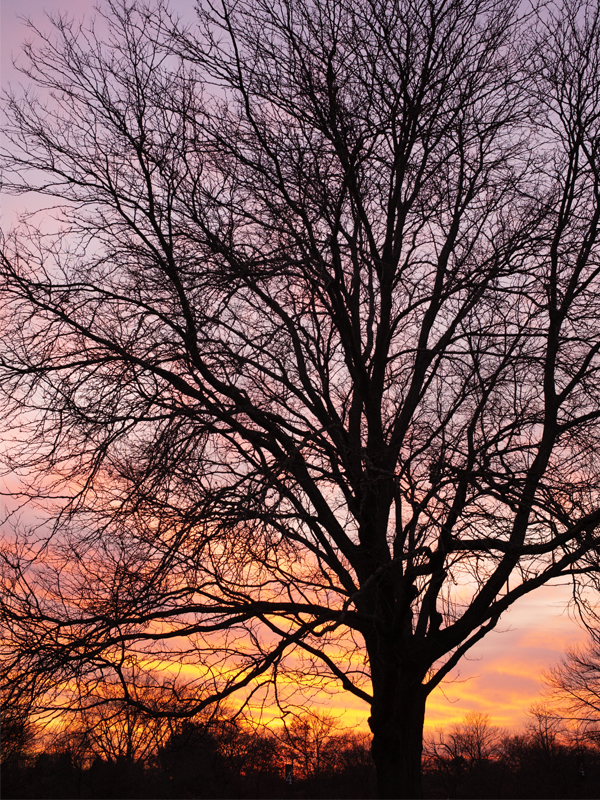
Without their cloak of leaves, deciduous trees reveal their brawny branches and delicate twigs. In the Sensory Garden, the stark white trunks of native sweet birch (Betula lenta) stand out on overcast days. Look for paperbark maples (Acer griseum) and Peking lilacs (Syringa pekinensis) and discover the cinnamon-colored peeling bark on their trunks. There are ornamental cherry trees that glisten the color of polished mahogany. Take a stroll in the Elizabeth Hubert Malott Japanese Garden on a winter day to observe the striking shapes and forms of the trees and rocks. The apples and pears are long gone, but this is a good time to admire the unusual structure and form of espaliered fruit trees in the Regenstein Fruit & Vegetable Garden.
Evergreens
Conifers—evergreen trees and shrubs like pines, firs, arborvitae, and spruces—create color in the frost-laden garden. Western red cedar (Thuja plicata) has dark green, scale-like leaves that are aromatic when crushed. Look for the delicate brown cones near the tips of the branches. The deeply furrowed bark of dawn redwood is evident now that it has shed its feathery needles for the season. This curious ancient tree species was believed to be extinct until it was rediscovered in inland China in 1941. You can locate these trees, shrubs, and other plants with the Garden’s Plant Finder and on the GardenGuide app.
Shrubs
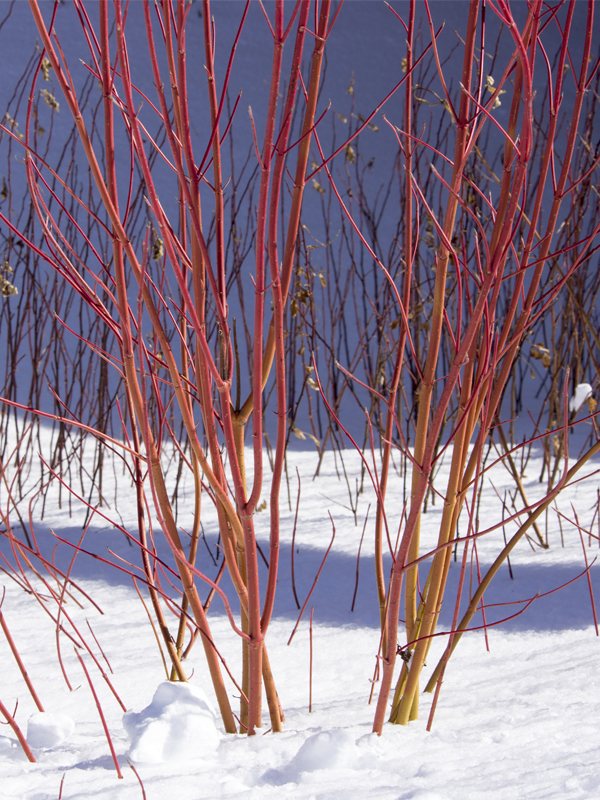
Spent flowers and colorful stems take the stage now. Hydrangeas sport tawny, dried blossoms and butterfly bushes have dark brown seedheads, all of which stay intact well into late winter and look particularly pretty when snow settles on them. Several shrubs have spectacular twigs in winter. The rich, red stems of redosier dogwood (Cornus sericea 'Bergeson Compact’) stand out in the landscape. Siberian dogwood (Cornus alba ‘Sibirica Bloodgood’) is another selection noted for its deep red stems while Cardinal red-twig dogwood (Cornus sericea ‘Cardinal’) is cherry-red. Other varieties have bright yellow stems. The Garden's dogwood collection includes almost 100 varieties from 20 species—more than 2,400 plants!
Perennials
There are plenty of reasons to wait until spring to clean up perennial beds. The dark seedheads of coneflowers (Echinacea) and black-eyed Susans (Rudbeckia) are winter food for goldfinches and other birds. The hollow stems of several perennials provide a protective place for overwintering bees. Leaving perennials in place until spring has another advantage. The stems and dried leaves catch and hold snow—a good insulator that helps protect roots.
Berries
For outstanding early winter berries, look to the native black chokeberries (Aronia). The extra-large, dark purple-black fruit is a winter attraction. Crabapple trees often hold their fruits for several months. Depending on the cultivar, fruits may be yellow, gold, or red. Deciduous winterberry holly (Ilex verticillata) has shiny red fruits that are especially attractive in the snow. All of these plants feed hungry wildlife at a time when little else is available to them.
Grasses
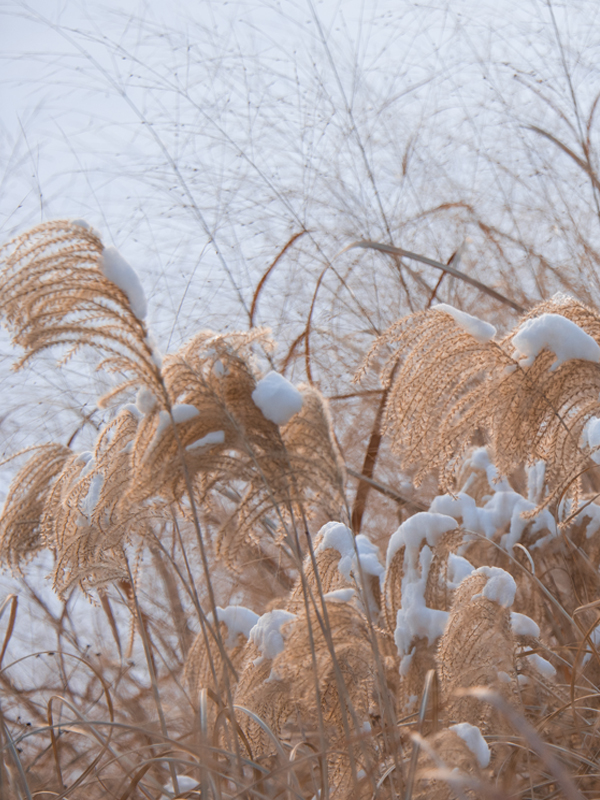
Despite a pummeling by late-autumn snow this year, the native switchgrass (Panicum) popped back up, allowing the tall wands topped with delicate seedheads to sway in the wind. Karl Foerster feather reed grass (Calamagrostis x acutiflora ‘Karl Foerster’), and other natives—prairie dropseed (Sporobolus heterolepsis), and little bluestem (Schizachyrium scoparium)—offer winter interest as well. All should be cut back in early spring.
So grab your coat, hat, gloves, and scarf and come out for a visit. There’s much to see.
Written by Nina Koziol, garden writer and horticulturist who lives and gardens in Palos Park, Illinois.