

As the weather cools, smart kitchen gardeners search for ways to stretch the growing season, hoping for a few more salads…an extra harvest of kale…or (gasp!) truly fresh veggies on the table at Thanksgiving.
The idea of season extension—gaining a month longer to grow crops at either end of our rather short USDA Zone 5 season—is worthy of a home experiment.
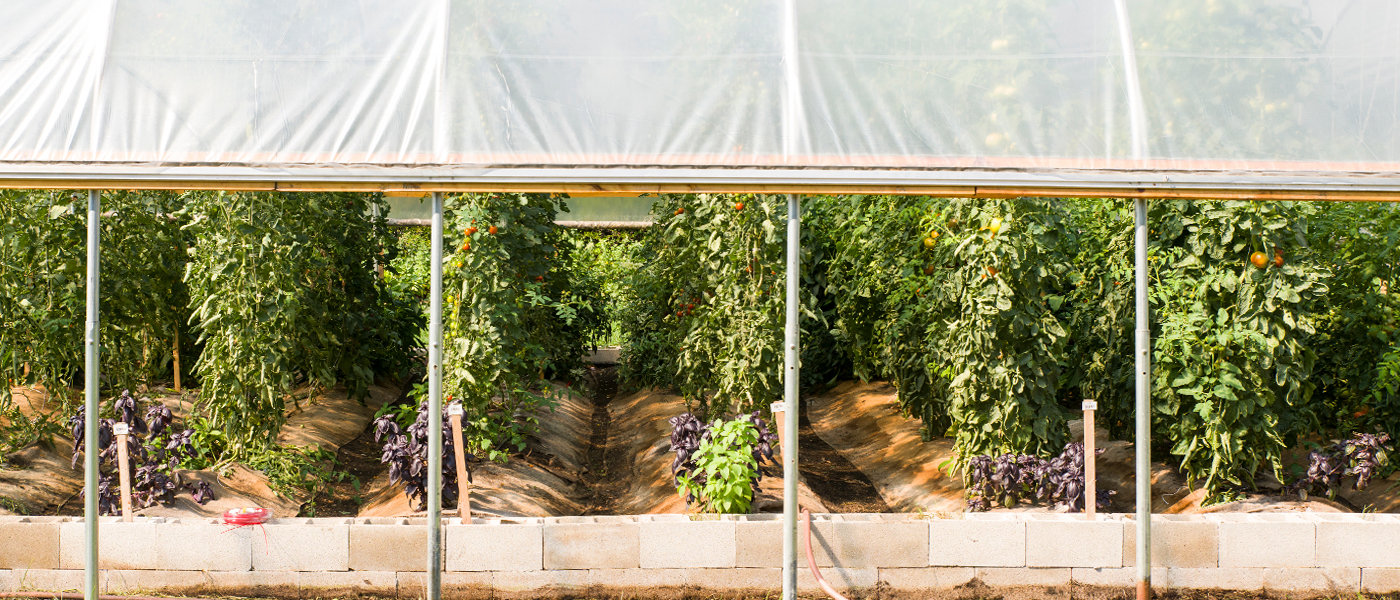
Hoophouses greatly increase vegetable production—they're mainstays at all of our Windy City Harvest locations.
Hoophouse
A hoophouse, either in-ground or attached to a raised bed, is a manageable way to try it. Along the way, you might find that a hoophouse has extra benefits for your garden, too.
Raised beds at the Fruit & Vegetable Garden are equipped with practical brackets/pipe segments for hoops to fit in.
Think of a hoophouse as a lightweight mini-greenhouse without the glass. A sheet of heavier plastic, draped over wire or plastic pipe arches creates the following benefits:
- holds in heat;
- keeps the soil warmer for longer;
- limits weather damage;
- helps hold in moisture; and
- is easy to take on and off and to store.
At the Regenstein Fruit & Vegetable Garden, raised beds are built with simple hardware to hold a hoophouse in place. Two ¾-inch in diameter PVC curved pipes simply slide into 1-inch in diameter pipe segments bracketed to the sides of the 4-foot by 8-foot beds.
As the regular growing season draws to a close and nighttime temperatures dip toward frost, an 8-foot by 16-foot garden blanket is fitted over the arches, then weighted down along the outside of the raised bed by bricks or boards. It’s a flexible system that can benefit the home gardener in every season:
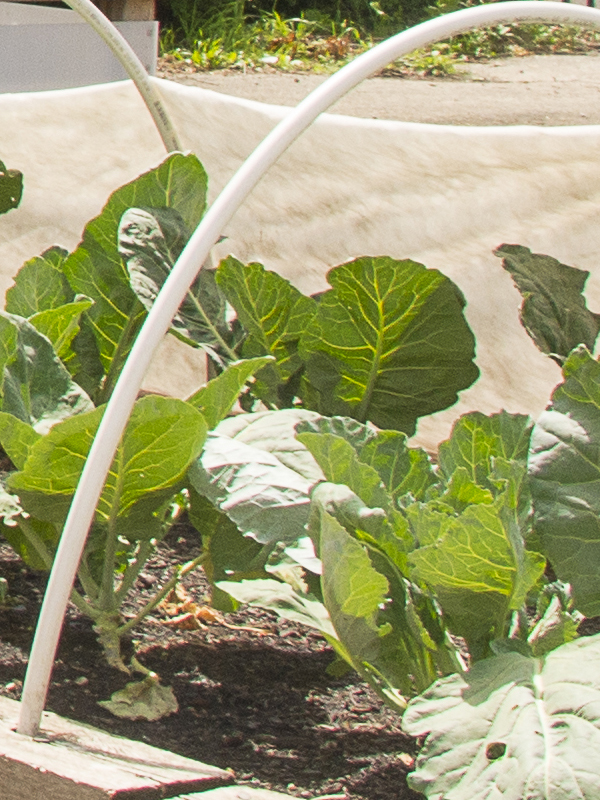
Ready to raise a hoophouse? Mine is planted with spinach, strawberries, kale, and a few of the hardier lettuces—a grand experiment for this winter and next spring!
- A hoophouse extends the harvest. Eat fresh vegetables a month later into fall (November) and a month earlier in spring (March). The heat trapped inside warms the soil enough to keep growth going.
- A hoophouse protects plants from wind, frost, snow, or ice. That’s true not only for plants in the soil, but also for hardy plants in containers that you want to protect. Here at the Garden, our dwarf blueberry bushes, which live in large containers all year long, spend the winter in an unheated hoophouse.
- A hoophouse jump-starts overwintered vegetables. A late-season crop of carrots, onions, and greens can be left in the ground to overwinter…then continue to grow more as temperatures re-warm next spring.
- A hoophouse becomes a handy greenhouse for growing and hardening off baby transplants in spring.
- A hoophouse can do summer duty, too. Lighter-weight garden blankets or fabric cloth can be draped over hoops for insect protection. Cover low tunnels or raised beds to protect young cucumber transplants from cucumber beetles, or squash from squash bugs. Remove the covers as flowers bud, so that bees can find them for pollination. Hoops can also hold shade covers (mesh cloths that cut the amount of direct sunlight) on blazing summer days.
While do-it-yourselfers have long rigged their own versions of hoophouses, more nurseries, websites, and catalogs are offering a host of infrastructures and coverings. Two resources we use: Territorial Seed Company offers good suggestions for beginners, while Johnny's Selected Seeds goes deep with a full range of season-extension supplies.
Karen Zaworski is a garden writer and photographer who lives and gardens in Oak Park, Illinois