Plants & Gardening
Garden Stories
Stories in the Soil
Black American gardeners, growers, chefs, and historians on what it means to grow, remember, and reclaim
When Angela Taylor, wellness director for the Garfield Park Community Council, thinks about growing food, she thinks about freedom.
She remembers coming home one summer evening after fishing with her family. Her daughter had a friend with them, and as they pulled up to the house, the friend asked whether they needed to go to the grocery store.
They didn’t.
They walked into the garden, picked lettuce and tomatoes, and made a meal with the fish they had caught. “We didn’t have to ask or pay the store,” Taylor recalls. “We caught a harvest.” Six people ate until they were full.
That experience has stayed with her because it captures something larger than convenience.
“Independence,” Taylor says. “That’s truly what it means to me.”
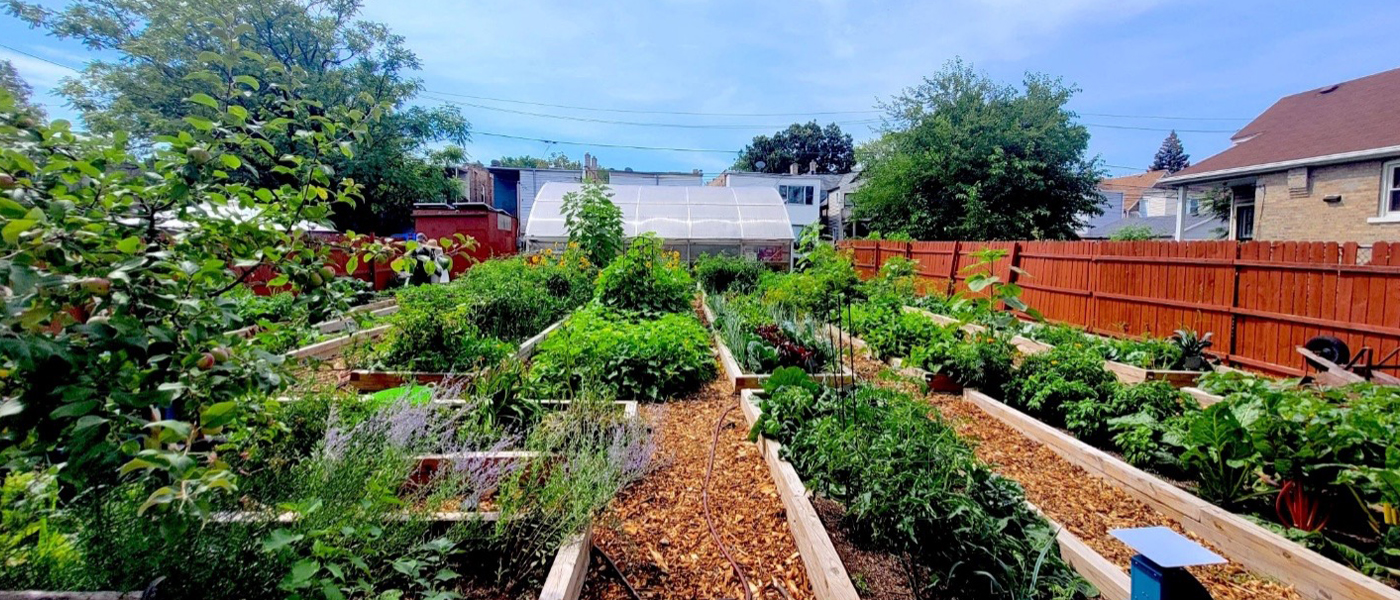
The Fulton Street Flower and Vegetable Garden. Angela Taylor’s community garden on Chicago’s West Side, brings food access, neighborhood wellness, and community care into one growing space.
For generations of Black Americans, the relationship between land, food, and freedom has been deeply personal. It lives in backyard gardens, vacant lots, seeds passed from hand to hand, pots of greens cooked low and slow, and the memory of elders who knew how to coax nourishment from the ground.
Many histories of Black Americans and land begin with forced labor, sharecropping, migration, and land loss. Those histories matter deeply, but the fuller story also includes skill, adaptation, abundance, and care. It includes people growing what they needed, feeding whom they could, and carrying knowledge forward even when land, resources, and recognition were denied.
This history of growing, feeding, remembering, and reclaiming is at the center of an upcoming Chicago Botanic Garden panel featuring Taylor, Monica White, Ph.D., and chef Fresh Roberson, whose work brings together scholarship, community wellness, farming, food justice, and care.
Dr. White, author of Freedom Farmers, studies Black food sovereignty, collective action, and the ways Black communities have used agriculture as a strategy for self-determination. Taylor works on food access, community gardening, and youth development, focusing and focuses on bringing more fresh food resources to Chicago’s West Side. Roberson, a chef, farmer, founder, and community builder, works across farming, mutual aid, hospitality, and food justice, using land and food as what she calls “a pathway for our collective liberation.”
Together, they trace a fuller story of Black Americans’ relationship to land, one that moves from ancestral memory to neighborhood action, from family recipes to collective care.
White’s work asks readers to look beyond narratives of loss alone. In her research, she has found a long history of Black communities returning to agriculture in difficult times to feed themselves, their children, and their communities. She also points to histories of provision gardens and spaces such as New Orleans’ Congo Square, where growing, exchange, gathering, and cultural practice were all part of Black life.
On Chicago’s West Side, Taylor sees those ideas in daily practice. Her work connects food access, community gardens, youth development, and neighborhood wellness, with a vision centered on more growing spaces, more abundance, and more opportunities for residents to work together. As she puts it, “If there was a community garden in every three-block radius,” access would begin to look very different.
Roberson carries the conversation from land to table. Through food, farming, hospitality, and mutual aid, she thinks often about what happens when people share a meal and the way food can create connection, hold memory, and help people feel seen. When the work is working, she says, people feel “worthy, and cared for, and honored.”
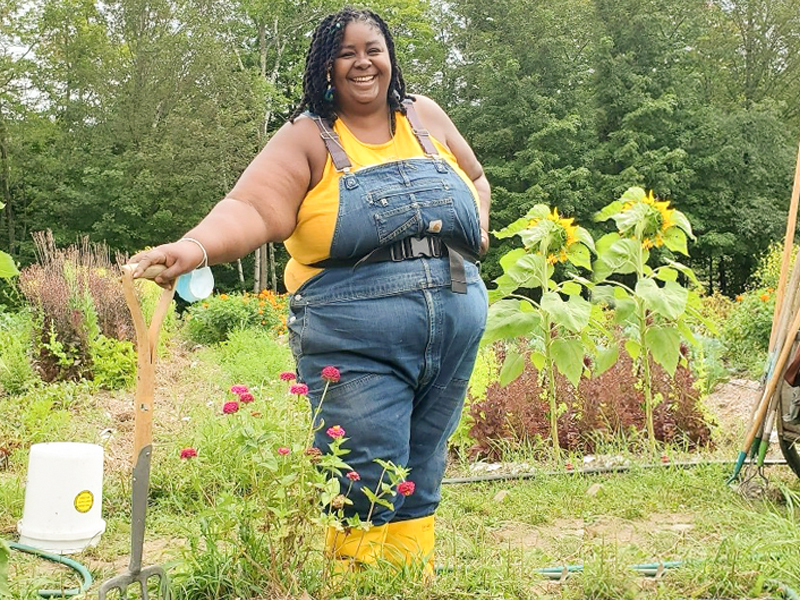
Chef Fresh Roberson in the garden, where her connection to land and food informs her work as a chef and storyteller.
Photo courtesy of Angela Taylor
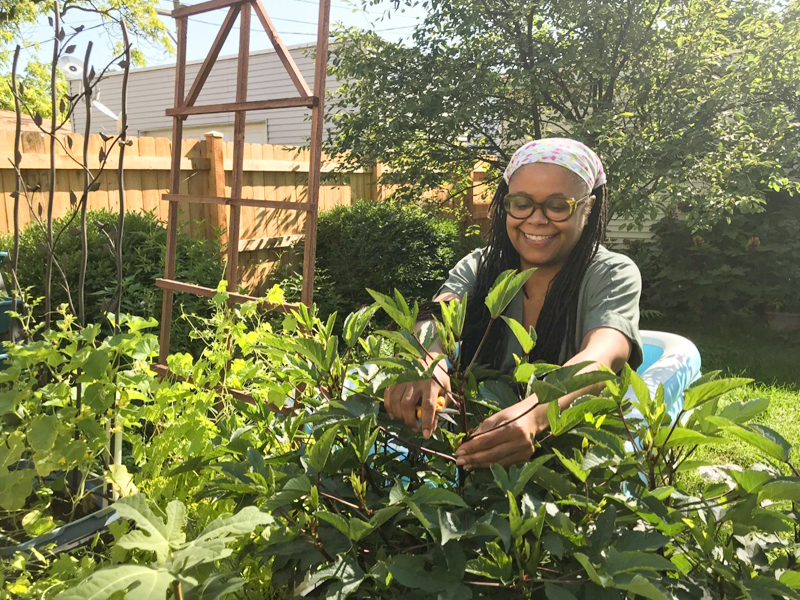
Tequia Burt prunes roselle in her Chicago backyard garden, where she grows crops connected to Black foodways, memory, and celebration.
Photo courtesy of Tequia Burt
These stories resonate with my own. Every year in my Chicago garden, I grow at least one Black American heirloom crop. I have grown okra, roselle, collards, peppers, and other plants that connect me to a larger history of Black foodways and seed saving.
Some of my earliest memories are of my grandmother setting big pots of collard greens on the stove to stew, filling the house with that earthy, vinegary, peppery fragrance. Her family came from Mississippi, and like many Black families who came north during the Great Migration, she carried pieces of the South with her.
Across these conversations, growing food emerged as a way to feed families, remember ancestors, build neighborhoods, reclaim agency, and care for one another.