Plants & Gardening
Garden Stories
Sally’s Sassafras
A botanical discovery hiding in plain sight for more than 80 years
Sally Hagan has lived in her Kenilworth home since 1940. She has watched her neighborhood change around her. Through it all, a cluster of wild trees in her backyard kept sprouting. Her late brother, Jim, had loved those trees. Beyond her personal attachment, she never suspected they were a rare piece of natural history worth preserving.
Then last fall, Sally sat down next to the right person at a Chicago Botanic Garden donor event. Within minutes, the conversation turned to these trees that had persisted along her fence lines all these years. “Her eyes lit up," Sally says of the woman she spoke with. “She said, ‘Come talk to Sally. She's got magic in her yard.’”
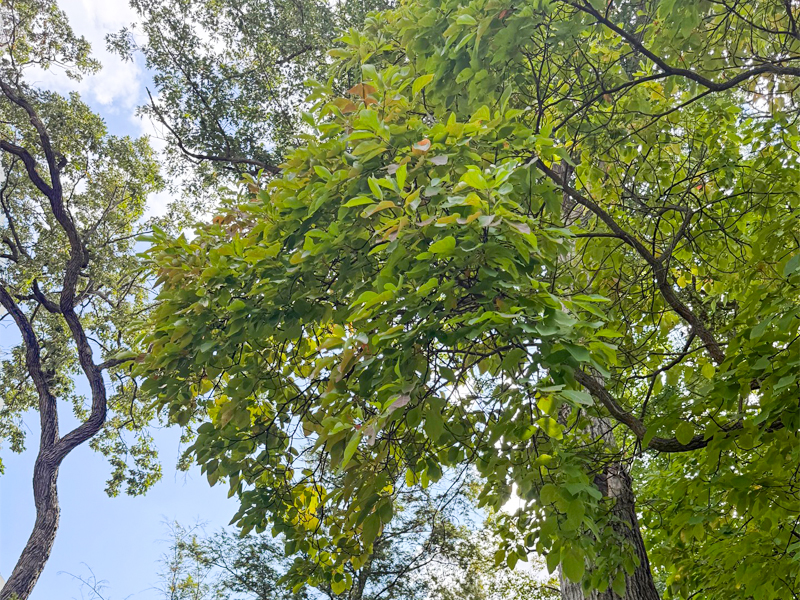
Sally’s backyard sassafras trees in October
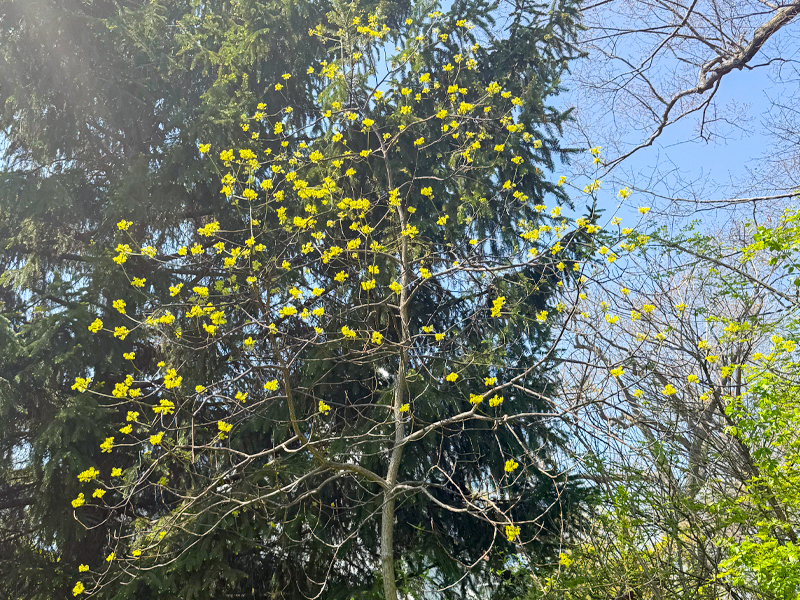
Sassafras tree blooming flowers in April
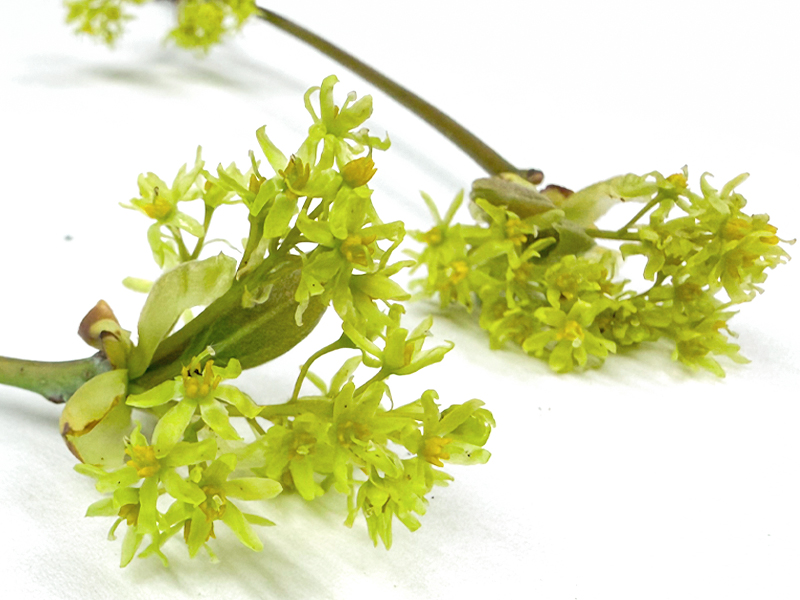
Close-ups of sassafras flower specimens Adam Dooling collected from Sally Hagan's tree to be processed and preserved in the Herbarium
The trees were sassafras (Sassafras albidum). They’re not unusual in themselves, but deeply unusual here. A 1926 book by naturalist Marcus Woodward declared there were no sassafras west of Lake Michigan. When Sally’s late brother Jim read the book in the fifties, he invited the author to the house to show him otherwise. After the visit, Woodward made revisions.
Jim was, by Sally’s account, one of those rare people who notices everything. He could hold a conversation with an astrophysicist, a botanist, or a philosopher with equal fluency. He was the one who, on any walk or drive, would insist on taking a different route, always something new to see. “He was a huge influence in my life,” Sally says. “I became interested in all these plants because of him. Everything makes me curious now.”
Jim identified the sassafras as potentially significant. He made sure they had space to grow and for decades they did. “Jim made it his mission to make sure they weren't cut down,” Sally says of her brother caring for trees that many homeowners remove without a second thought.
Sally has recently sold and moved out of her childhood home of eight decades. She doesn’t know what might become of the trees, so it was perfect timing that she was recently connected with Adam Dooling, director of plant collections at the Garden. Dooling visited Sally’s property to see these special trees before she moved. He confirmed Jim’s suspicions that they appear to be naturally occurring rather than planted.
“It shows us that we don't have to go into the wilderness to find important plants,” Dooling says. “There are things that are wild and locally native that are important parts of the natural history here. Besides that, sassafras is just a great native plant with beautiful fall color and importance for a lot of other creatures and insects. I encourage anybody to plant it if they can.”
Dooling and his team took vouchers—pressed specimens of branches and leaves—for the Garden's Nancy Poole Rich Herbarium, which will be available to any researcher studying sassafras for years to come.
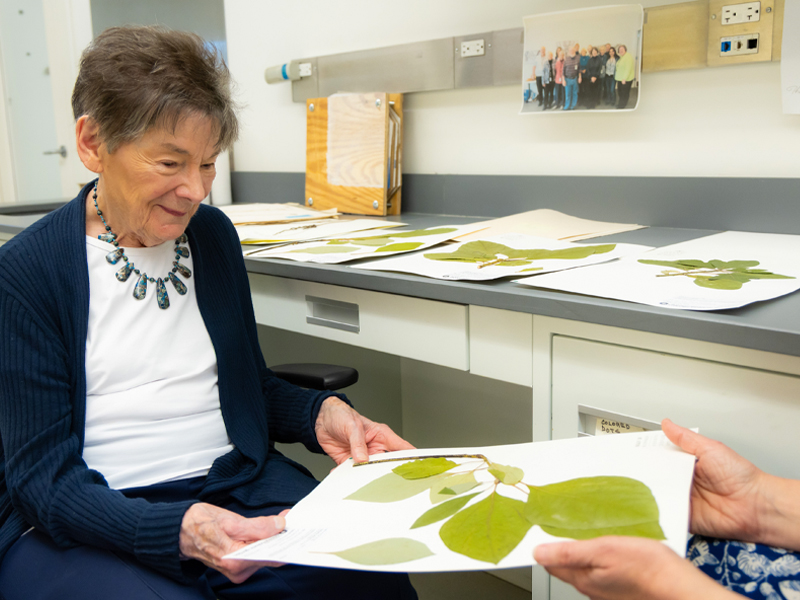
Sally Hagan visits the Nancy Poole Rich Herbarium to see the sassafras vouchers, or pressed specimens of branches and leaves.
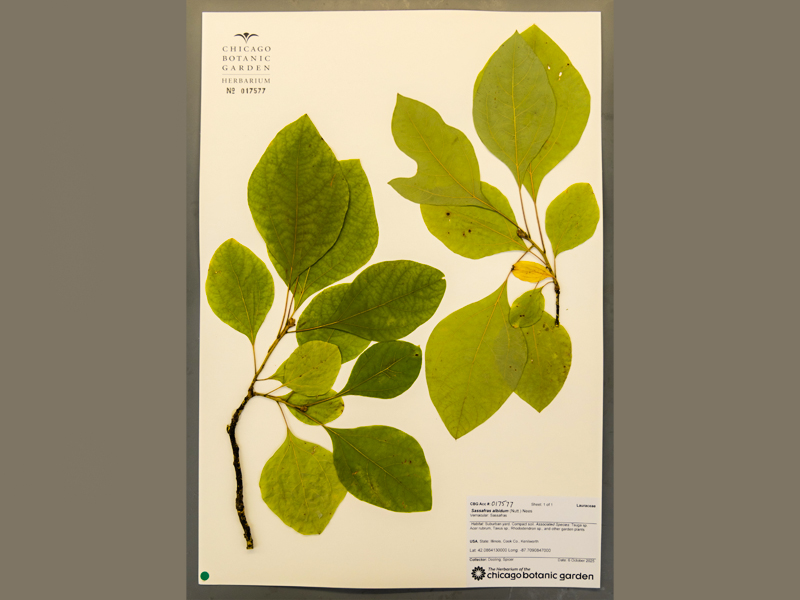
Shown is the close-up of the sassafras voucher.
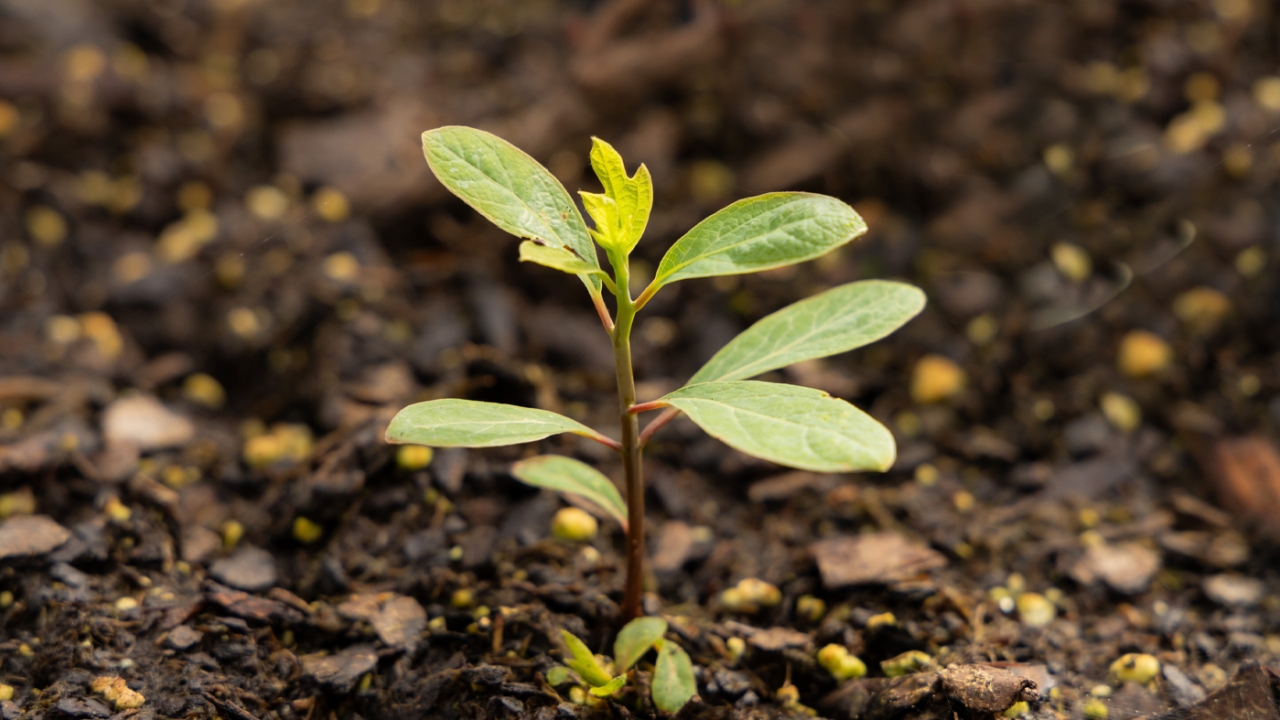
They also took root cuttings to grow in the Robert F. Finke Greenhouses, perhaps to one day join the permanent tree collection that blankets every corner of the Garden. The saplings are living evidence of a historic plant population that may otherwise disappear when Sally’s home changes hands.
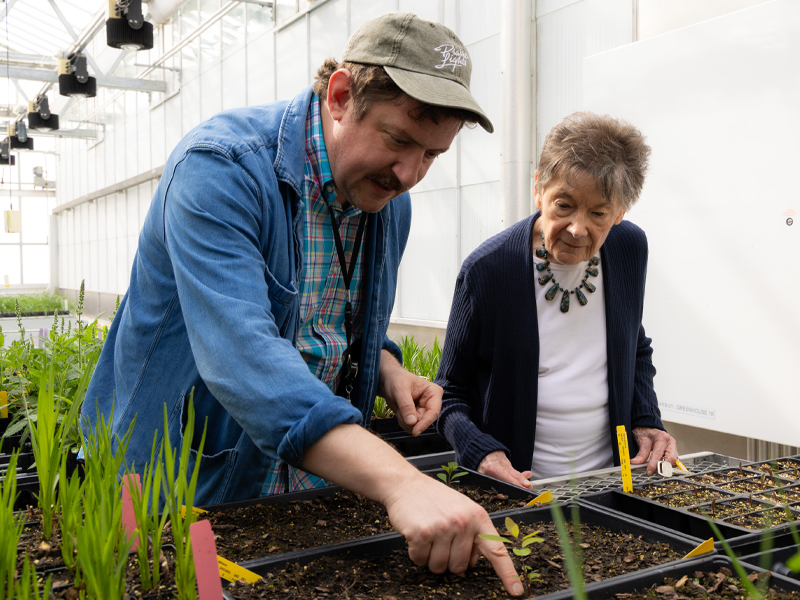
Sally Hagan visits the production greenhouses where Adam Dooling shows Sally the sassafras seedlings coming up.
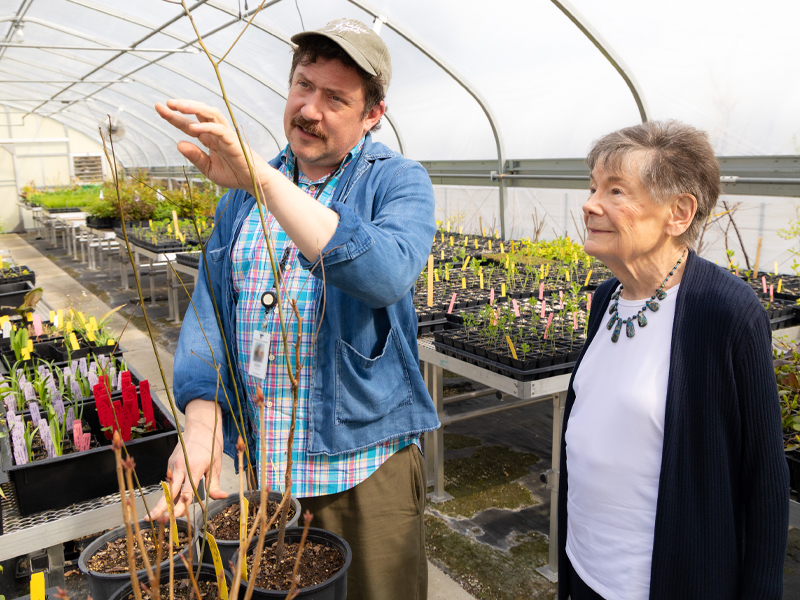
Adam Dooling showing Sally the saplings growing from root cuttings of her plants.
“Jim was the kindest, most brilliant person I ever knew in my life. In a way, these are Jim’s sassafras. Now that I know how special they are, I'm just really proud that we saved so many,” says Sally.
Sally has supported the Garden as a donor for years, particularly the College First program, which connects underserved students to science careers. The through-line is unmistakable: she hopes to inspire in someone else what Jim inspired in her.
“I never would have been interested in any of this except for my brother,” she says. “He made me realize that the things around you might be unusual. He taught me to pay attention.”