Plant Science & Conservation
Garden Stories
Bonsai as Conservation Ambassadors
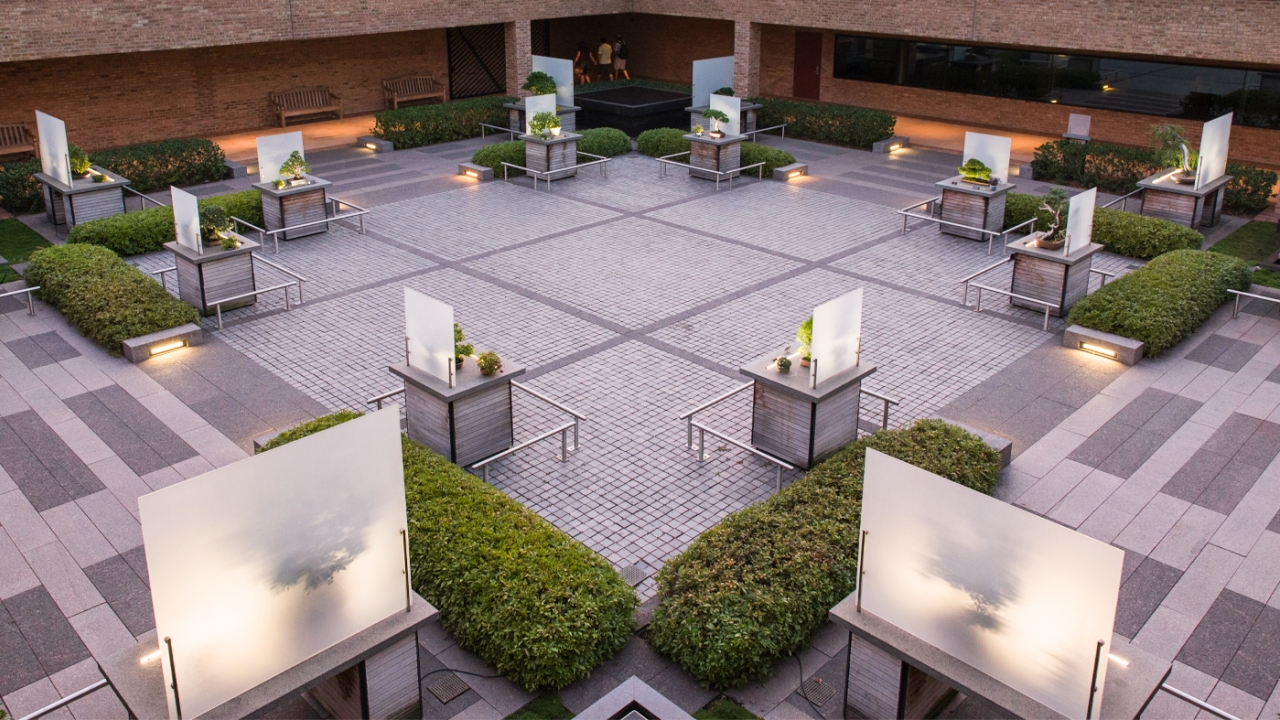
Look up. A limber pine on a mountaintop can stretch five stories into the sky over hundreds of years. Now look down. The one in the Regenstein courtyards fits on a tabletop.
Bonsai are miniature living artworks meant to represent and carry the story of their full-sized counterparts. Three of them in the Garden’s collection are also ambassadors for scientific efforts to protect their species from extinction, a weighty role you might not expect for something you could hold in your arms.
Nearly one-third of the world's tree species are threatened with extinction. Losing them would disrupt ecosystems and sever relationships between species that have evolved together over millennia. Three bonsai in the courtyards represent a species at a crossroads, and each one is tied to scientific research at the Negaunee Institute to help pull them back from the edge. These bonsai are ambassadors for conservation.
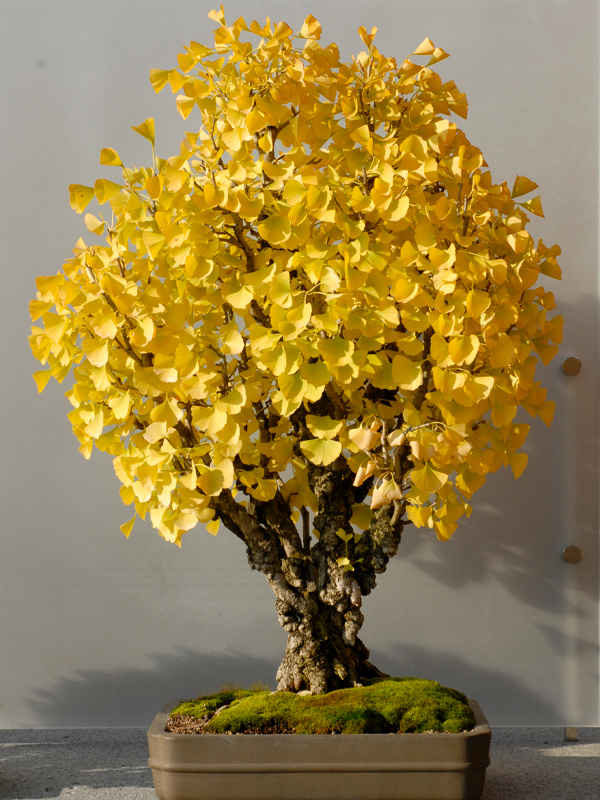
Ginkgo biloba bonsai
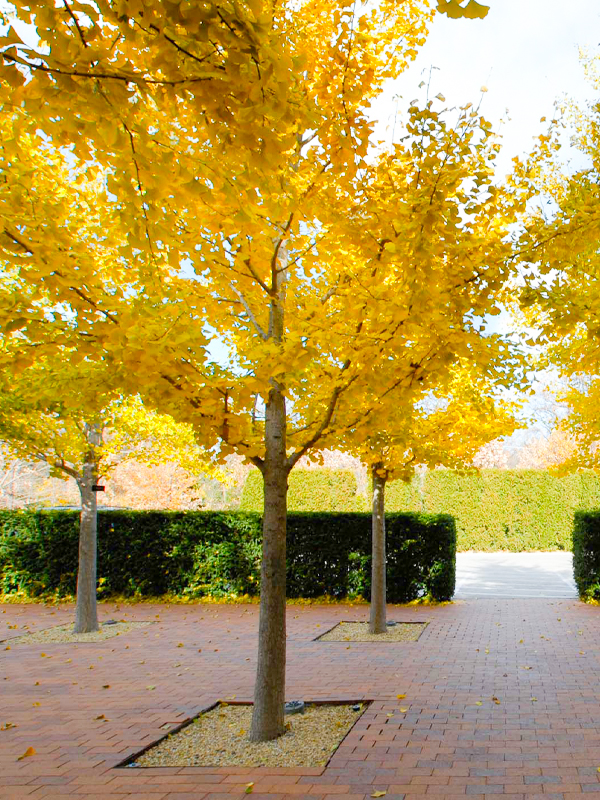
Ginkgo biloba
The ginkgo biloba has existed since before the dinosaurs. Today, this “living fossil” is endangered in its native China. Yet, it lines streets across North America, prized for its fan-shaped leaves and tolerance for pollution and compacted soil.
This tree exists in a paradox: common everywhere, but imperiled at home.
The contradiction may be an opportunity. Dr. Natalie Love, conservation scientist at the Negaunee Institute, and colleagues mapped more than 380 threatened tree species across 525 cities in 36 countries, asking a critical question: are cities inadvertently safeguarding genetic diversity that could help these species adapt and survive?
Urban trees, once planted, become part of a living ecosystem: shading pavement, supporting wildlife, filtering air, cooling neighborhoods. The research could reshape nursery practices and city planting strategies, strengthening both urban forests and the threatened species within them.
Explore the research
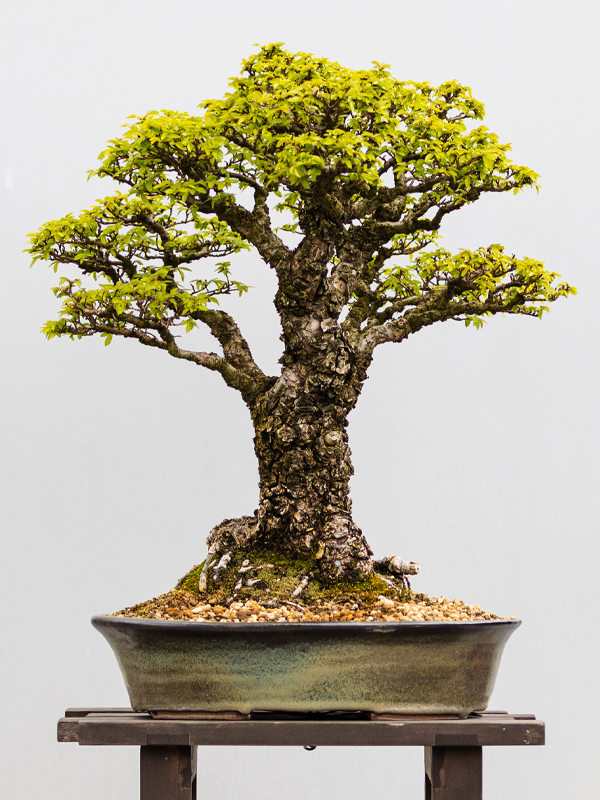
Cork bark (Ulmus parvifolia 'Cork Bark') bonsai to represent the American elm
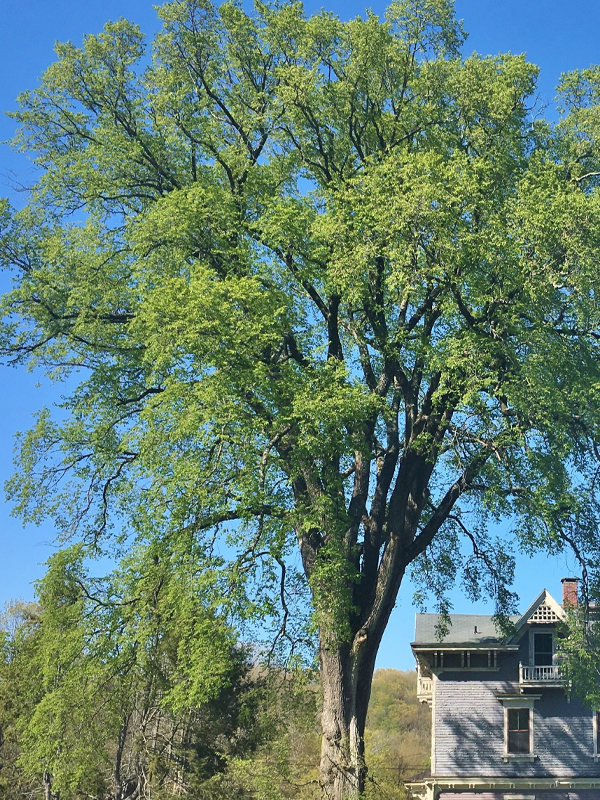

For most of the twentieth century, the American elm was the tree of the American street. Its arching canopy lined boulevards from New England to the Midwest. Then Dutch elm disease arrived and claimed 50 to 100 million trees by the 1980s.
The loss wasn’t only aesthetic. The elm is a dominant species, meaning when they disappeared, invasive species moved into the newly open canopy. Some forests morphed into marshland. Others lost their ability to absorb floodwater, triggering erosion. A single species gone, and an entire web of relationships unraveled with it. The American elm is now endangered.
But some elms survived the disease. That’s where master’s student Marné Quigg comes in. Working alongside the U.S. Forest Service and Negaunee Institute scientists, Quigg is tracking down these “survivor elms” scattered across the country. By analyzing their DNA, she can identify a blueprint for planting the next generation of American elm forests to be more resilient, more diverse, and perhaps better prepared than the ones we lost.
The bonsai-sized elms in this courtyard have been thriving for years. Quigg is working to make sure their full-sized counterparts can say the same.
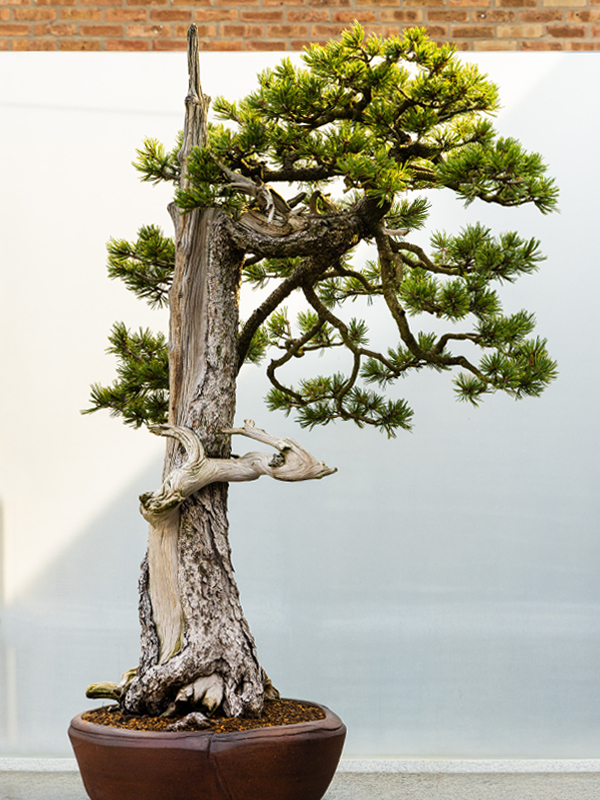
Limber pine bonsai
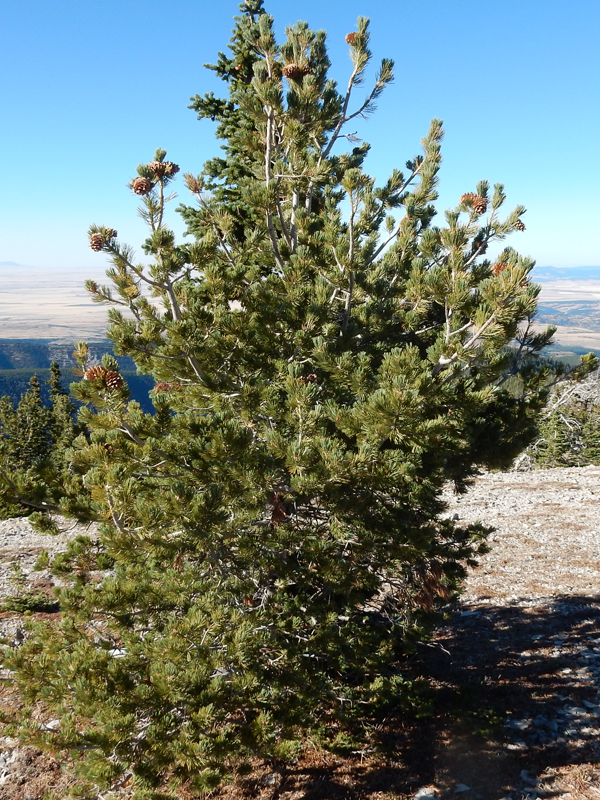
Limber pine
Photo: By Matt Lavin, Flickr (CC BY-SA 2.0).
The limber pine bonsai is estimated to be between 600 and 1,000 years old. The DNA held in this tree’s cells carries a record of what its species looked like across centuries of climate, drought, and change. It is a living archive of a world before any person now alive was born.
Researchers are only beginning to understand how bonsai like this one, preserved across generations with extraordinary care, might function as genetic repositories for species whose wild populations are shrinking. If scientists collect pollen from these trees, they may be able to fertilize specimens in other collections. This work depends on a broad genetic pool. Breed from too narrow a base, and the risk of inbreeding grows.
Isolated collections, maintained without coordination, can quietly lose the diversity that makes reintroducing vulnerable species into the wild viable.
That’s why Garden scientists helped develop the “plant studbook” approach, a method for documenting and sharing the family tree of a species so that breeding decisions can be made with the whole picture in mind. The questions are open. This tree, and other rare beauties like it, may hold some answers.
Go deeper: visit the exhibit or join a bonsai class at the Regenstein School to learn the art firsthand.
What does it take to prepare a bonsai to be an ambassador?
Bonsai curator Chris Baker says that his job is not to invent a tree, but to listen to one. “I’m going for realism,” he says. “For me, that’s about imagining how that particular tree would grow in its habitat.” Every decision—the angle of the trunk, the direction of a branch, the depth of the container—is made in conversation with what the tree is already trying to become while taking into consideration the impact a given environment will have on a tree's growth.
That conversation, though, allows for some creative liberties. Baker controls the tree’s water, its nutrients, the direction and length of each branch. If he plants a bonsai in a shallow pot, it will spread its roots laterally rather than driving them down. He can prune, wire, and push the tree's resource management to its limits in pursuit of the smallest, tightest, most vivid version of itself. “The best bonsai trees in the world can be on a razor’s edge of being perfect and not being healthy anymore,” he says.
And yet the tree has the final word. “The style is derived from the species,” Baker explains. Force a horizontally growing tree into an upright form and it will spend the rest of its life trying to return to what its DNA wants. Work with the tree’s natural growth habit, and it will develop faster, grow healthier, and hold its form more readily. “Just lean into what the tree wants to do,” he says. The best bonsai aren't conquered; they're collaborators.
The artwork is never finished. Each tree in this courtyard is a snapshot in a life that is still unfolding. As Baker puts it: “The only finished bonsai is a dead one.”