
On-Site
Workshops
On-Site Workshops
Grades: preK – 12
Monday – Friday, 10 or 11:30 a.m.
$150 per class | Learning Center
Maximum class size per program: 25 students, 5 adults
Capacity: four simultaneous groups per time slot
Field trip workshops are 45- to 60-minute investigations of phenomena related to Next Generation Science Standards (NGSS). These are available at 10 or 11:30 a.m. (maximum four simultaneous programs per time slot). Workshops include an indoor lunch space for your group after the workshop.
Field trip workshops must be booked a minimum of three weeks in advance; full payment is due at time of scheduling. Select a workshop topic at checkout.
Before or after your workshop, explore the rest of the Garden with your class. Small, chaperoned groups may visit the Model Railroad Garden (early May through early October) and Butterflies & Blooms (Memorial Day weekend through Labor Day weekend) free of charge.
Note: Exhibition entry is first-come, first-served and based on availability. Only small, chaperoned groups will be admitted at a time and entry ticket must be shown at the ticket booth. On busy days, expect there to be a wait. Exhibitions are open daily, weather permitting.
If you have any questions, please email or call the Registrar's Office at (847) 835-6801.
Preparing for Your Visit
Come prepared for your learning experience in the Garden. Explore the Garden online before your visit.
View recommended Garden areas for school groups.
Some students may benefit from reading a social story, My Visit to the Chicago Botanic Garden (in English or Spanish) before their visit.
Registration
Fall 2026
September 8 – November 20
(no programs October 12 & November 11)
Fall Workshop Offerings
60 minutes each
Discovering Plants
Grades preK – K
30 – 45 minutes
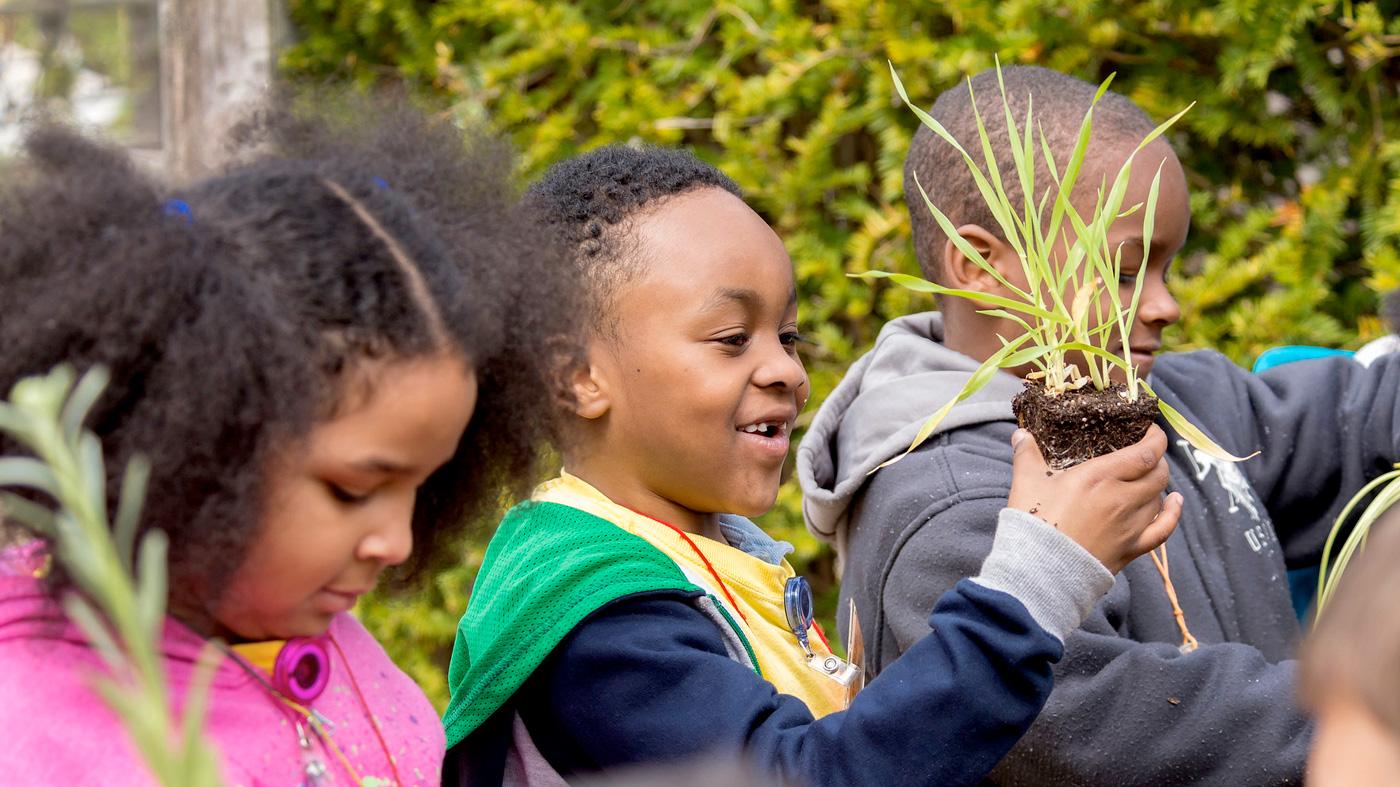
How do the parts of a plant help it get the things it needs to grow? Transplant a flowering plant and get ready to take care of it at home.
IELDS: Science Learning Standards 12.A and 12.B
NGSS: K-LS1-1, K-ESS3-1
Terrific Trees
Grades K – 1
What do plants need to survive, and how do they get it? Investigate trees around the Garden and find patterns to learn how plants use their structures to survive.
NGSS: K-LS1-1, K-ESS3-1, 1-LS1-1
Surprising Seeds
Grades 2 – 3
How do plants magically appear in new spots? Seeds have amazing ways to get around. Compare seed structures and functions and test different ways seeds disperse.
NGSS: 2-LS2-2; 3-LS4-3
Carnivorous Plants
Grades 3 – 5
What’s going on with these plants that eat bugs? Meet sundews, pitcher plants, and Venus flytraps and discover why carnivorous plants have adaptations to trap insects. Set up a classroom experiment to understand what plants need to survive.
NGSS: 4-LS1-1; 5-LS2-1; 3-LS3-2
Pond Life Investigation
Grades 3 – 5, 6 – 12
Only September 8 – October 30
What lives in a pond ecosystem? Find and identify organisms found in the Garden’s lakes and assess the water quality by measuring the biodiversity of organisms. Learn how certain species are indicators of heathy water.
NGSS: 3-LS4-3; 4-LS1-1, 5-LS2-1MS-LS2-4; HS-LS2-2; HS-LS2-6
DIY Hydroponics
Grades 6 – 12
Can you make a system to grow plants in water? Discover the basics of growing plants in water, consider the factors that go into engineering solutions to problems, and work with a Garden educator to build a small hydroponics system for your home or classroom.
NGSS: MS-LS2-4; MS-ETS1-1, 2, 3; HS-ETS1-1,2,3
Trees: Nature’s Climate Heroes
Grades 6 – 12
How do trees play a role in mitigating climate change? Get up close with some of the trees at the Garden and use real scientific methods to measure a tree’s carbon storage capacity. Reflect on the importance of urban forests as a tool for climate resilience and ecosystem services.
NGSS: MS-LS2-5; MS-ESS3-3; HS-LS2-7
Spring 2027
March 29 – May 28, 2027
Spring Workshop Offerings
60 minutes each
Science with your Senses
Grades preK – K
30 – 45 minutes
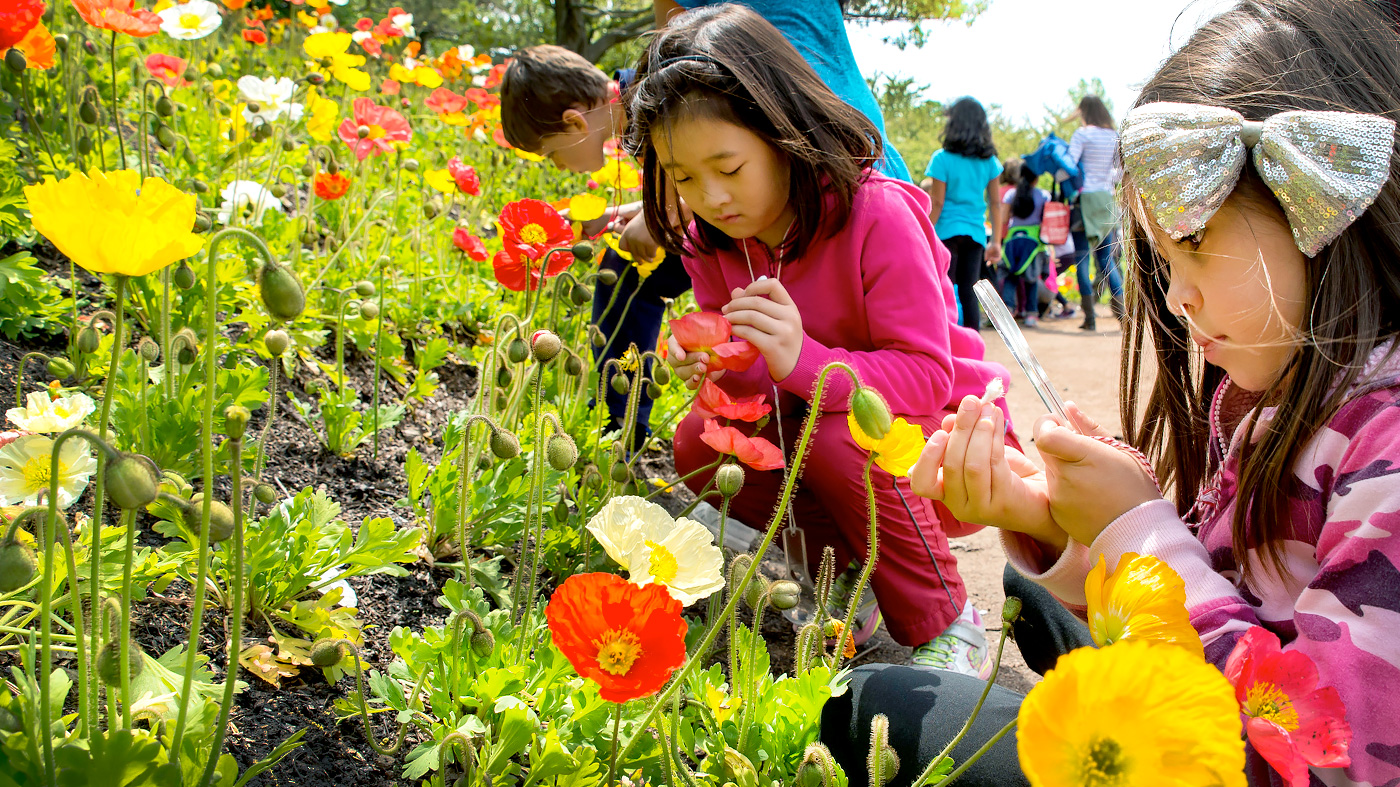
See, hear, smell, and touch the natural world! Practice science skills as you discover patterns in different plants around the Garden.
IELDS: Science Learning Standards 12.A and 12.B
NGSS: K-LS1-1
Wonders of Worms
Grades K – 1
What do you mean worms don’t eat dirt? Investigate worms’ structures to understand their needs, hypothesize about their habitat, and learn some surprising facts about these marvelous organisms.
NGSS: K-LS1-1, K-ESS3-1, 1-LS1-1
Flower Lab
Grades 2 – 3
What is the reason for a flower, and how does it do its job? Become scientists through a guided dissection of a real flower to look for patterns in form and function to hypothesize about how pollination works.
NGSS: 2-LS2-2; 3-LS1-1; 4-LS1-1
Tropical Plant Paradise
Grades 3 – 5
What makes tropical plants suited to their environment? Observe the characteristics of plants that grow in the tropics and explain how these adaptations help them survive in warm, humid conditions.
NGSS: 4-LS1-1, 5-LS1-1, 5-LS2-2
Pond Life Investigation
Grades 3 – 5, 6 – 12
Only April 12 – May 28
What lives in a pond ecosystem? Find and identify organisms found in the Garden’s lakes and assess the water quality by measuring the biodiversity of organisms. Learn how certain species are indicators of heathy water.
NGSS: 3-LS4-3; 4-LS1-1, 5-LS2-1MS-LS2-4; HS-LS2-2; HS-LS2-6
Propagation Foundations
Grades 6 – 12
How can plants grow without a seed? Investigate and experiment with different methods of plant propagation and discover how and why a plant has specialized structures to reproduce in different ways.
NGSS: MS-LS1-4, MS-LS3-2, HS-LS1-4, HS-LS1-2
If you would like to register for a Field Trip Program, please enter your unique school code supplied to your school or district. If you do not have your code, please locate it here, then click on your school’s link to register. If your school is not on the list, contact us to request a school code or call (847) 835-6801 with any questions.
Scholarship funding to cover the cost of the workshop is available on a first-come, first-served basis for qualifying schools. Visit the Chicago Botanic Garden scholarship application to learn more and apply.
BUS PARKING
Upon entry, the gatehouse attendant will direct you to your drop off and pick up location. Please make sure all teachers, chaperones, and bus drivers have a copy of the entry ticket to ensure free parking and admission to the Garden and exhibitions.