Plant Science & Conservation
Garden Stories
Every Plant Counts
The great lengths scientists go to save species from extinction and restore healthy habitats
Every landscape healed and plant species saved from extinction is the result of someone doing something painstaking: counting, hand-pollinating, nurturing fragile seeds to sprout. This Earth Day, we’re celebrating the quiet, stubborn, meticulous work our scientists do every day.
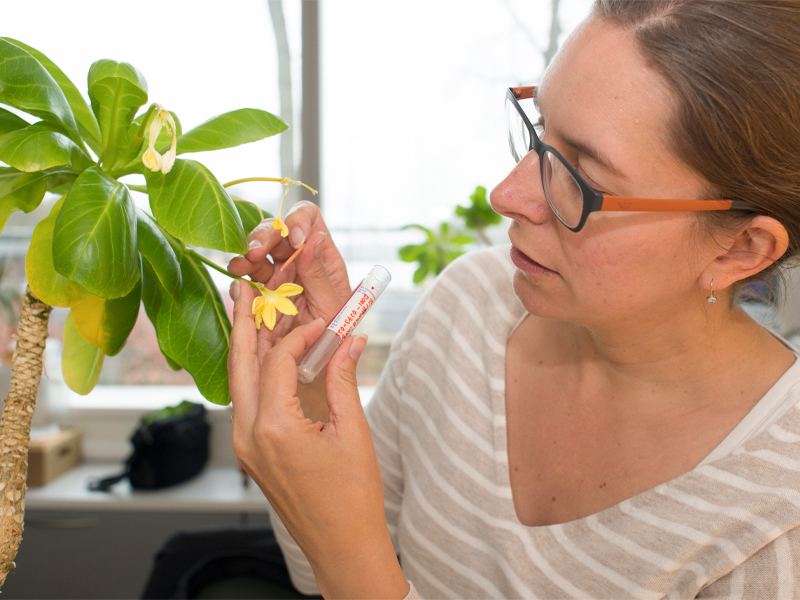
Hand pollinating the extinct-in-the-wild alula
The alula (Brighamia insignis) has been pushed to the very edge of existence, and so has the moth that once pollinated it. With its natural pollinator gone, Garden scientists now step in themselves, transferring pollen by hand, flower by flower, to give the species a fighting chance. They’re also partnering with botanic gardens around the world to manage breeding across living collections, ensuring that the alula’s last survivors remain genetically diverse and resilient.
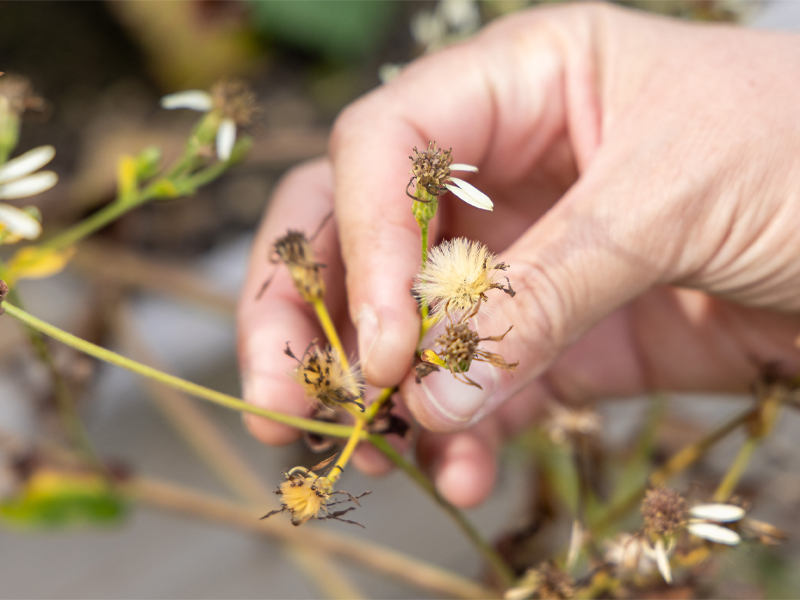
Harvesting native seeds by hand
A nationwide shortage of native seed is slowing down restoration work at exactly the moment it needs to speed up.
The Seed Amplification Program, a first-of-its-kind initiative developed by a botanic garden and local government, is working to close that gap one harvest at a time.
Every seed in the program is harvested by a person, and every species demands its own approach. One species, when touched, explosively launches its seeds into the air. So the harvest team rigged a special vacuum tool to catch them before they’re gone. Other plants require clipping entire seed heads and shaking out tiny seeds. After harvest, the seeds are cleaned by hand, then sown.
This year alone, more than 100,000 seeds passed through human hands on that journey. Each one was a small, deliberate act in the larger work of putting native landscapes back together.
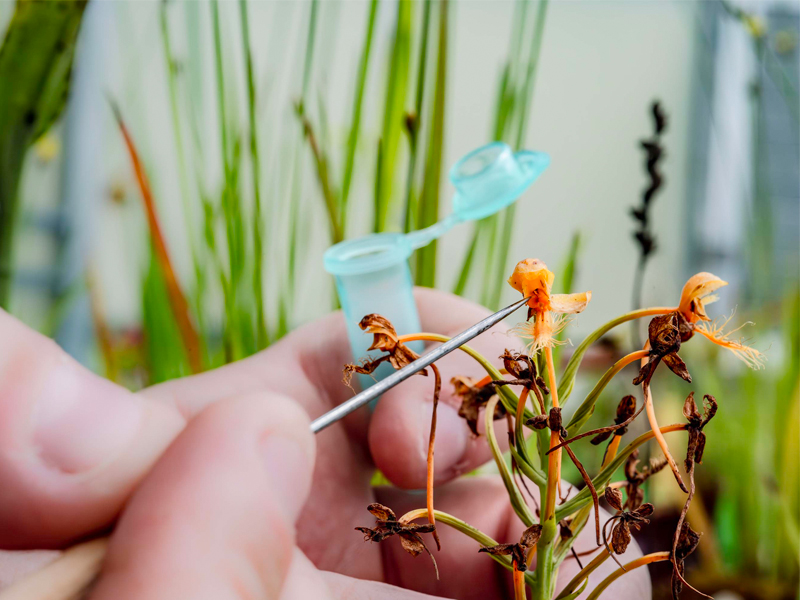
Unlocking the mystery of propagating wild orchids
More than half the world’s orchid species could vanish within this century, lost to climate change, habitat destruction, invasive species, and poaching. Garden staff are working to change that. But growing native orchids and returning them to the wild is far more complicated than it sounds.
It starts in the field. Finding rare orchids means traversing swamps and wilderness, timing each trip to the exact days a species is in bloom. Then comes the delicate work of collecting seeds so small they look like dust. Back in the lab, germinating those seeds often requires a specific mycorrhizal fungus partner. But for most species, no one knows which fungus that is. Scientists test combinations one by one, in sterile conditions, until something works.
Successfully germinated plants move into greenhouses to be grown and eventually returned to the wild. One plant can take more than a year from seed to greenhouse. Some species take two to ten years from seedling to first bloom. To truly understand what works—well enough to share findings with the world—that process needs to be repeated ten times per species. There are 230+ orchid species native to North America, and more than 30,000 native species worldwide.
Finding and nurturing these hidden relationships, species by species, is the only way forward.
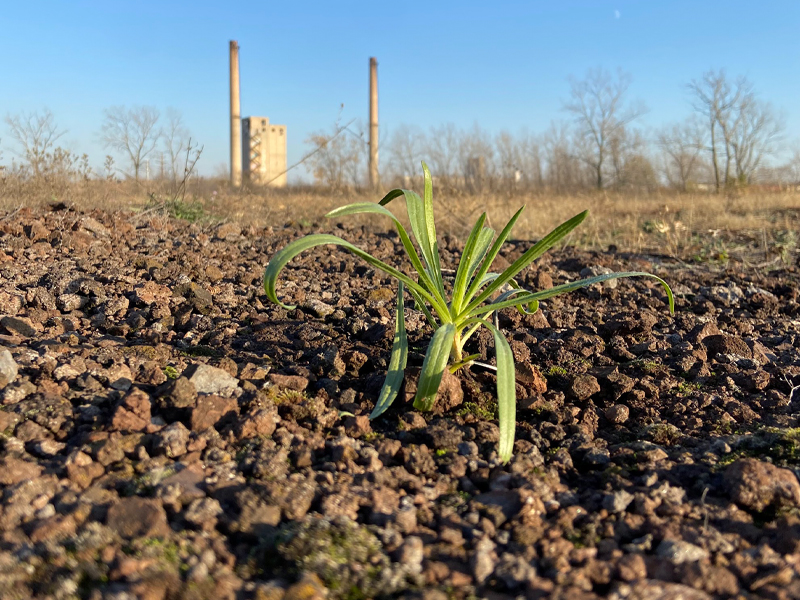
Finding new habitats for long-lost species
The lakeside daisy hasn't been seen in Illinois for more than 40 years, its habitat nearly erased by quarrying. But a local wetland, scarred by decades of industrial waste dumping, strangely echoes the chemistry of that lost landscape. Could a place written off as beyond repair become a refuge for species with nowhere left to go?
To test the theory, scientists needed seeds—no easy feat for a plant so rare and protected they’re nearly impossible to obtain. Thankfully, the Garden’s Seed Bank held a small supply, collected decades ago.
Tests followed. Forty-four plants proved hardy enough to transplant. Then a brutally hot spring day arrived, and only one survived. Park district staff built a cage around it for protection.
That single caged daisy is not a failure—it’s a data point, and a beginning. Scientists are continually adapting, learning what this species needs to come back. It’s a future made possible by refusing to give up on places and plants, no matter the setbacks.
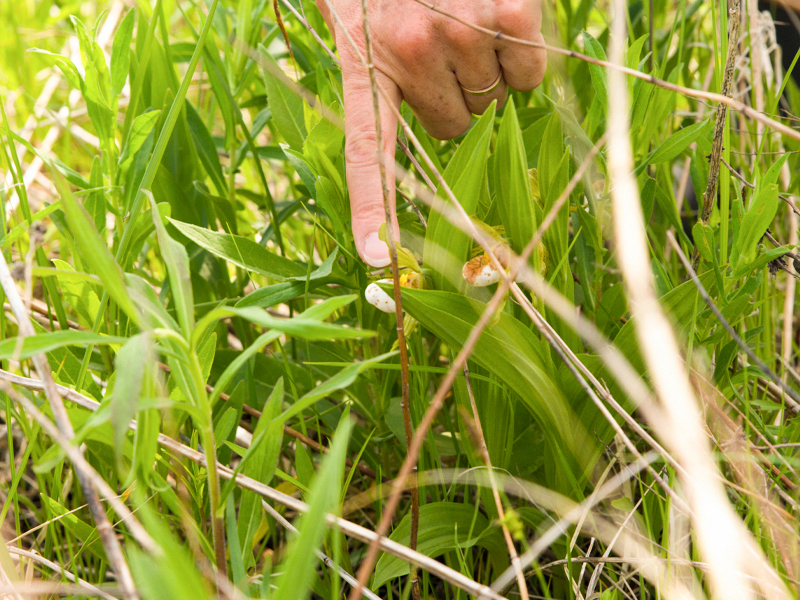
Counting rare plants in Illinois
You can’t protect what you haven't found. Plants of Concern, a community science program at the Garden, trains volunteers to fan out across Northeastern, Northwestern, and Southern Illinois—searching for rare plants, counting each one, checking whether they’re reproducing, and reporting back to the land managers working to restore their habitats.
It’s slower work than it sounds. Some volunteers drive hours to reach remote land reserves, then hike into hard-to-reach spots across steep prairie hillsides or swampy lowlands. In Cook County alone, more than 550 rare plant populations are scattered across 70,000 acres of forest preserves—far more than staff could visit on their own. And this isn’t a one-time survey. The same sites must be revisited year after year, because a population that’s stable today may be struggling tomorrow.
In muddy boots and thorn-snagged pants, these volunteers are filling essential gaps. Without their commitment, hundreds of struggling plant populations would go unnoticed, uncounted, and undefended.
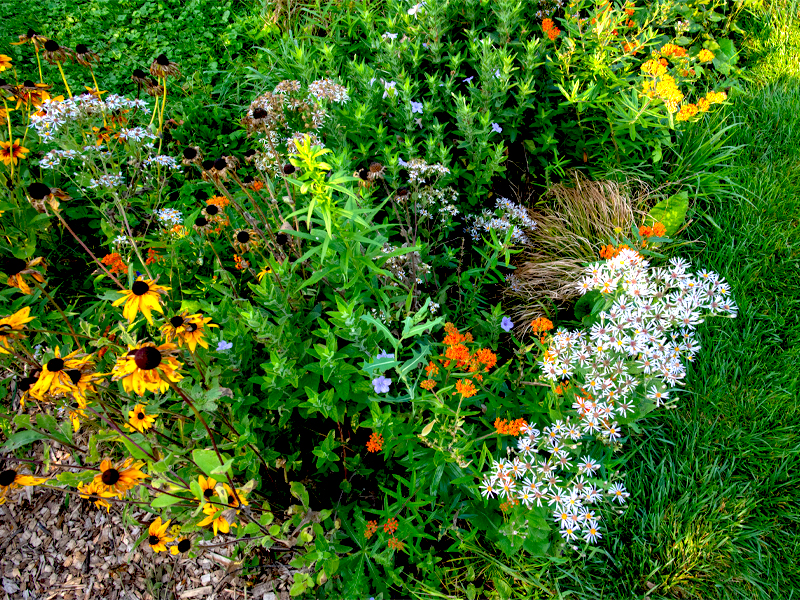
Rethinking lawns
Thirty to sixty percent of potable water in the U.S. goes to lawns. They take real effort to maintain, and yet they contribute little to biodiversity or the environment. What if they could do more: support wildlife, help mitigate stormwater flooding, absorb carbon from the atmosphere, cool nearby areas, and still look good doing it?
For five years, the Rethinking Lawns team has been documenting the native plants most suitable for lawns—how they survive and spread, what pollinators they support, how much they cool the air, and how effectively they absorb stormwater.
Every detail—ecological impact, seasonal resilience, and yes, how it looks—has been tracked, tested, and refined to offer home gardeners a "menu of options" backed by years of real-world science. So far, the data agrees that switching up our lawns, even starting on a small portion, benefits local flora, fauna, and beyond.
Learn more and attend an upcoming horticulture class at the Regenstein School.
The Negaunee Institute is turning plant science into action, confronting our most urgent environmental challenges.