Plant Science & Conservation
Garden Stories
The Race to Save Wild Orchids
Johanna Hutchins was on a summer hike in Illinois when she rounded a bend, stopped, and stared at the rare sight before her. A wild orchid. Then another. Then dozens.
“They were everywhere,” said Hutchins, the floriculturist who oversees the Orchidarium at the Chicago Botanic Garden. “It stopped me in my tracks.”
The irony? That kind of abundance in the wild is rare.
More than half of the world’s orchid species could disappear within this century, as climate change, habitat loss, invasive species, and poaching take their toll. Scenes like the one Hutchins saw, she said, show both what’s at risk and what might still be saved.
“This is what I want for many more places” she said. “It’s what I hope we can help create.”
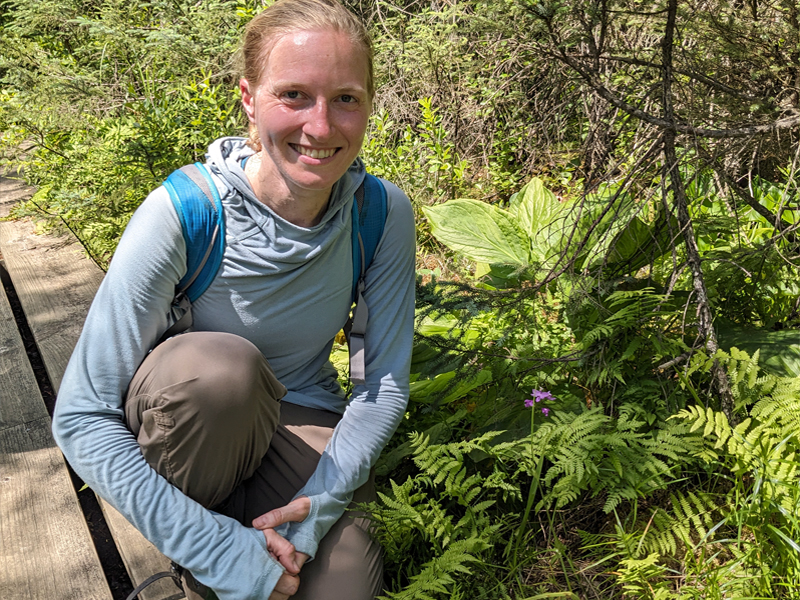
Johanna Hutchins, floriculturist and curator of the Orchidarium, on a hike encountering the tuberous grass pink orchid (Calopogon tuberosus), a common midwest native
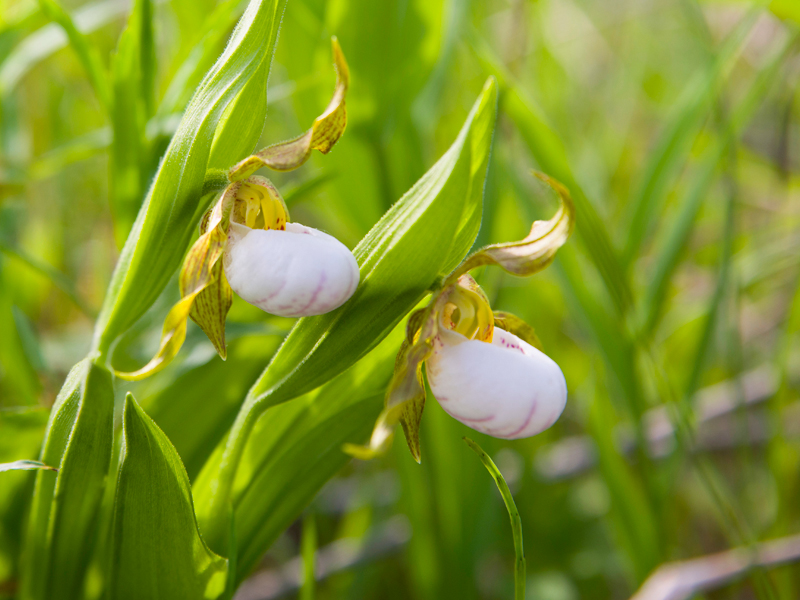
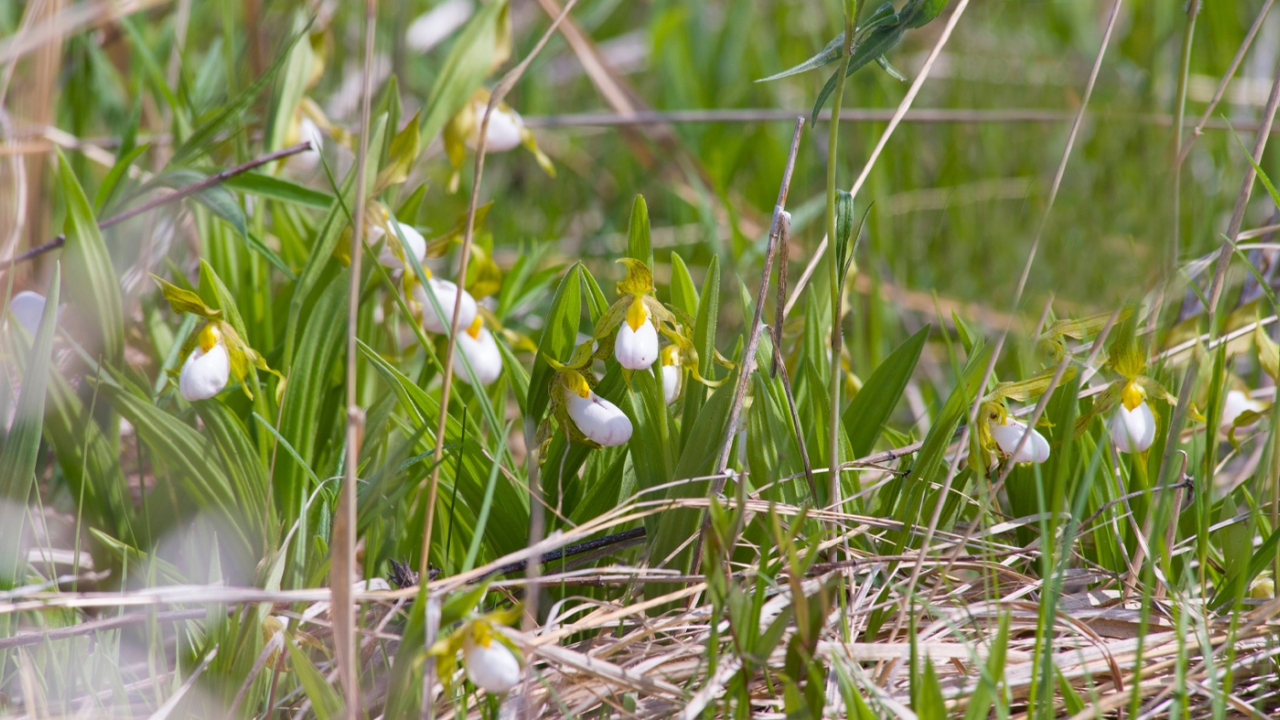
Cypripedium candidum
Hutchins and Garden colleagues are studying how to grow native orchids and return them to threatened habitats. They are part of a collaboration working across botanical gardens to build a practical framework for orchid reintroduction, testing approaches used by growers across regions, and sharing what works so others don’t have to start from scratch.
“With orchids, there’s no one-size-fits-all,” Hutchins said. “People all over the world are working with their own native species. But with almost 30,000 orchid species, there’s a lot of chipping away to do. Knowing we’re all working on the same puzzle—and that we’re not alone—makes it feel possible.”
Wild orchids function much like a canary in a coal mine. Because they depend on precise relationships with pollinators, fungi, and environmental conditions, they tend to disappear early when ecosystems are under stress. Their decline is often an early warning that something deeper is breaking down.
So, if wild orchids matter so much, why not grow more? The orchids sold in grocery stores are already easy to cultivate. Most are hybrids, and more than 100,000 varieties exist. However, growing wild orchids means cultivating more than just the plant.
Orchid seeds are as tiny as a speck of dust, which means they don’t store food like other seeds do. Instead, many species depend on helpful mycorrhizal fungi to survive and grow. Without the right fungus, a seed might never sprout. Because each orchid species relies on different fungal partners, restoring orchids to the wild means discovering and nurturing these hidden relationships, not just planting flowers.
Which fungus activates which orchid? That question remains a complex puzzle, especially with tens of thousands of species to consider. The only way to know for sure is to matchmake and see what happens.
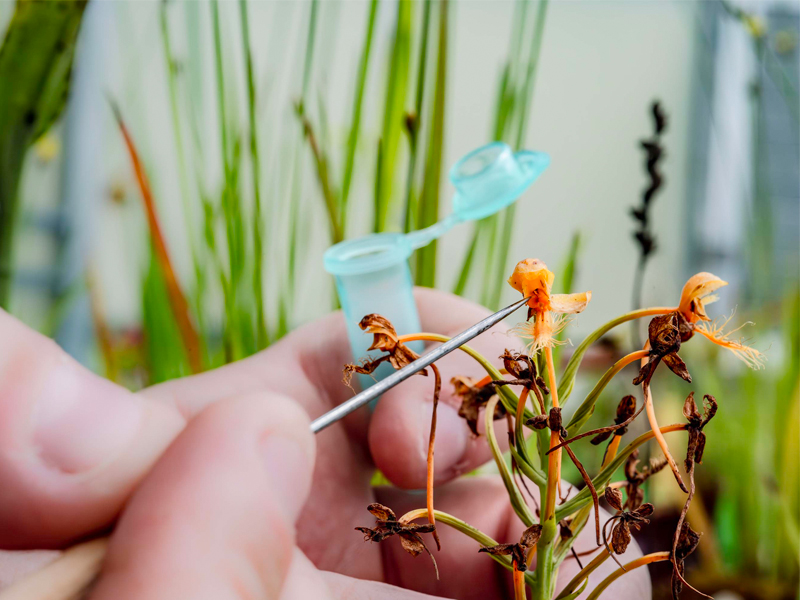
Some native orchids in Illinois occupy the edges of their species’ range, which may give them rare genetic traits that help the entire species adapt to change. Jeremy Foster, manager of the Garden’s Pollen Bank, takes a pollen sample from the Yellow fringed orchid (Platanthera ciliaris) to store for future study.
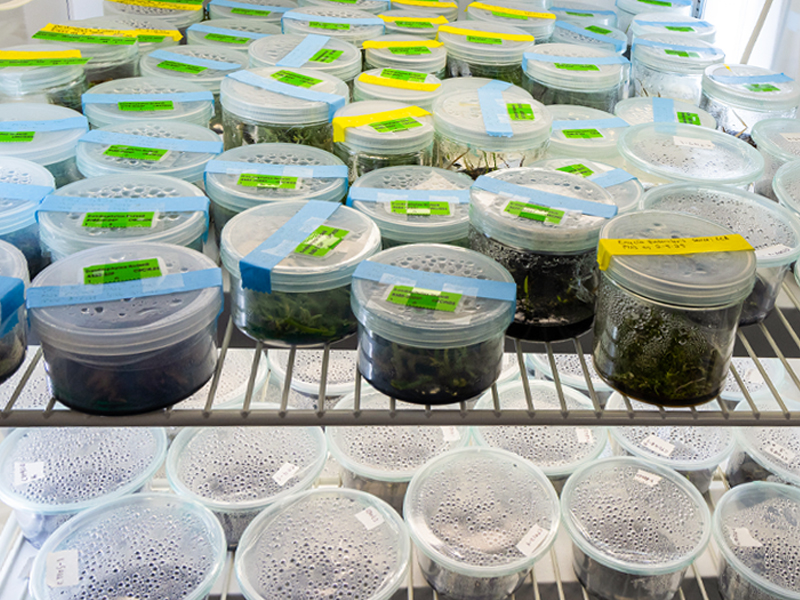
After the orchid seeds have been sown with their mycorrhizal partner in sterile media, they are transferred to an incubator to provide optimal growing conditions.
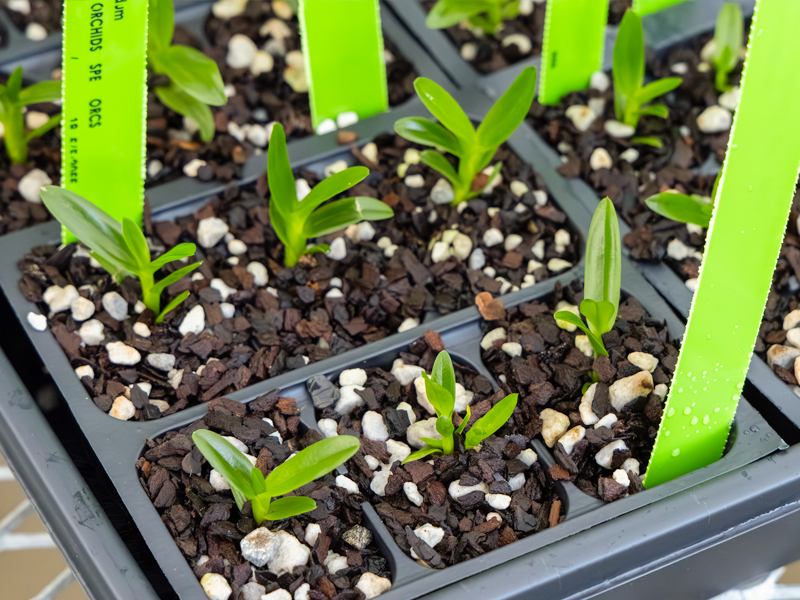
After some time in tissue culture, the young plantlets are gently removed from their flasks and potted into trays in a process known as “deflasking”.
Then germination must happen in sterile lab conditions, so contaminants don’t wipe out fragile seedlings. From there, plants move into greenhouses to be transplanted, hardened off, and eventually sown. One plant can take more than a year from seed collection to greenhouse. Some species, two to ten years from seedling to bloom. Repeat that ten times per species to understand what really works.
“Unlike the orchids in grocery stores, most of which are clones of a single ‘perfect’ plant, conservation depends on growing genetically diverse plants from seed, using the right fungal partners,” Hutchins said. “When we understand those relationships and share that knowledge, we give orchids the chance to survive far beyond a single generation.”
Spot an orchid in the wild? Enjoy the moment and leave it where it grows. You can help monitor some of Illinois’ 49 native orchid species with Plants of Concern. Learn how the Chicago Botanic Garden is working to prevent extinctions.