Plant Science & Conservation
Garden Stories
Weaving the Landscape Back to Life
In a sunny patch at the Chicago Botanic Garden, a single bee balm (Monarda fistulosa) stretches toward the sky. A long-lost visitor lands: a rusty patched bumble bee (Bombus affinis), fuzzy and endangered, unseen here before. The rare sighting is a bright thread in a much larger tapestry being rewoven across the region.
Once one of the most common bumble bees in the Midwest, the rusty patched population has declined by 90 percent in the last decade. Its reappearance at the Garden isn’t an accident. For years, our ecologists have been restoring native plants to the landscape, carefully stitching back the connections that support pollinators, wildlife, and people alike.
Bee balm, the flower that drew the bee that day, is one of many resilient native species helping to reweave balance. Its tubular blossoms attract hummingbirds and butterflies; its roots anchor the soil and better its ability to absorb stormwater; its seeds sustain birds through winter. Each plant plays a part in strengthening the landscape.
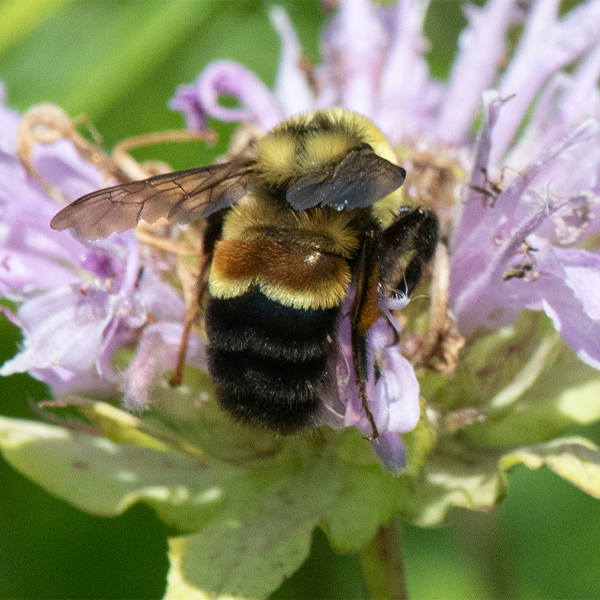
A rusty patched bumble bee (Bombus affinis) on bee balm, or wild bergamot (Monarda fistulosa) at the Garden. Photo by Nick Dorian.
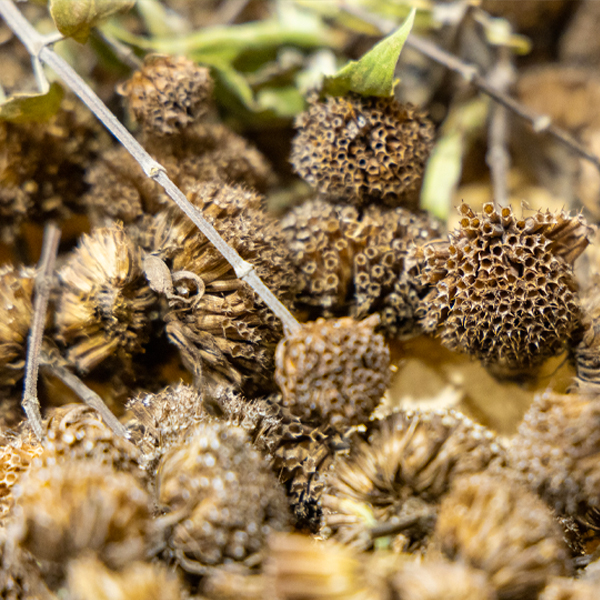
Bee balm (Monarda fistulosa) seed pods
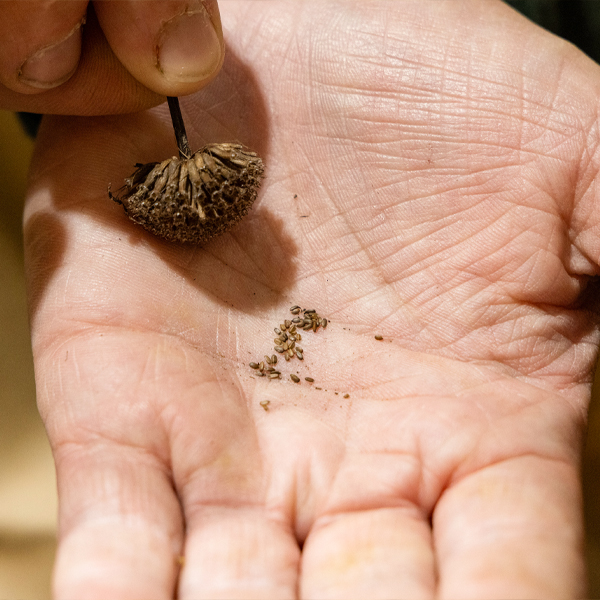
Bee balm (Monarda fistulosa) seeds
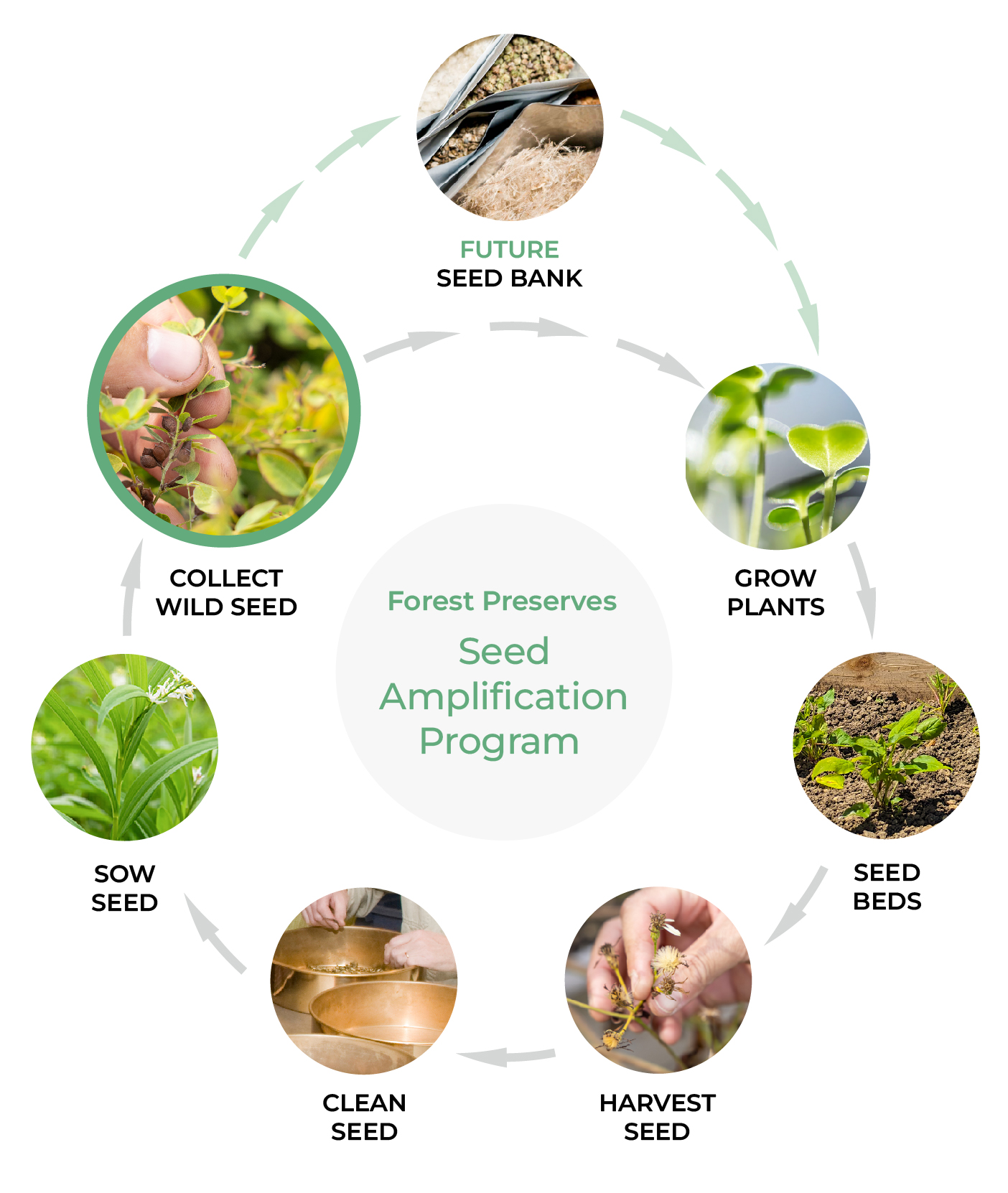
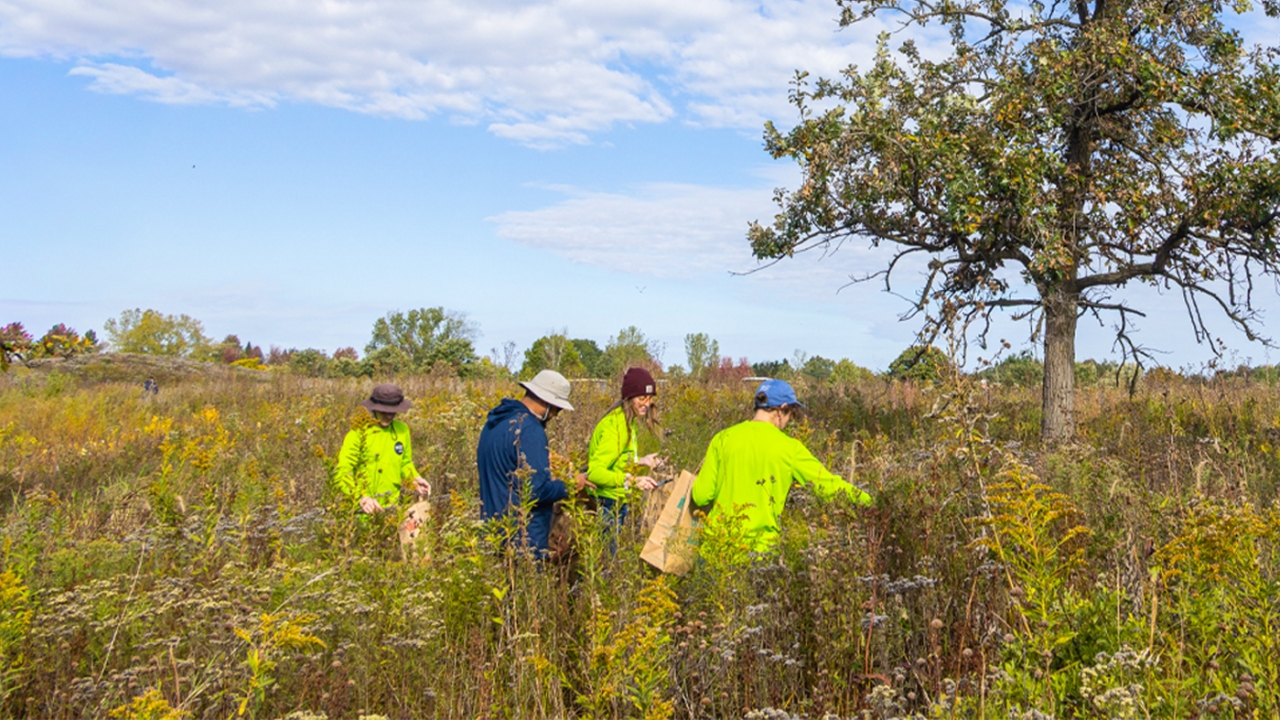
The Seed Amplification Program is cyclical, beginning with collecting seed from the forest preserves to “amplify” through seed beds. Seed produced through the program is harvested, processed, and then sown back into the forest preserves.
The mission to make ecosystems more resilient extends far beyond the bee balm and the Garden’s borders. Together with the Forest Preserves of Cook County, Garden staff are part of a plan to restore 30,000 acres of local prairie, woodland, and wetland by 2040. But weaving resilient connections at this scale requires many steps, one essential material being seed.
There’s a nationwide shortage of native seed: in number, species type, and genetic diversity, which slows efforts to restore habitats at the pace our landscapes need. To fill that gap, the Seed Amplification Program is gathering small amounts of wild seed and multiplying them in native seed beds, a first-of-its-kind initiative developed by a botanic garden and local government.
Each seed passes through many hands, from field to lab to greenhouse to nursery, before returning to the soil as a building block for new habitat. It’s painstaking work. Conservationists must balance taking enough seed from the wild to gather genetic diversity without taking too much that they harm existing populations. With the help of volunteers, they clean, sort, and get to know every species, learning what each one needs to germinate and thrive.
“We also bank seeds of the original wild collections of these species, so it will be possible to expand seed amplification as needed in the future,” said Andrea Kramer, senior director of restoration ecology at the Garden’s Negaunee Institute, referring to the Garden’s Dixon National Tallgrass Prairie Seed Bank.
In 2025, the Seed Amplification Program produced more than 330 pounds of native seed—representing potentially hundreds of thousands of seeds and amplifying what conservationists initially collected in the wild 300 times over. Harvests should only continue to grow with time, eventually reaching thousands of pounds per season in support of the ambitious 2040 restoration goal.
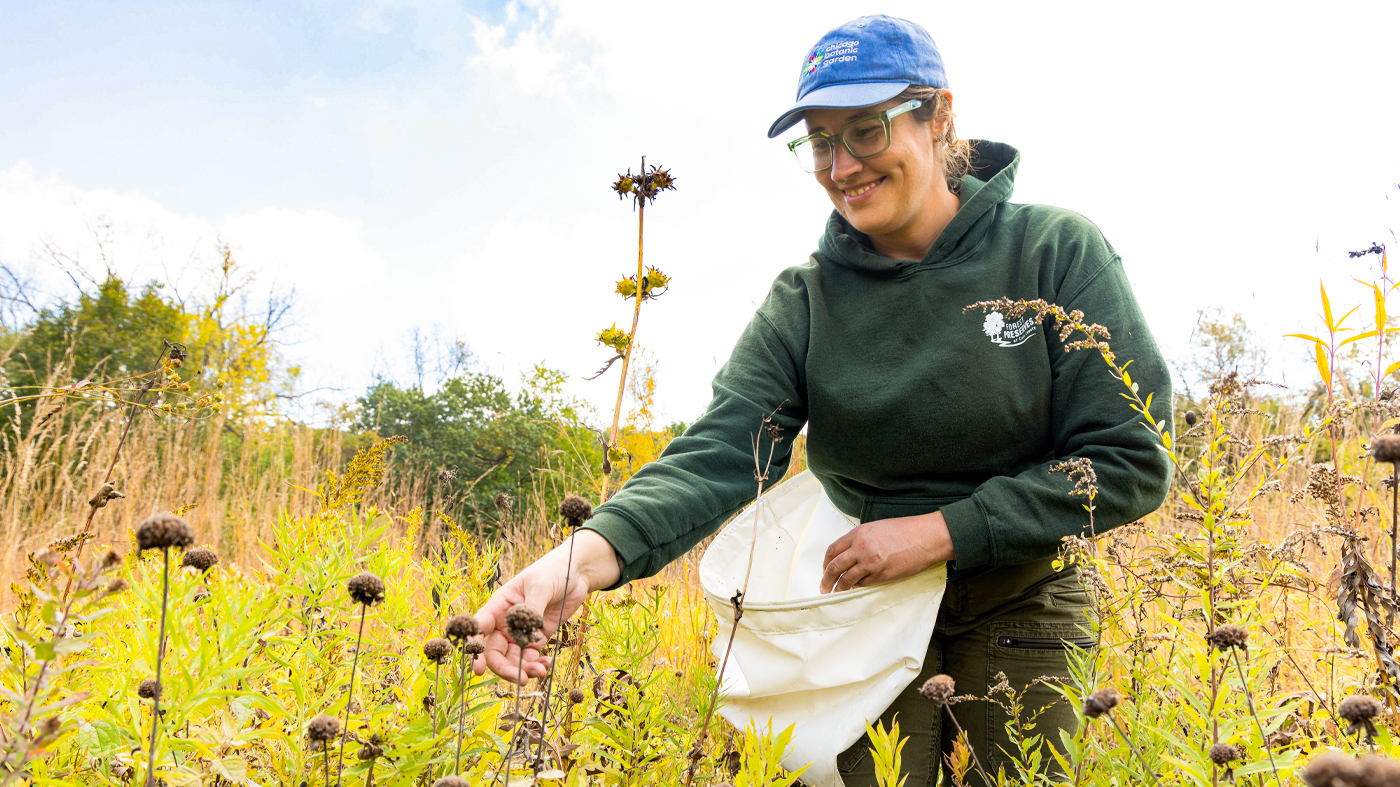
Program Manager Molly Marz describes the goals of the Seed Amplification Program.
“It’s been intense,” said Molly Marz, the manager of the Seed Amplification Program. “It’s gone really fast, but I think we’re really proud of the work that we’ve been able to do.”
At the native seed nurseries, staff work in rhythm with the plants, collecting seed only when each plant is ready. The process is intensive, but so is weaving anything meant to last.
“Sometimes on a frustrating day where things don’t go the right way, I just think about each seed going on and living a healthy life as a new plant in the forest preserves somewhere,” said Noah Hornak, technician at the native seed nursery. “It feels like we’re doing something meaningful, doing the best we can.”
Each new bloom draws pollinators back; each native plant threads a pattern of resilience across the landscape. From bee balm (Monarda fistulosa) to fields of rare purple milkweed (Asclepias purpurascens), every native seed sown adds another row to the tapestry of recovery. Thread by thread, patient hands and resilient roots are weaving the landscape back to life.