

Learning
Garden Stories
Gardening and Autism
Horticultural therapy has proven benefits for individuals with autism.
The integration of horticultural therapy and therapy gardens within health and human service agencies has grown exponentially in recent years. In senior centers, gardening and garden spaces are used to help with fine motor skills, socialization, and ambulatory movement. In veteran’s hospitals, gardening is used for exercise, vocational training, and education.
There is one population that, in my opinion, receives the most benefit from the incorporation of gardens and horticultural therapy in daily services. That population is found in the organizations, schools, institutions, and training centers that serve individuals on the autism spectrum.
Autism spectrum disorder (ASD) and autism are general terms for a group of complex disorders of brain development. These disorders are characterized by difficulties in social interaction, verbal and nonverbal communication, and repetitive behaviors.
In the spring and summer of 2013, I worked with two organizations and schools and led weekly horticultural therapy sessions in their outdoor gardens. We observed many benefits when engaging both children and adults on the autism spectrum. For today, I’ll discuss three primary benefits I observed: quiet fascination and stimuli reduction, the ability to follow direction, and tactile sensory integration.
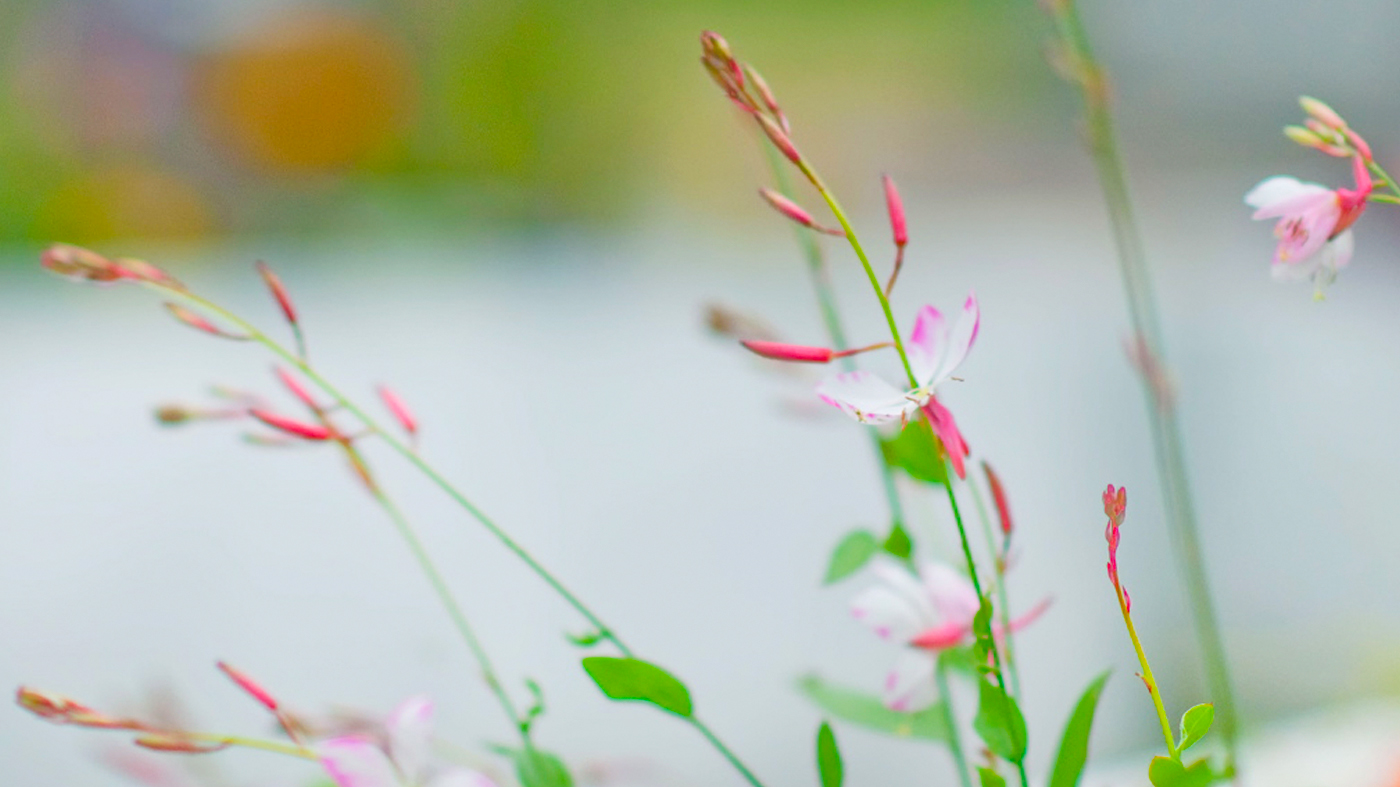
Flowers like butterfly gaura (Gaura lindheimeri) can be observed with quiet fascination.
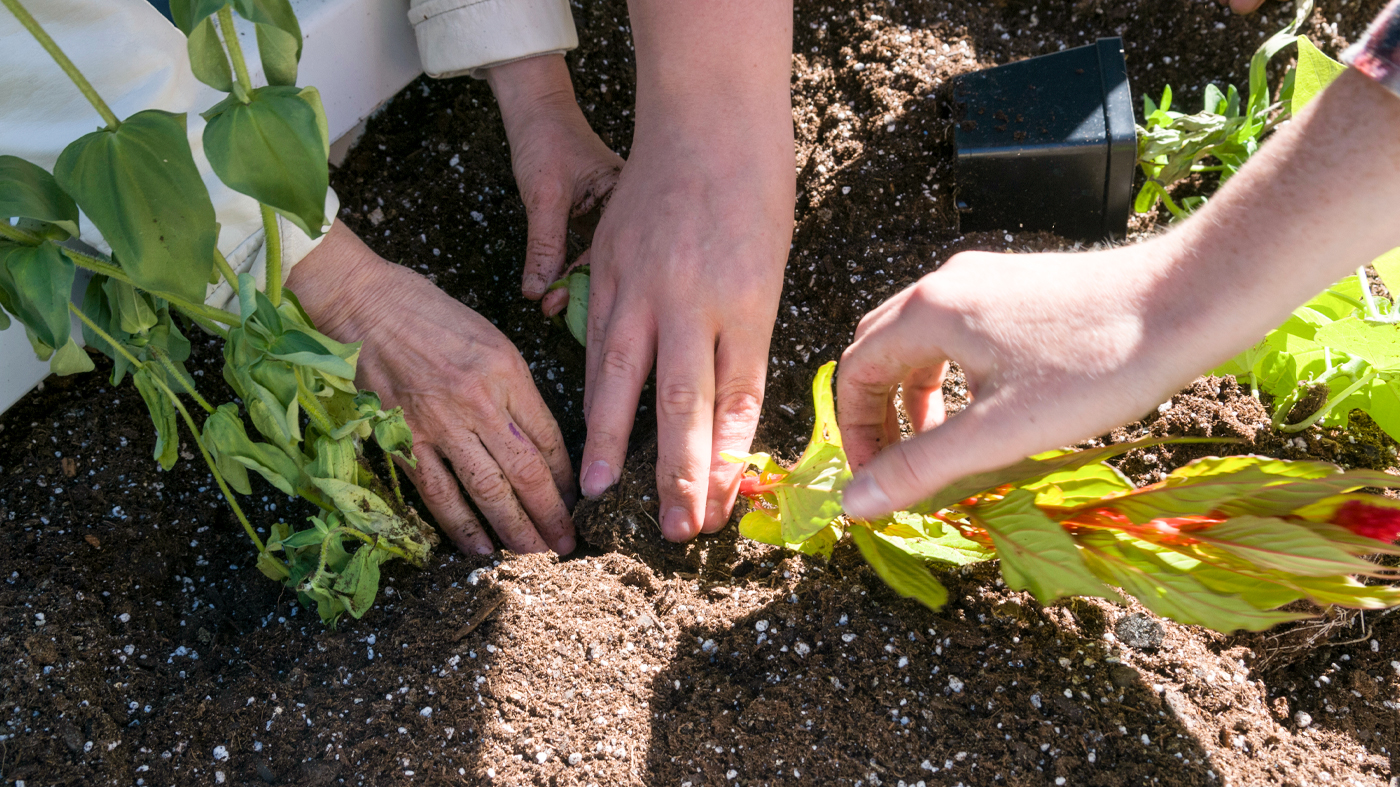
With assistance from staff and horticultural therapist, participants were encouraged to plant with their own hands.
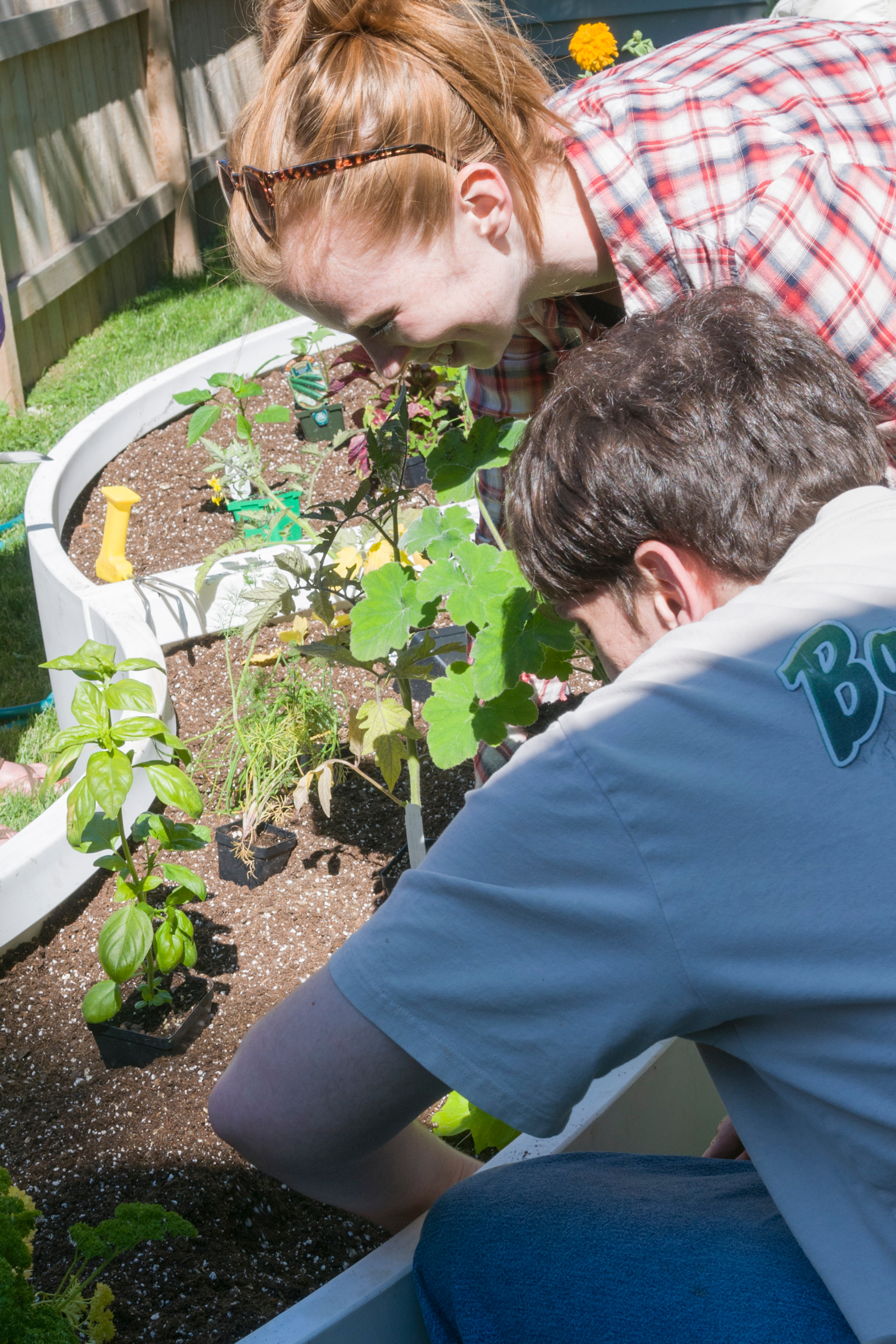
Installing an edible garden with a client from the nonprofit Rimland Services
The first benefit has to do with the physical garden space itself.
I observed a sense of relief displayed by the participants when in the garden space. Gardens can serve as a welcome break from the classroom or facility environment, for clients and staff, and provide a space for “quiet fascination.”
Kaplan, Kaplan, and Ryan state that quiet fascination can “come from the setting itself, from the sound patterns, the motion, the intensity of forms and color” (69). An evaluation was designed at the beginning of the season and results demonstrated that 72 percent of participants were observed having slightly to significantly less anxiety when engaging in the garden and with horticultural therapy activities in comparison to other daily tasks.
The second benefit was the participant’s ability to follow directions with multiple steps.
Individuals with autism spectrum have greater difficulty shifting attention from one task to another or changing routine. During horticultural therapy activities, participants would be asked to follow steps in order to complete the activity. For example, when planting the garden, instructions were to dig a hole, take the plant out of the plastic, place it in the soil, gently push the soil back around the base, and repeat. The hand-over-hand technique was often used to aid in the task and 77 percent of participants were observed being slightly to significantly more responsive to a multiple-step process and able to repeat without instruction.
The last benefit dealt with sensory integration with a focus on the tactile system.
When engaging participants in garden activities, dysfunction in the tactile system prompted actions such as withdrawing when being touched or helped, and overall avoidance of getting one’s hands dirty. With assistance from facility staff, we worked with participants to slowly introduce the sensation of soil, plant material, and water to participants. Each week, we’d encourage participants to touch, rub, and smell numerous plants with interesting textures and aromas along with the soil and water. As the weeks went on, it was observed that participants were not only less reserved but also were fascinated with the soil and plants.
The integration of gardens and garden-based activities in health and human service agencies is expanding year after year. If you know an individual or organization who could benefit from a garden, share some of the information you learned in this blog. It’s often in those conversations, filled with factual evidence and interest, that new ideas are planted and grown.