

How-to
Garden Stories
Science Activity: Albino Plants
Leaves are green.
There are very few exceptions in healthy living plants, and most of the exceptions are partially green with red, yellow, orange, or white patterns; or they look white, but upon closer inspection they are actually whitish, bluish-green, and not pure white. The pigments that give all leaves their color are essential for the plant’s ability to harness energy from the sun and make sugars in the process we know as photosynthesis.
But every once in a while, a completely white seedling sprouts from a seed. This happened with some basil I grew a few years ago.
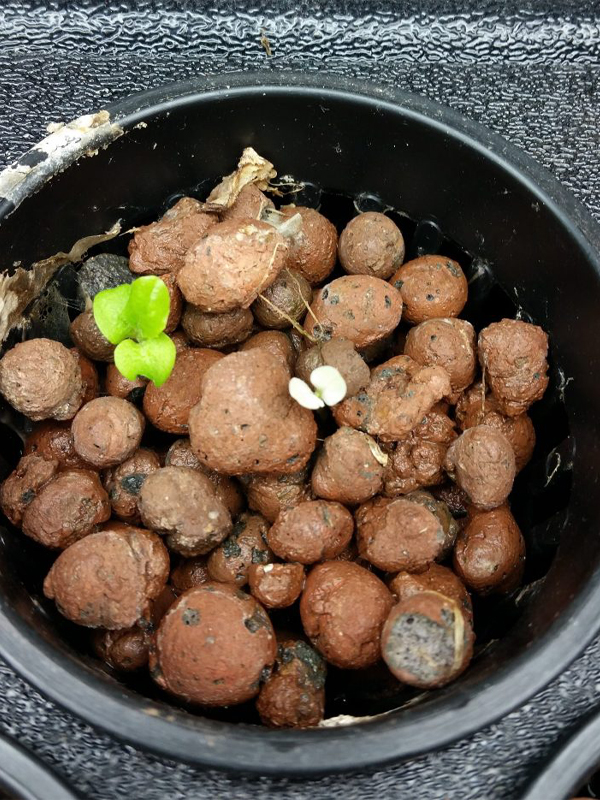
The green and albino seedlings came up at the same time, but the albino seedling never grew true leaves, and eventually withered and died.
My albino basil survived only a few days. Without any chlorophyll—the green pigment necessary for photosynthesis—this seedling was doomed. That is the case with all albino plants. The gene mutation that gives rise to albino plants is fatal to the plant, because without the ability to make sugars, the plant runs out of energy to live.
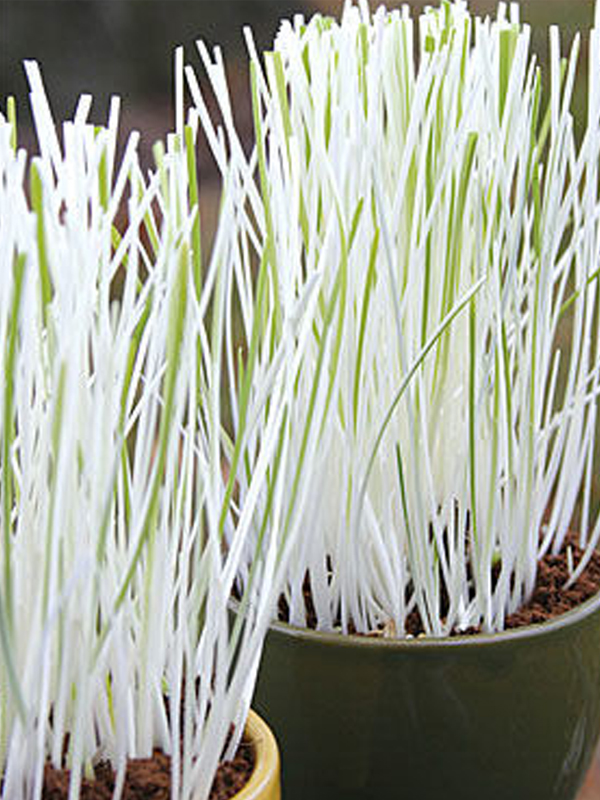
So when I was perusing the online Burpee seed catalog and came across “variegated cat grass” I was curious. VERY curious, and perhaps you are, too.
How can this albino plant survive? (Photo permission from W. Atlee Burpee Company)
I had several questions:
- The term “variegated” implies that the leaves would be striped or multicolored, but in the picture it appears that there are all white leaves. What will this grass actually look like?
- How long will it take to sprout?
- How easy it to grow?
- Is there enough green on those leaves for the grass to survive or will it die off like my basil?
- If it does survive, how long can I keep it growing?
- And most importantly: Would this make an awesome science activity for students in the classroom and at home to investigate the importance of chlorophyll in plants?
There was only one way to find the answers.
I ordered the seeds and grew some variegated cat grass in our nature lab at the Learning Center. You can do this in your classroom to find answers to my questions and your own.
Before I give you directions for growing cat grass, you may be wondering what IS cat grass?
The cat grass you may have seen sold in pet stores is usually a type of wheat, or Triticum. Our “variegated cat grass” is a type of barley (Hordeum vulgare variegata). Both are cereal grains that have been cultivated as food for hundreds of years. Both are sold commercially as cat grass because some cats like to chew on the leaves. Not being a cat owner, I don’t know if cats actually like this stuff, but apparently it sells.
Variegated barley was the result of science experiments on genetic mutations in barley seeds in the 1920s. The hybrid barley seeds have been packaged and sold by different seed companies because…well, they’re attractive and intriguing—they caught my attention.
What you need to plant cat grass, barley, wheat, or any grass seeds:
- A container that will hold soil at a depth of at least 2 inches; drainage holes are best, but not necessary
- Variegated cat grass seeds (sold as “cat grass, variegated” and available at Burpee and other seed suppliers)
- Potting soil
- Water
- A warm, sunny location for your plants
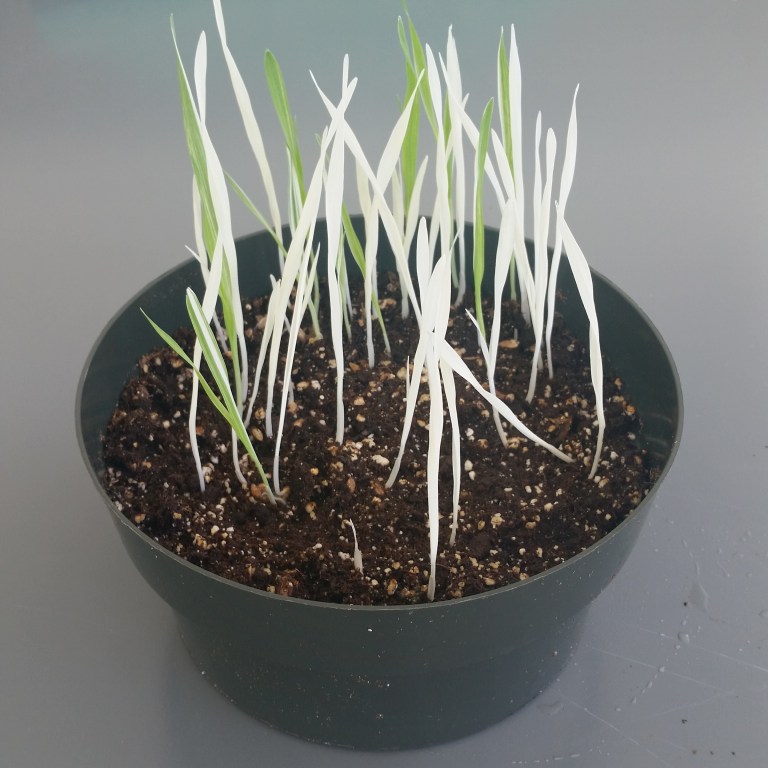
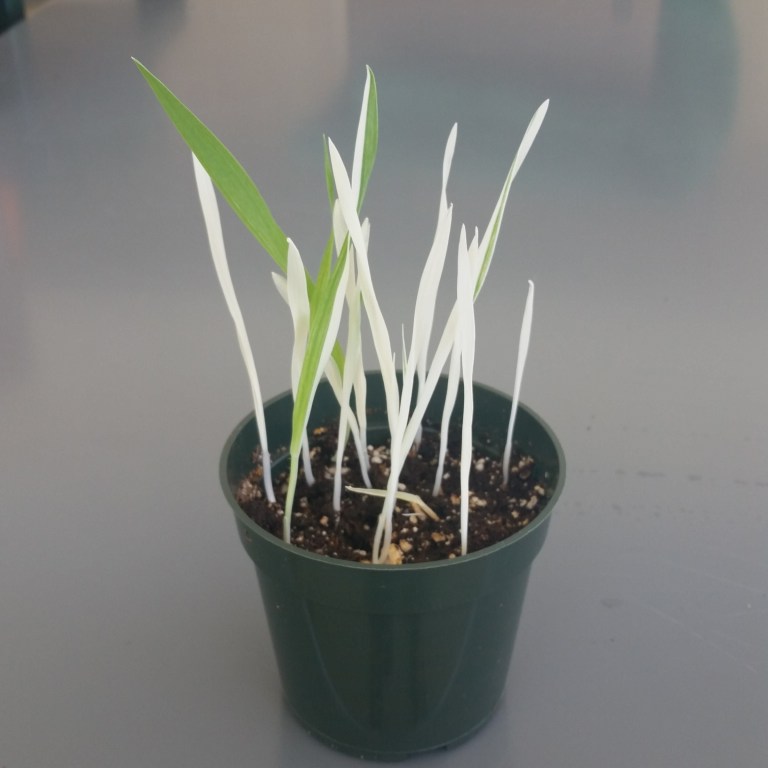
In less than a week, a few more than half of the twenty variegated cat grass seeds planted in this 4-inch pot grew to 4 – 6 inches tall. The taller plants are ready for a trim.
Fill the container with moist potting soil. Spread seeds on the surface of the soil. Cover seeds with a thin layer of moist soil and tamp the soil down so that most of the seeds are covered. It’s all right if you can see some of the seeds through the thin layer of soil. Place in a warm, bright location. The seeds will sprout in a few days, but may take a week depending on the room temperature.
If students plant their own individual pots, have them place 20 – 30 seeds in each 3-inch container. The seeds I bought came 300 to a pack, so that means you need at least two (maybe three) packs to have enough for everyone in the class.
Now the REAL science part:
Whether you make a single classroom planter or have each student plant her own pot, observe your variegated cat grass for the next four to six weeks, or even longer. Keep it watered and trimmed. Measure its growth. Take photos or sketch it to record how it grows and changes. Ask your own questions and try to find answers, and ultimately reach a conclusion about what happens to white plants. If you and your class are really interested, plant some more cat grass and change the procedure to test your own ideas. It’s that easy to do plant science in your classroom.
Want more albino plant science? Read on.
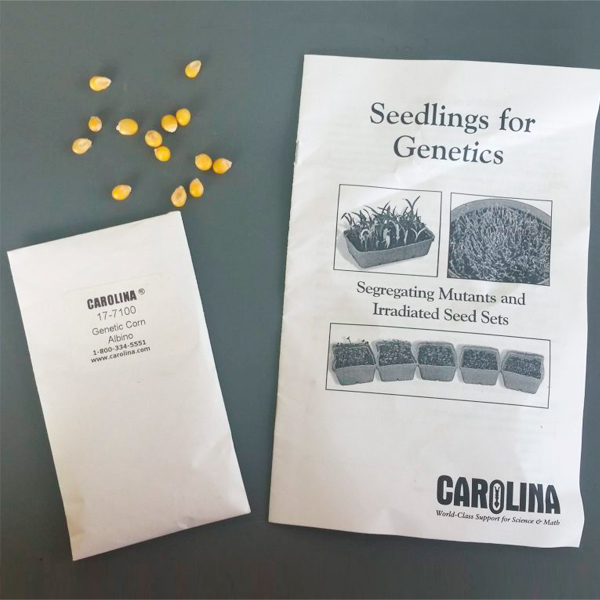
More activities for inquiring minds
You can experiment with other genetically modified albino seeds available through science supply companies.
Seed kits enable you to investigate different genetic traits, including the albino mutation.
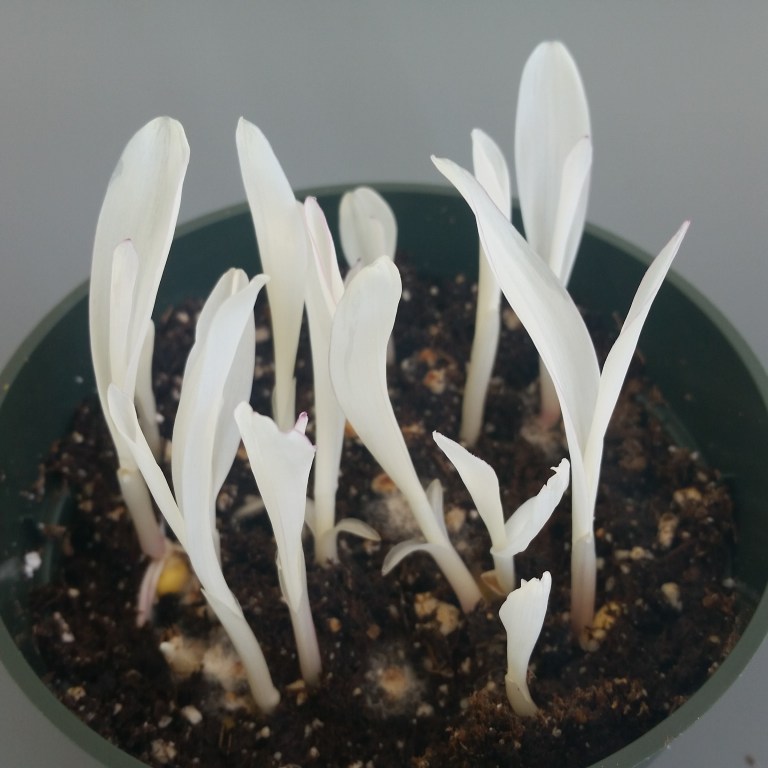
Five days after planting, albino corn seedlings are beautiful, but ill-fated.
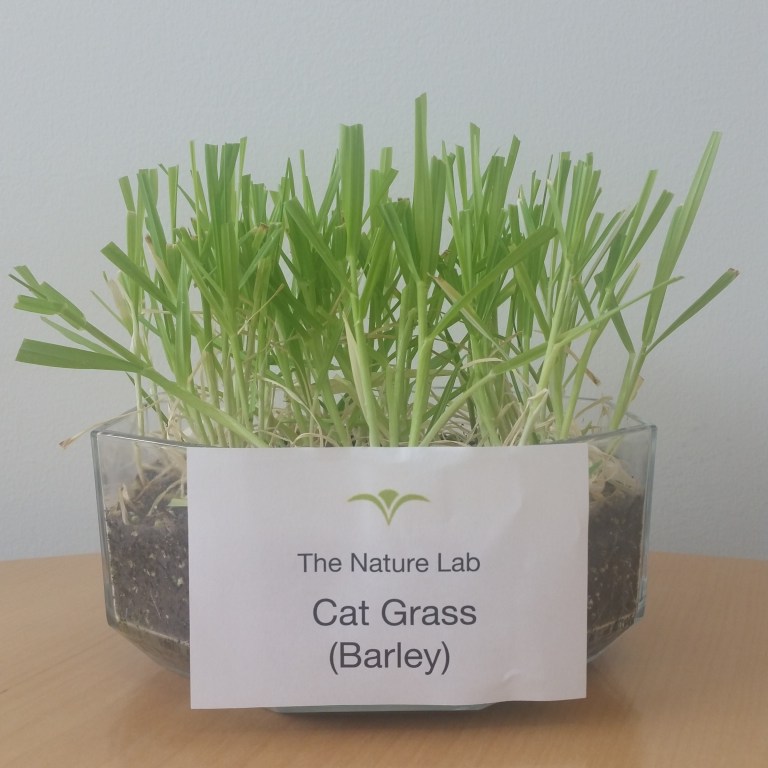
After a two months, my densely planted variegated cat grass is thriving at the nature lab, even though it no longer resembles the catalog photo.
Seed Kits
Carolina Biological Supply Company sells hybrid corn that will grow white leaves and stems. I have planted these seeds and they work pretty well, but require a bright window or light and a warm environment to sprout successfully. A classroom kit contains soil, planting trays, and 500 seeds for a classroom investigation, and costs about $100. You can order just the seeds in packs of 100 genetic corn seeds that are all albino (90 percent of the seedlings will grow to be albino) for $18.50, or a green/albino mix—which means about 75 percent of seedlings will be green and 25 percent white, for $10.50. The latter enables you to compare the mutation to the normal strain.
Nasco sells seeds and kits to investigate albino plants. Their “Observing the Growth of Mutant Corn Seeds” kit serves up to 40 students and costs $62.50. Nasco also has albino tobacco seeds with 3:1 green to white ratio, 1,200 seeds for $12.05. Tobacco seeds are smaller, and therefore more difficult for little fingers to handle than corn or barley. I have never tried growing them, but that might be my next science project this fall.
The answer to my question?
Yes! This is an awesome science activity for students because it’s easy and demonstrates something really important—in fact, something essential to our existence!
You don’t need to purchase the fancy kits to investigate why plants are green. You can get a lot of good science learning out of a pack of variegated cat grass. All you really need to do is look around you and notice the colors in nature. Do you see white leaves anywhere? If you do, then there is probably a science investigation waiting for you.