Tomato Talk | Select
MAY
A Full Season of Tomato-Growing Information
Select the perfect tomato combination
Have you ever had no tomatoes all summer, and then all of them all at once? Or had so many cherry tomatoes all summer long that you never wanted to plant them again?
It might be that the tomatoes you planted were all of one type of tomato plant.
Determinate vs indeterminate tomato plant
A determinate tomato plant grows to a certain size, then produces its fruit all at once, and generally does not grow much larger after the fruit is set. Once a determinate plant starts to flower, it will stop putting out new shoots.
An indeterminate tomato plant, on the other hand, keeps on growing and sending out new shoots—and new flowers—at regular intervals along the main stem all season long, continually setting fruit.
Because of their constant growth, indeterminate tomatoes benefit from caging or staking, as well as regular pinching out of any side shoots that develop in the axils or the main stem and the side branches. Planting a combination of determinate and indeterminate plants may be the best plan for your home garden. Make sure to check plant labels and ask questions when purchasing your tomato plants.
I'm not sure if I want to plant hybrids or heirlooms. What's the difference between a hybrid and an heirloom tomato?
Hybrid tomatoes combine two different varieties of tomato plant to to create a plant with beneficial traits from both its parents. These traits typically include increased pest and disease resistance, and more consistent-quality fruit. Hybrids can also be bred for traits such as longer shelf life, or to produce a fruit with particular flavor characteristics. Seed saved from these plants will not reproduce true to the parent plant.
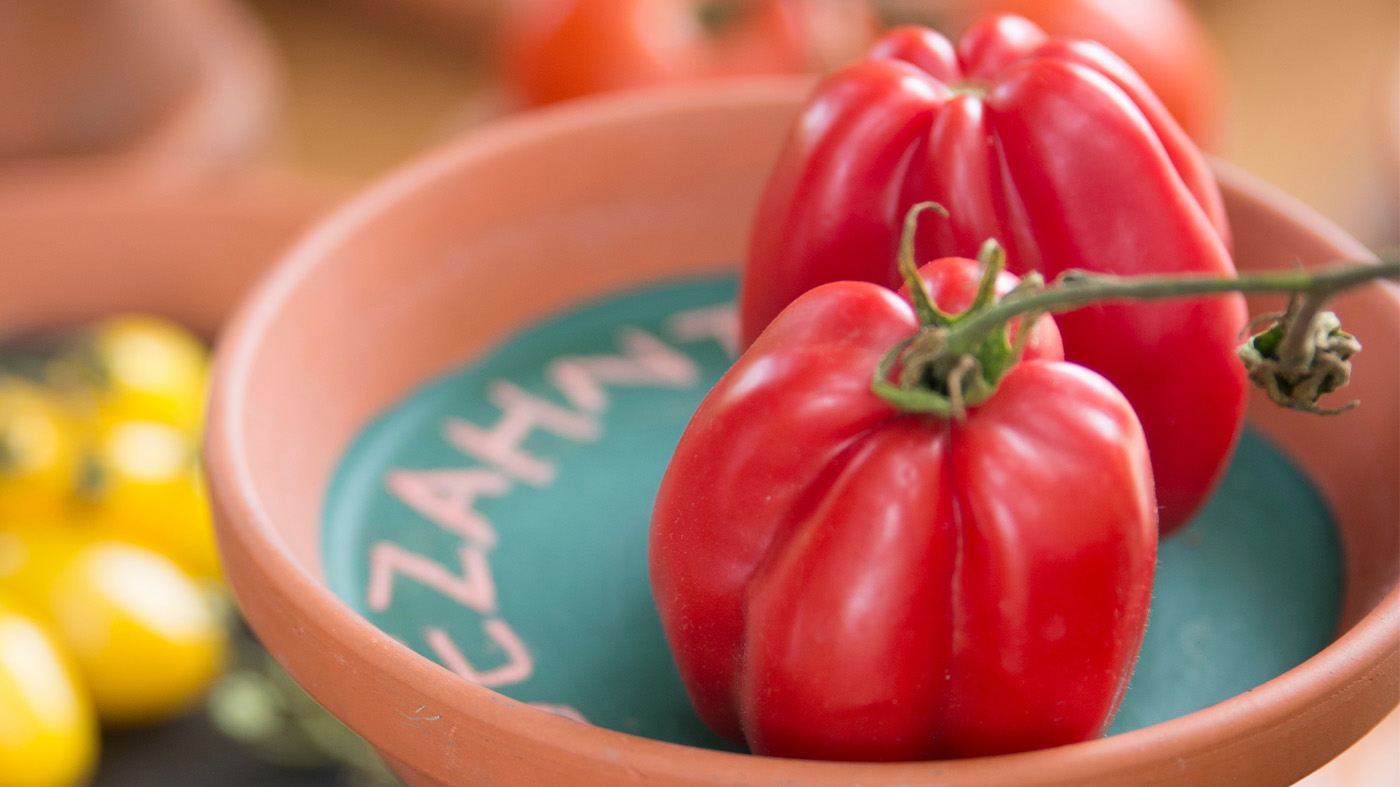
Heirloom tomato 'Tiacolula Pink'
Three facts set heirlooms apart from hybrid tomatoes:
- Heirlooms are tomatoes that reproduce “true to type.” Save and plant an heirloom seed, and you can be sure of getting the same variety. This is not true of hybrids: save and plant a hybrid’s seed and a distant relative may grow—therefore, hybrid (or F-1) seed must be purchased fresh each year.
- Heirlooms are open-pollinated. Nature handles their pollination via insects or wind. Humans control the selection of a hybrid’s characteristics.
- Heirlooms are typically vintage varieties. Heirlooms generally are known to be 50 years or older.
Does your tomato have an interesting shape? It might be an heirloom.
This variable alone often distinguishes an heirloom from a hybrid. Heirloom tomatoes come in every permutation of “round” imaginable. In the Regenstein Fruit & Vegetable Garden beds, look for these six shapes:
- Currant and cherry—Tiny currant tomatoes measure about ½ inch in diameter, while cherries range from ½ to 2 inches.
- Pear and plum—Plums are generally oblong or cylindrical; pear tomatoes have a telltale bottleneck at the stem end.
- Ribbed—These are beautifully furrowed, gathered, or grooved.
- Globe—Today’s norm, globes come in many sizes and colors.
- Beefsteak—Big and broad, beefsteaks are typically meaty and dense.
- Oxheart—Often big and heart-shaped, oxhearts can be blocky at the shoulders with a pointed or blunt end.
Fun Facts
Heirloom tomato seedlings don't always have that telltale toothed or deeply cut leaf.
- Potato leaf tomatoes have large, uncut leaves very similar to a potato plant.
- The crinkly rugosa leaf type is usually found on dwarf varieties; the angora leaf type is downy or fuzzy.
- A drooping leaf is most often found on oxheart tomatoes.
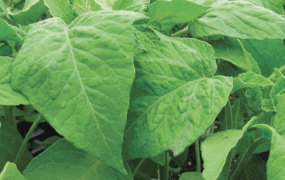
A "potato leaf" tomato
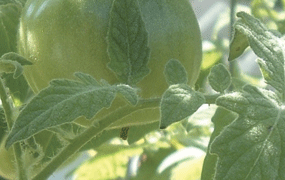
Fuzzy leaves on 'Angora Orange' tomato
Looking for one-on-one tomato assistance?
Contact our Plant Information Service for a personal diagnosis and recommendations.