John Nash Ott
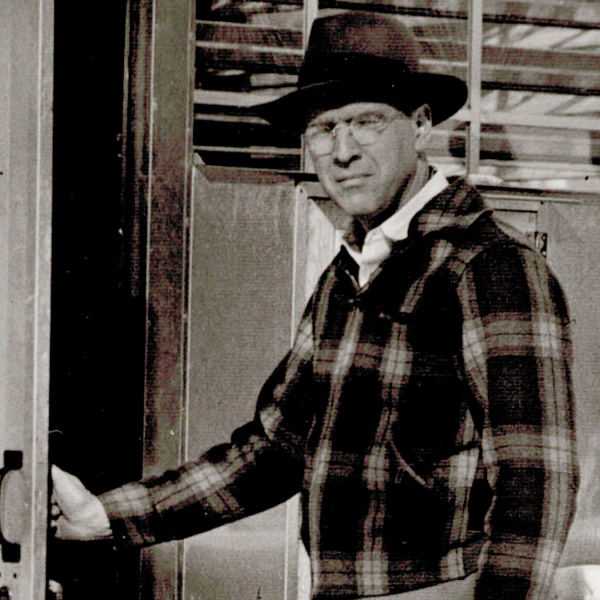
By CloutCuckooLand - Own work, CC BY-SA 4.0, Link
Years:
1909 – 2000
Year Hutchinson Medal awarded:
1958
Ott was a photo-researcher, writer, photographer, and cinematographer who was an early adopter of many modern photographic practices, including time-lapse photography and full-spectrum lighting. In addition to making films, he performed research about the effects of natural lighting on plants, animals, and humans.
Key contributions:
- Initially, Ott's interest in time-lapse movie photography, mostly of plants, was just a hobby. Starting in the 1930s, Ott bought and built more and more time-lapse equipment, eventually building a large greenhouse full of plants, cameras, and self-built automated electric moving camera systems (the first movie camera motion control systems ever built) for moving the cameras to follow the growth of plants as they developed. He timelapsed his entire greenhouse of plants and cameras as they all worked and grew.
- His work caught the attention of organizations who employed him to make time-lapse segments for films they were producing, including the educational film Secrets of Life, for the Walt Disney Company in 1956 and The Story of Wheat, for the Santa Fe Railroad.
- From the late 1940s to the early 1950s he hosted a Chicago-area television program called How Does Your Garden Grow, which featured gardening tips, botanical information, and short time-lapse films.
- Ott developed a theory that movement of plants could be manipulated by varying the amount of water that plants were given, and varying the color temperature of the lights in the studio, with some colors causing the plants to flower and other colors causing the plants to bear fruit.
- Ott's experiments with different colored lighting systems and their effects on the health of plants led to experiments with colored lights on the health of animals, humans, and individual cells, using timelapse micro-photography. Ott's experiments led him to believe that only a full spectrum of natural light (including natural amounts of infrared and ultraviolet) could promote full health in plants, animals, and humans. He wrote the 1973 book Health and Light advancing his theories.
- Ott received an honorary doctorate in science from Loyola University of Chicago in 1958. Although it is not customary for recipients of such an honorary doctorate to adopt the prefix "Dr.", he was widely referred to as "Dr. Ott" thereafter