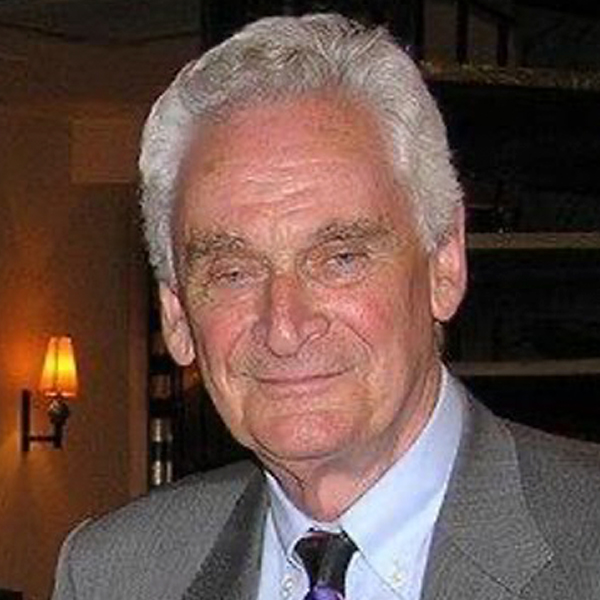
Vernon H. Heywood
Years:
1927 – 2022
Year Hutchinson Medal awarded:
1989
Renowned British botanist, taxonomist, conservation leader, and one of the world’s foremost authorities on flowering plant diversity.
Vernon H. Heywood’s career shaped global approaches to plant taxonomy, plant genetic resources, and the role of botanic gardens in conservation.
Early Life:
Vernon Hilton Heywood was born December 24, 1927, in Edinburgh, Scotland. He trained as a biologist and was recognized for his exceptional abilities in plant systematics, particularly the taxonomy of angiosperms and the use of emerging analytical methods in plant classification. He taught at the University of Liverpool from 1955 to 1968, and he was awarded the Second Established Chair in Botany in 1964. His early work helped modernize botanical teaching and integrate evolutionary systematics with practical taxonomy.
University of Reading:
Heywood became professor of botany and head of department at the University of Reading, where he taught from 1968 to 1987. He built Reading into a leading center for taxonomy, systematics, and biodiversity studies. He trained multiple generations of botanists who would later become leaders in plant science worldwide.
Founding of Botanic Gardens Conservation International (BGCI):
In 1987, Heywood became the founding director of Botanic Gardens Conservation International (BGCI), establishing the first global framework linking the world’s botanic gardens for plant conservation. His leadership helped define the modern conservation missions of botanic gardens, emphasizing ex situ collections, public engagement, and international cooperation.
Heywood was a prolific author, editor, and scientific organizer.
Key Works:
- Principles of Angiosperm Taxonomy (1963), the foundational textbook in modern plant taxonomy
- Flowering Plants of the World and Flowering Plant Families of the World, major global references on angiosperms.
- Global Biodiversity Assessment, a landmark international work on global conservation science.
Research Focus:
- Medicinal and aromatic plants
- Wild relatives of crop plants
- Plant systematics and biodiversity assessment
He wrote more than 400 papers and more than 60 books covering taxonomy, conservation, ecology, ethnobotany, and plant resources. His work influenced both academic taxonomy and applied conservation policy across multiple continents.
Awards and Recognition:
- Heywood won international honors including:
- Linnean Medal, Linnean Society of London (1987)
- Planta Europa Linnaeus Award (2007)
- Multiple book dedications and honorary recognitions, including the dedication of Taxonomy and Plant Conservation for his 75th birthday (2006)
He was also widely remembered as a generous mentor and educator.
Legacy:
Heywood remained active as an author and scientific adviser well into his 80s and 90s. He passed away on September 17, 2022, in Reading, England, at the age of 94.
His legacy includes shaping modern plant taxonomy; defining global strategies for plant conservation; establishing BGCI as a central organization for safeguarding the world’s botanical heritage; and training generations of botanists, taxonomists, and conservationists
He is regarded as one of the most influential botanical scientists of the 20th century.