

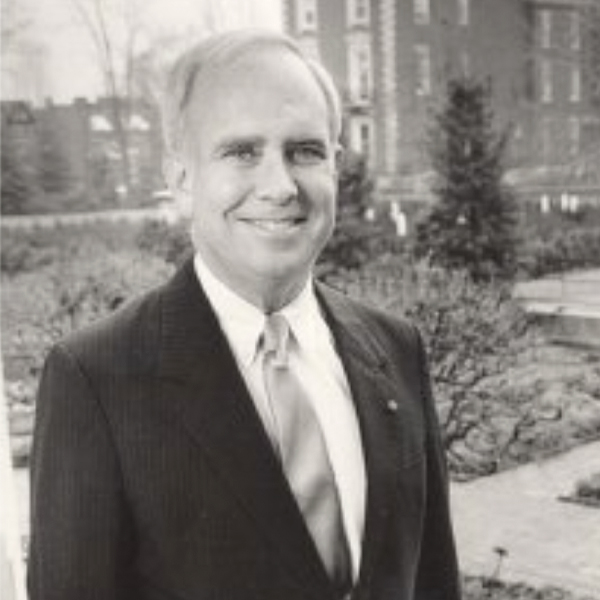
Peter H. Raven
Years:
1936 – 2026
Year Hutchinson Medal awarded:
1986
American botanist, environmentalist, and leading authority on plant systematics and evolution, best known for his long tenure as director and later president emeritus of the Missouri Botanical Garden.
Peter H. Raven earned an A.B. at UC Berkeley and a Ph.D. in botany from UCLA, where his research focused on the plant family Onagraceae (evening primrose). He taught at Stanford University for nine years before moving to St. Louis in 1971 to lead the Missouri Botanical Garden, where he built a globally respected program for taxonomic research, botanical education, conservation, and horticulture. Raven made transformative contributions to plant biology, which shaped the understanding of plant evolution, speciation, coevolution, taxonomy, and conservation.
Career highlights:
Raven wrote more than 480 books and scientific papers, including Biology of Plants, a widely used botany textbook. He pioneered research on plant evolution, pollination biology, and the biogeography of angiosperms. He was a leader in the Flora of China project, a joint international effort cataloging more than 31,000 plant species. Under his leadership, the Missouri Botanical Garden became a center for botanical research, education, and global conservation, with scientists conducting fieldwork across the Americas, Africa, Asia, and more. Raven received many honors for his contributions to science and conservation and is recognized as a key figure in modern botanical science.
- Raven co-coined the term "coevolution" in a landmark 1964 paper with Paul Ehrlich, analyzing the intricate evolutionary relationships between butterflies and their food plants.
- His work established fundamental principles for studying mutual adaptations between plants and pollinators, influencing the explosive growth of pollination biology and leading to predictive models about pollinator specificity and floral rewards.
- Raven’s research on the evening primrose family (Onagraceae) provided key insights into rapid speciation and the mechanisms driving plant diversification, including chromosomal changes and interspecific sterility.
- He demonstrated that hybridization can play an important role in adaptation and speciation among perennial plants, challenging previous assumptions on the nature of species cohesion.
- Raven advanced botanical systematics by integrating morphological and molecular data, refining taxonomic classifications to better reflect evolutionary relationships.
- As a co-founder of the Flora of China project, he helped catalog more than 31,000 plant species, creating one of the world’s definitive botanical references.
- Raven was among the first botanists to apply plate tectonics theory to explain modern plant distributions, which illuminated plant disjunctions and the radiation of angiosperms, especially in the Southern Hemisphere.
- His biogeographical research shed light on why certain regions, like California, have unusually high levels of endemic species due to historical climate and geological shifts.
- Raven was a pioneering advocate for biodiversity conservation, integrating research with public outreach and policy.
- He transformed the Missouri Botanical Garden into a preeminent global hub for plant diversity research, conservation, and horticultural education.
- His public efforts and scientific work inspired policies and programs aimed at preserving endangered plant species and their habitats worldwide.
- Raven received the U.S. National Medal of Science and the International Prize for Biology for his scientific achievements and leadership.
Peter H. Raven’s interdisciplinary research and advocacy set new standards in plant biology, environmental science, and conservation practice, leaving a lasting legacy on the field.