News
Garden Stories
Our bloom of the century
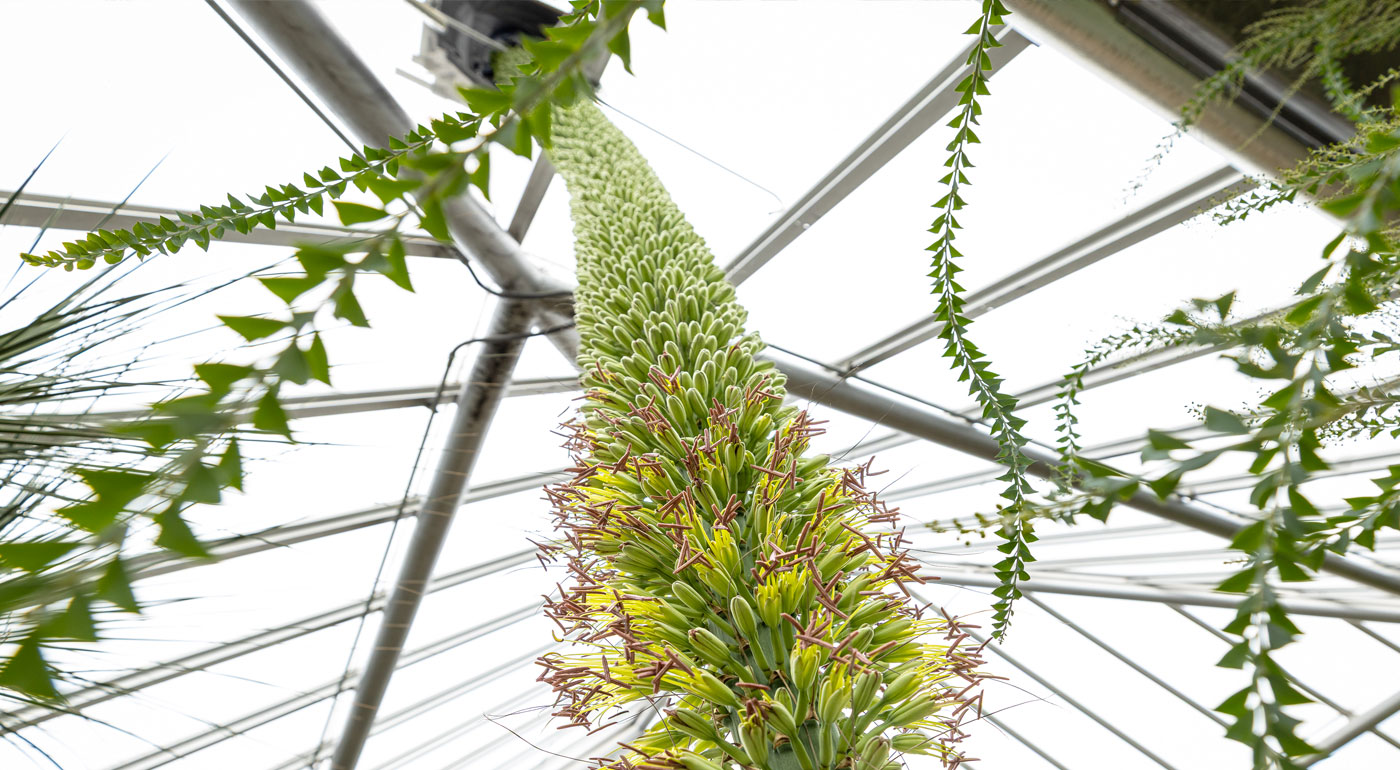
In the Arid Greenhouse, a zealous Agave—known colloquially as a Century Plant—has grown literally through the roof, choosing the dead of winter for a bloom that’s been three decades in the making.
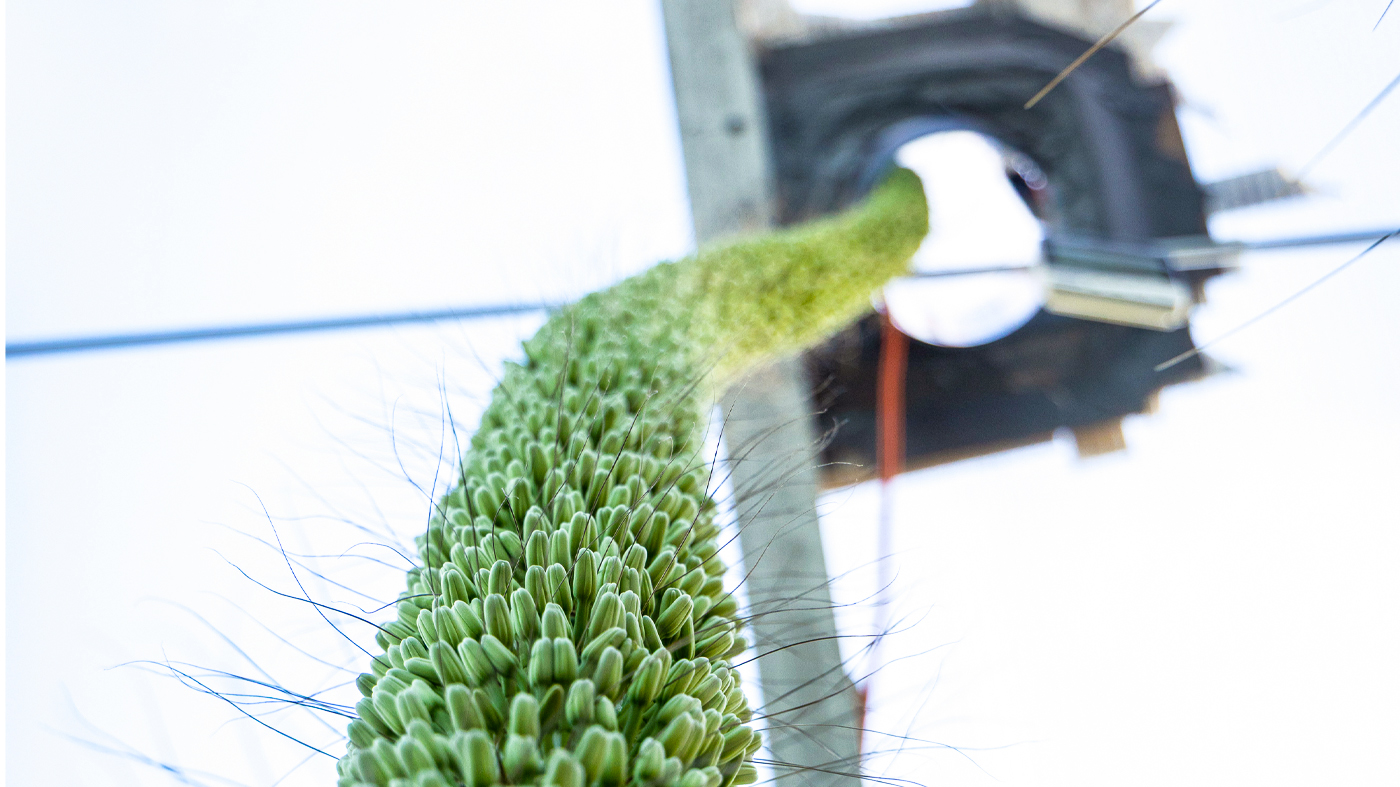
Agave sp. FO-76 on December 10, 2025
UPDATE, August 2026:
When Agave oteroi bloomed at the end of 2025, staff members wondered if it was capable of pollinating itself—and in summer 2026 they proved that it can.
“I couldn't find anything in existing literature about it,” said Sarah Nolimal, greenhouse horticulturist. “We gave it a shot anyway, hand-pollinating with paintbrushes.” Earlier this summer, they found tiny black seeds along the lower part of the plant’s stalk. But were they viable? The Horticulture team handed the seeds off to Plant Production, where nearly all of the seeds germinated, resulting in a new generation of baby agaves.
Sarah questioned whether these new plants were actually Agave oteroi, thinking the flowers could have been cross-pollinated by an insect. But according to the Garden’s phenology records, no other agaves were flowering at the same time, leading to the conclusion that the Century Plant did, in fact, pollinate itself.
It's a discovery made right here at the Garden, one that adds an important conservation tool for the species—and another chapter in this particular agave’s story.
Think nothing blooms at the Garden in January? Think again.
Acquired by the Garden in 1993, Agave sp. FO-76 has embarked on its first and last bloom, marking the end of its life cycle. Horticulturists and scientists are reveling in its bittersweet finale; stop by the Arid Greenhouse in the Regenstein Center to witness it yourself.
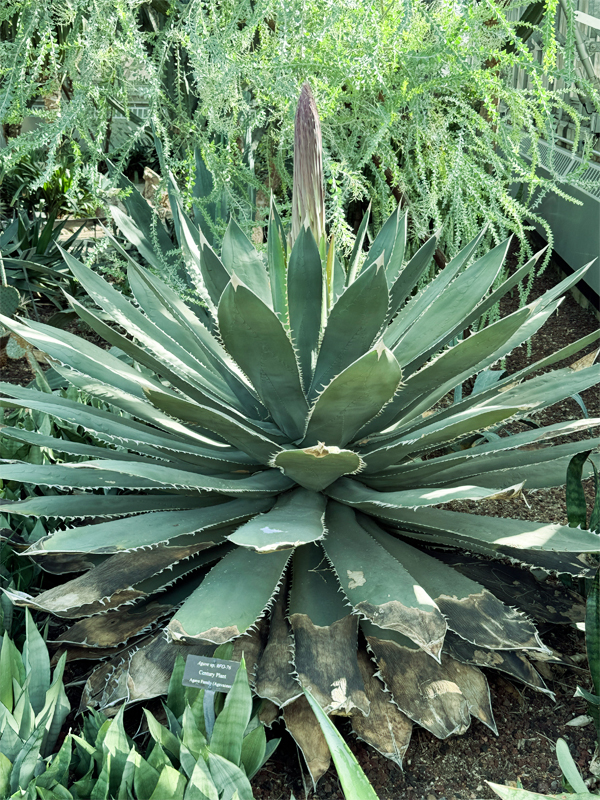
Agave sp. FO-76 on November 11, 2025
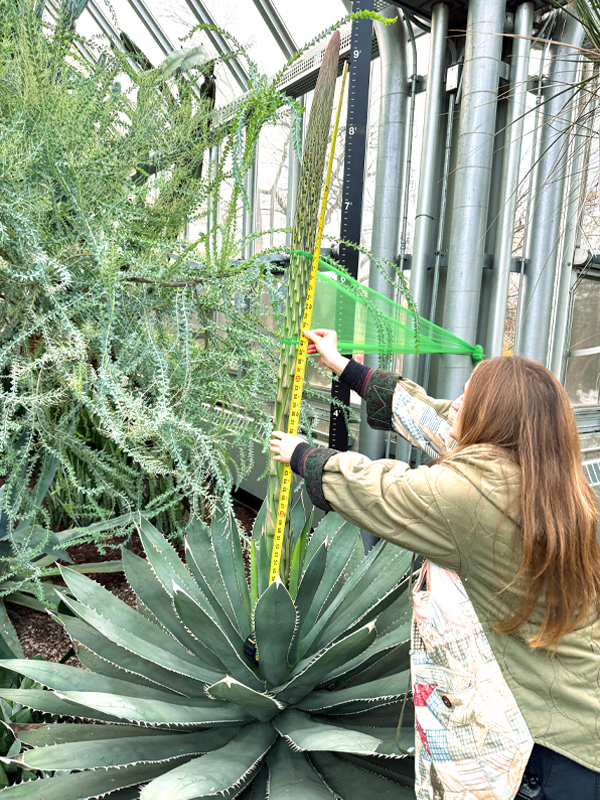
Senior Horticulturist Sarah Nolimal measures FO-76 on November 21, 2025, to track its growth.
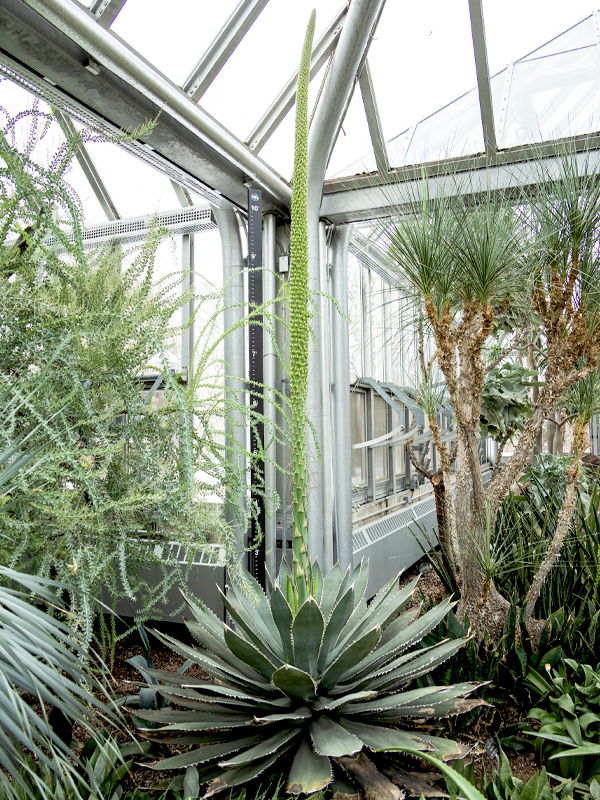
Agave sp. FO-76 on December 1, 2025
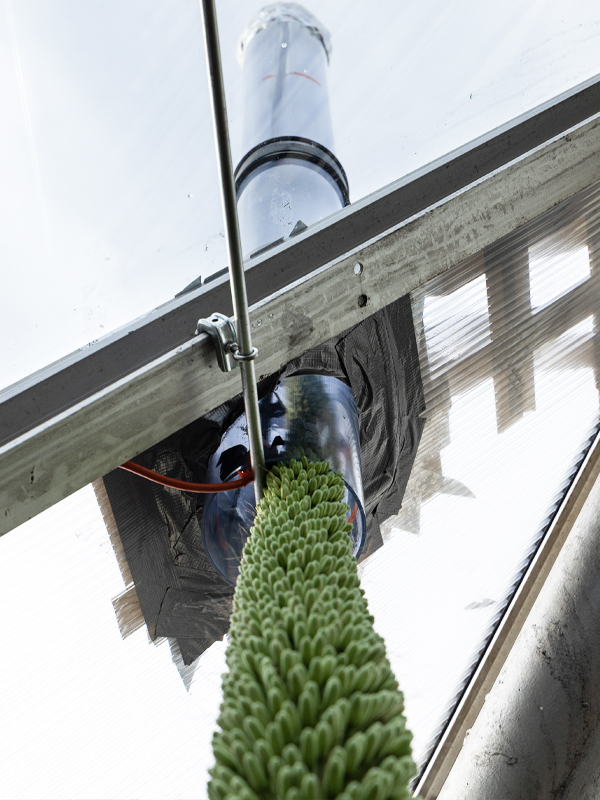
Agave sp. FO-76 on December 15, 2025
A stunning sorpresa (surprise)
On November 13, greenhouse horticulturists Sarah Nolimal and Laura Nulty realized that a 1-foot stalk had emerged from FO-76’s rosette of leaves, signaling an imminent bloom. The stalk grew fast, about 4 to 6 inches per day, until it threatened to collide with the greenhouse roof—requiring them to get creative, replacing a pane of greenhouse glass with plastic, drilling a hole, and encircling the tip of the agave with a tube, complete with heating device, to protect the plant against frigid temperatures it would never encounter in its native Oaxacan desert. In late December, frost hit and killed the end of the stalk, prompting the staff to jump back into action to re-insulate the agave and hopefully save its bloom.
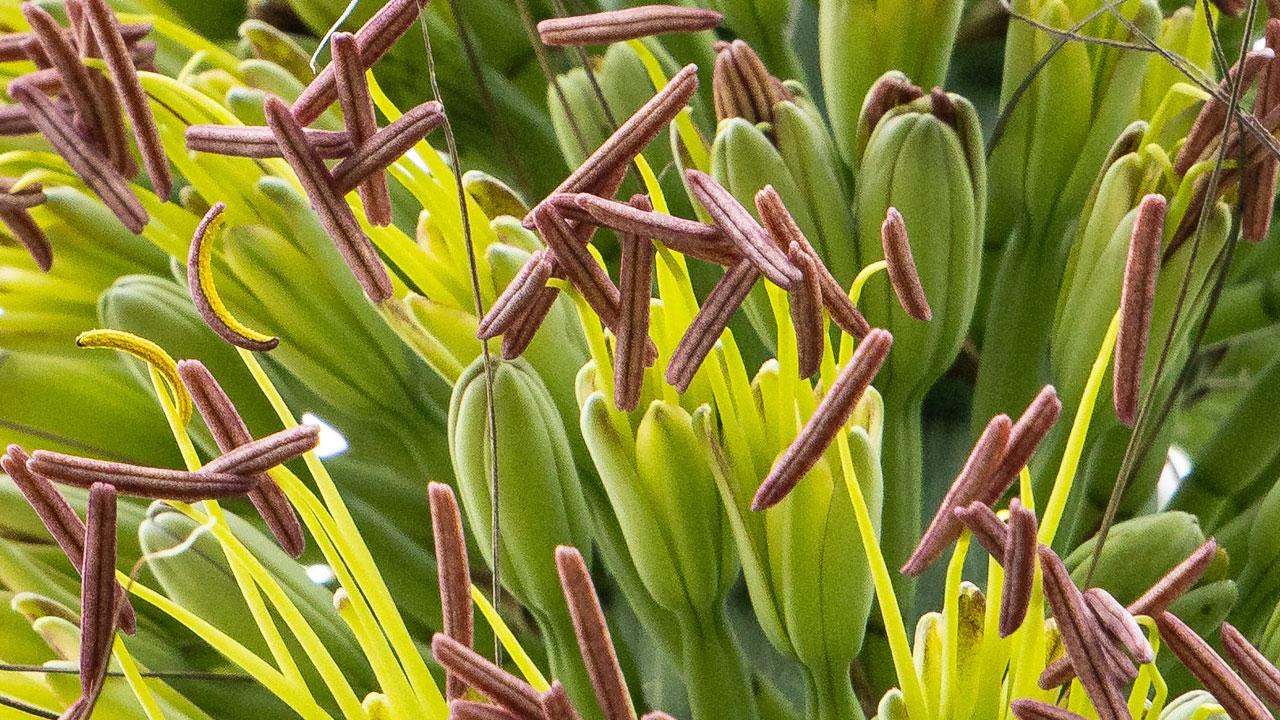
Their efforts paid off; in early January FO-76 began to bloom from the bottom up. Its blossoms occur in a vertical wave along its stalk, with purple stamens appearing first, followed by small yellow flowers. From start to finish, the full “wave of blooms” could take weeks, or even months, to unfold.
The Garden has seen Century Plant blooms before, but they're rare. The last one happened in 2010, and before that, in 1995. Those blooms came from different species of agave and looked very different from the current bloom, making FO-76 one-of-a-kind at the Garden.
“People can work 25 years in horticulture and never have a flowering agave this massive,” said Laura. Due to the plant’s long life cycle, “it takes many, many years to get to experience this. It’s a gift.”
A mystery twist
FO-76 has left our staff scratching their heads. “We’re not actually sure what species it is,” Sarah said. Her guess is Agave oteroi, a species that was only characterized six years ago. Conservation scientist Hector Ortiz Cano hopes to take a tissue sample to get a clear ID.
Why go to the trouble? For one, without knowing the species, it’s hard to predict when an agave will bloom, and how long the bloom will last—hence the sorpresa. And getting a read on FO-76’s DNA will also help us learn what this species needs to thrive.
Tequila farmers growing agave in monoculture don’t wait for the plants to bloom. Instead, they cut the stalk as soon as it emerges to use the sugars stored there. Over the years this practice has altered ecosystems in agave’s native desert habitats in Mexico and the southern U.S.; when the plants can’t bloom, their pollinators can’t survive. And when farmers grow just a few species of cultivated agave, wild species can’t gain a foothold.
Learning about FO-76 as it blooms allows scientists like Hector to understand the conditions it needs to live a complete and healthy life, which can help them preserve wild species of agave and their native deserts.
A cycle worth preserving
Agave is a “keystone species” for humans, a source of food and drink for Indigenous Mexicans for thousands of years. In Aztec mythology, agave and its goddess, Mayahuel, represent eternal life; before an agave dies, if conditions are right, it produces “pups” or offshoots from its roots, small new rosettes of leaves sprouting through the soil nearby. In 30 years, our Arid Greenhouse just might see the bloom of FO-76’s next generation.
“We really create connections with plants in our traditional knowledge,” said Hector, who grew up in Sonora, Mexico, with Mestizo Indigenous roots. “In many tribes and traditions, plants guide you through life with their wisdom. For me, it’s agave.” Day after day, Hector has visited FO-76 in the greenhouse, keeping it company as it completes its journey.
In some ways, Sarah said, this is “the worst time and place it could have been flowering" in terms of protecting the agave from Chicago's winter elements. But it’s also a reminder that nature’s cycles continue, even when the Garden around FO-76 is hibernating.
“This plant has truly guided us through challenges, bringing us together to brainstorm and adapt as issues arise,” said Laura.
“For me, it’s ceremonial,” said Hector. “I couldn’t miss this.”
Visit Agave sp. FO-76 now in our Arid Greenhouse.
Note that our Regenstein Center Greenhouses close on January 20 for Orchid Show setup, so don’t miss your chance to stop by!