Caring for Orchids at Home
Introduction
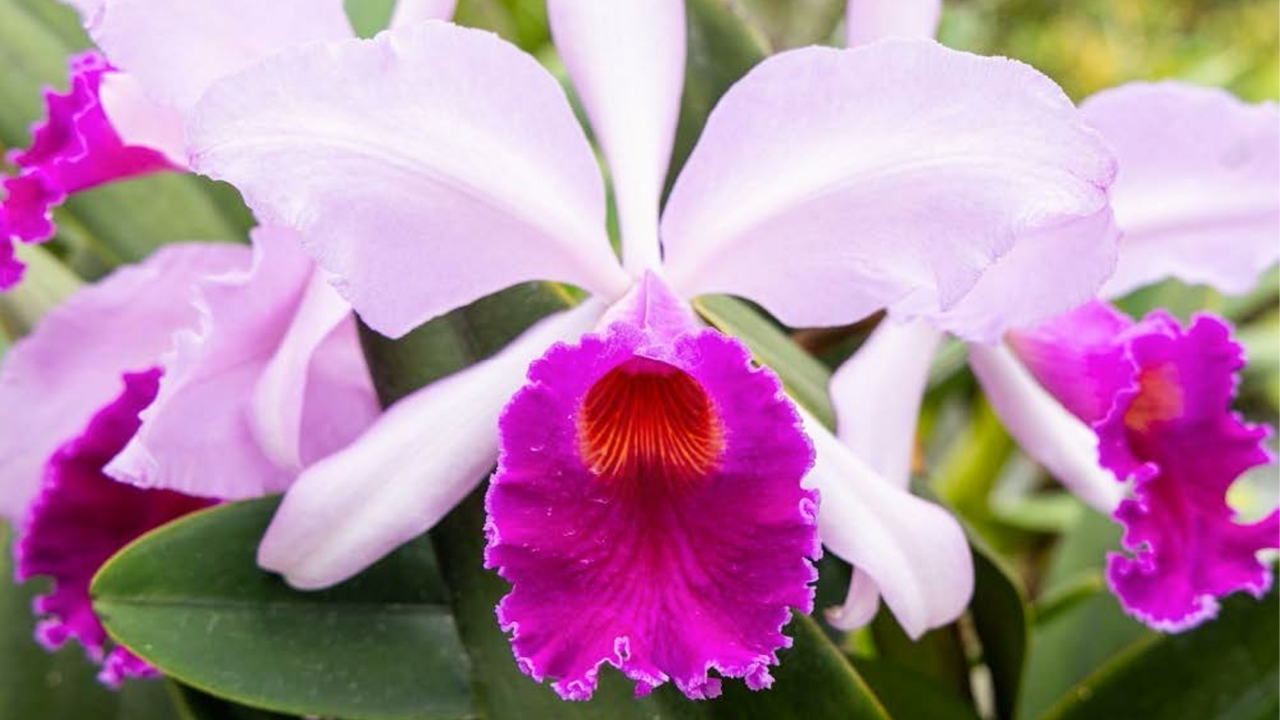
Orchids are amazing plants. Their colorful petals are like a splash of sunlight. The wispy forms of epiphytic orchids spark our imagination. These unique plants have inspired artists, gardeners, and scientists around the world. It is no surprise that orchids have a special place in our homes and hearts.
At the Chicago Botanic Garden, we celebrate the world of orchids with our annual Orchid Show. We work to conserve native orchids. Our research team is involved in studying and preserving the endangered ghost orchid. We also have orchids on display throughout the year. Members and visitors often glimpse orchids in our Tropical Greenhouse, like the whimsical clamshell orchid.
You do not need your own greenhouse to grow orchids successfully. There are practical ways you can encourage orchid growth and flowering at home. Whether you are thinking about buying your first orchid, or are coaxing your plant to rebloom, these tips from our orchid specialist and plant information service coordinator can help.
Selecting a location
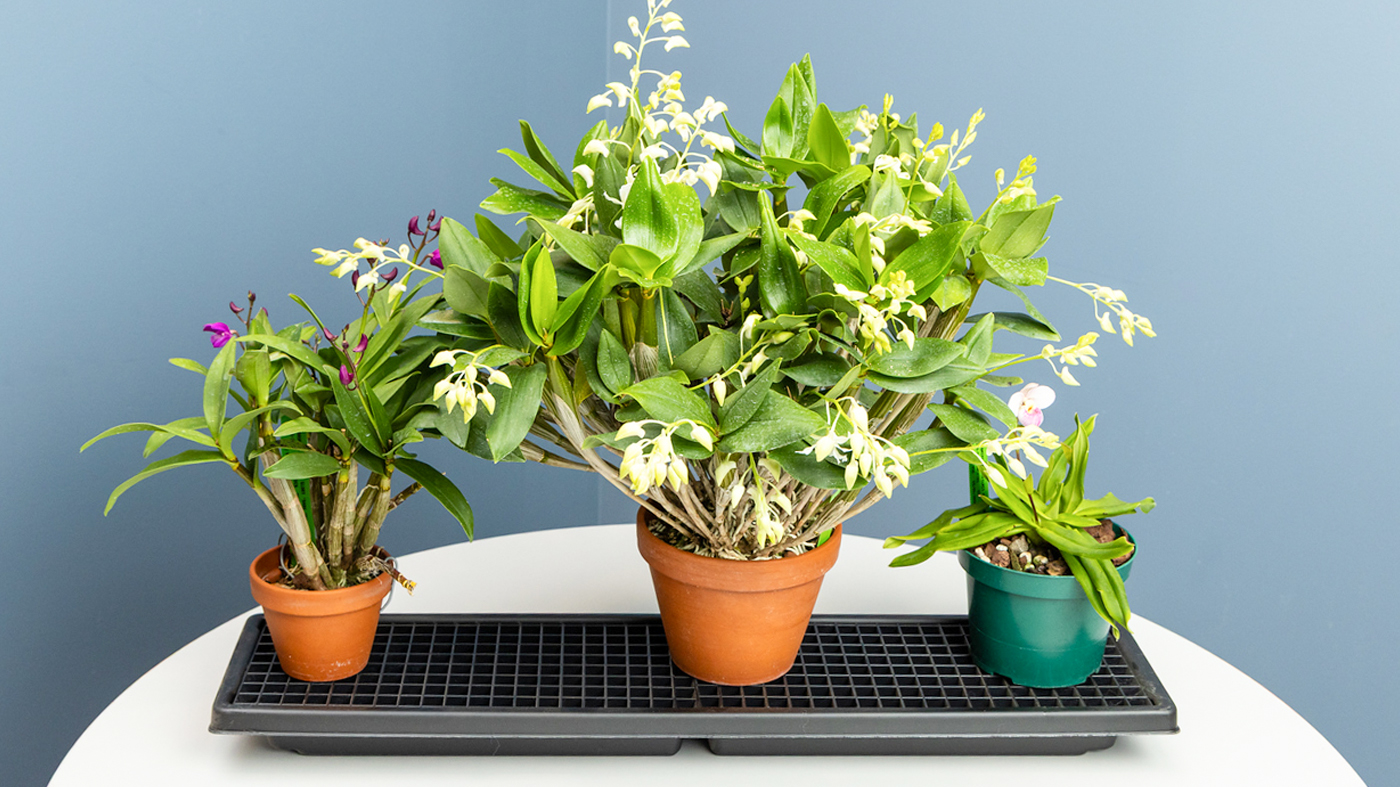
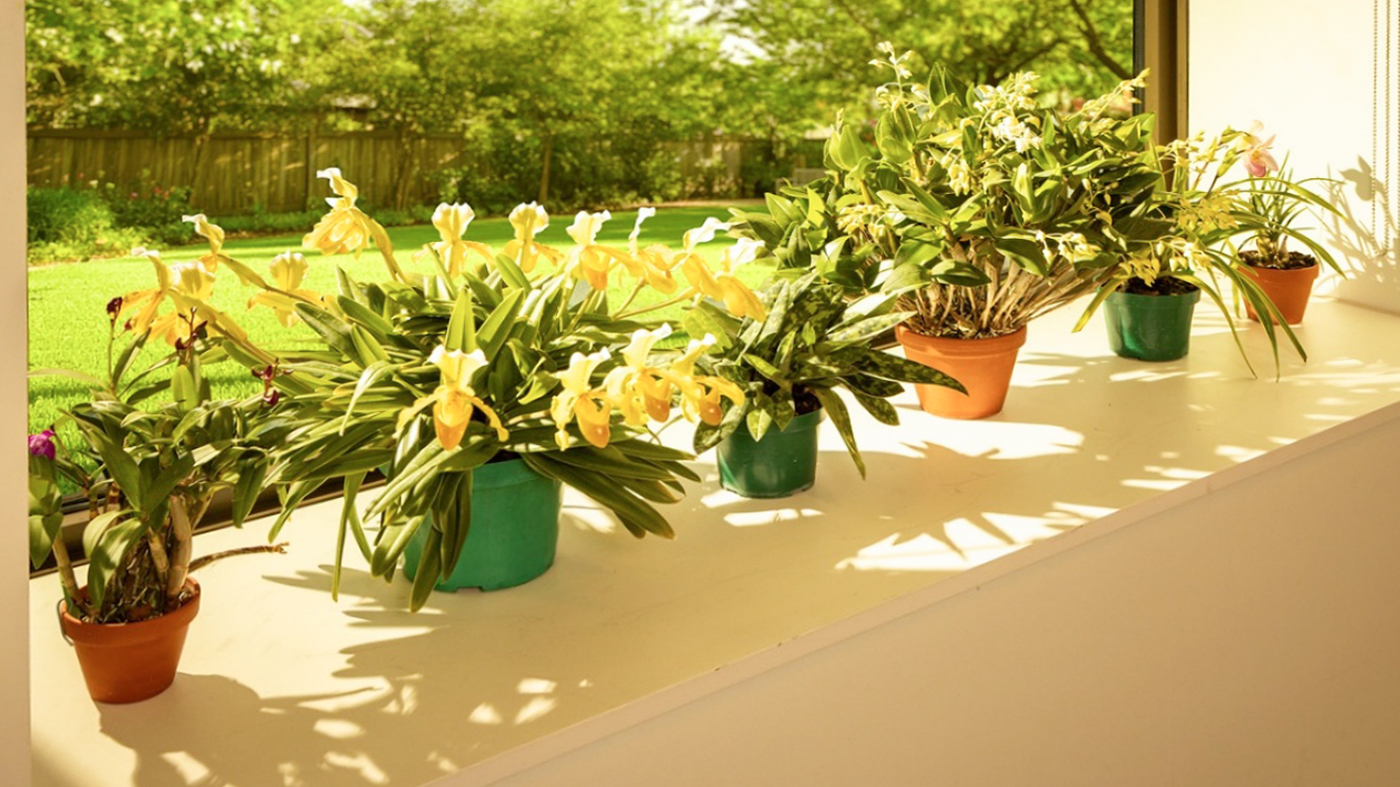
Because light is so important to orchid health, it often helps to grow them near a window. Orchids should not touch the window, though. Orchids can be damaged if they touch windowpanes that are too hot or too cold. When placing an orchid, windows that face east or south are recommended. Avoid putting orchids by a window on the north side of a building. North facing windows do not provide much light. West facing windows should also be avoided because they can get too warm in the afternoon.
Orchids often need humidity levels that are higher than what is common in most homes. There are several things that can be done to prevent orchids from drying too much. Avoid putting orchids near vents, where hot dry air blows directly on the plant. If the humidity level is too low, a humidifier can be run near the orchid. Another strategy is to place an orchid in a clear glass container, such as a vase. Some orchids prefer more humidity than others. Orchids in the genus Phalaenopsis are popular tropical orchids that benefit from higher humidity levels.
When selecting a location for your orchid, keep temperature in mind. Most orchids grow well in temperatures that we find comfortable. Many orchids thrive at daytime temperatures of 70–80 degrees Fahrenheit. If you like to turn the temperature down in the evening, that practice can benefit some orchids. Many orchids in the genus Cattleya, as well as Paphiopedilum and Oncidium, enjoy warm day temperatures but prefer 55–65 degrees at night.
Getting enough light
Not all orchids need the same amount of light. Some orchid species grow well in low light, while others do not. Most orchids do not grow well in direct sunlight. Too much light can lead to sunburned leaves and faded flowers. Too much light also damages flower buds. The flower buds may not be able to open if the damage is severe. If the damage is mild, the flowers will open but may have dry, brown edges or distorted growth. If you think your orchid is getting too much light, you can move it to a location where it gets indirect sunlight.
Even orchids that thrive in low light environments need light. The color of an orchid’s leaves can tell you if it is getting enough light. Light green leaves are a sign of adequate light. Leaves that are longer than usual, dark green, and spindly, indicate the orchid is not getting enough light. Without enough light, orchids will struggle to produce flowers. In some cases, the orchid will not be able to flower at all. In other cases, the flowers will be smaller.
One way to increase your orchid’s exposure to light is to find a brighter location. Another option is using artificial light. Choosing a light for your orchid can be overwhelming. Many specialized lights exist for growing plants. Orchid enthusiasts often use fluorescent lights or LEDs. It is recommended to choose one that provides your orchid with a full spectrum of light. This kind of lamp will emit light with short wavelengths as well as long wavelengths. Orchids need a mixture of both in order to thrive.
Watering tips
Orchids are sensitive to overwatering. If they are watered too often, root rot quickly becomes a problem. There is no watering schedule that works for all orchids. Each species has unique requirements. Some need to be watered weekly, while others need to be watered less often. The best strategy is to learn about the requirements your species has, regularly observe the orchid and water as needed. Several helpful resources are included at the end of this page. Additionally, here are a few watering tips.
For potted orchids, the container weight is one way to know if the media is wet or dry. If you pick up the container after watering, the container weight will be relatively heavy. When the media dries, it will weigh less because air will fill the pores instead of water. With time and practice, you can train yourself to recognize the difference between these two weights. Watering only when the container is light is one of the best ways to avoid overwatering.
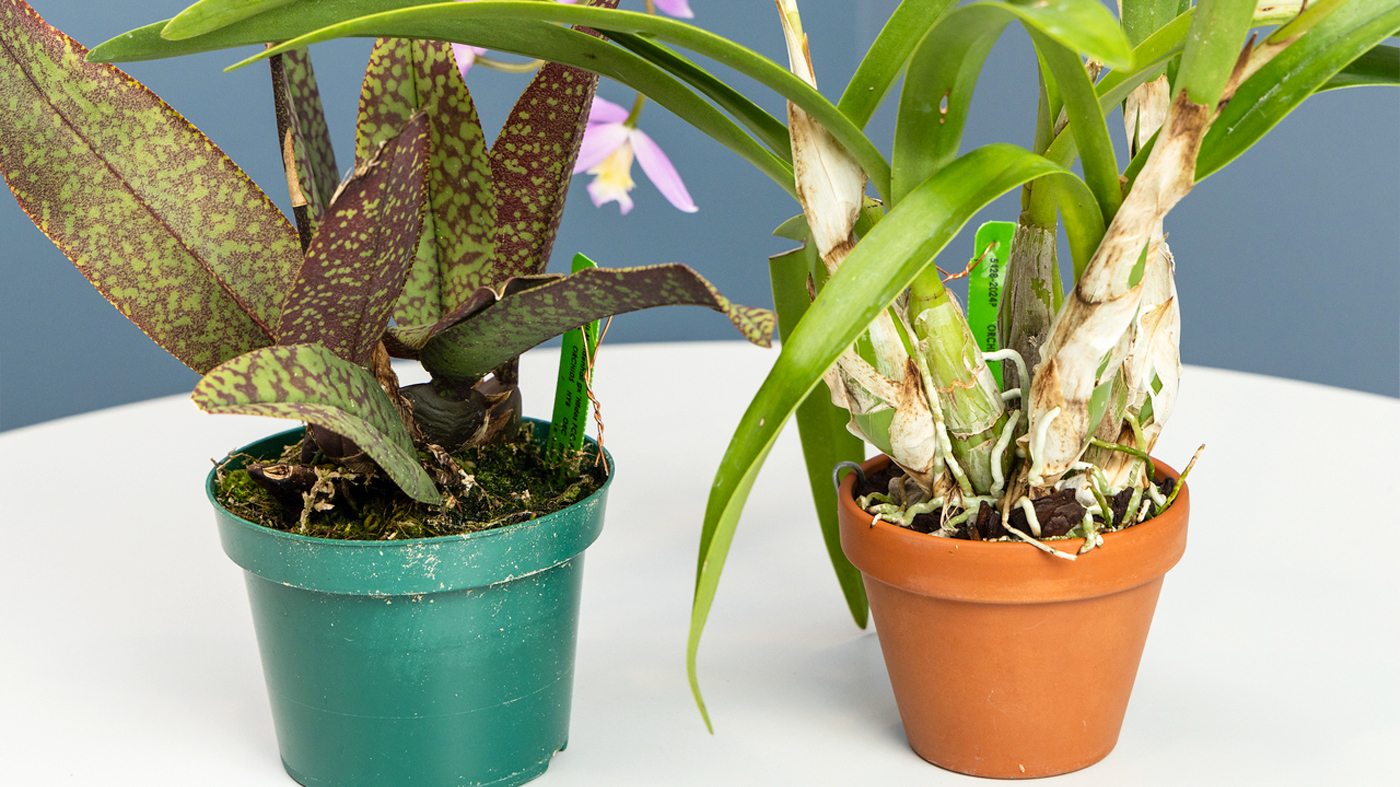
The orchid’s container will also influence how frequently you water. Clay pots that do not have a hard shiny coating have pore spaces that provide more air flow to plant roots. This can be very helpful for orchids, because orchid roots need an ample amount of oxygen. However, this container will encourage the planting media to dry more quickly than a plastic pot. Plastic pots and clay pots that are glazed retain moisture for longer amounts of time. This means an orchid grown in a clay pot that is not glazed will need water sooner than an orchid in a plastic pot.
Nutrition and fertilizer
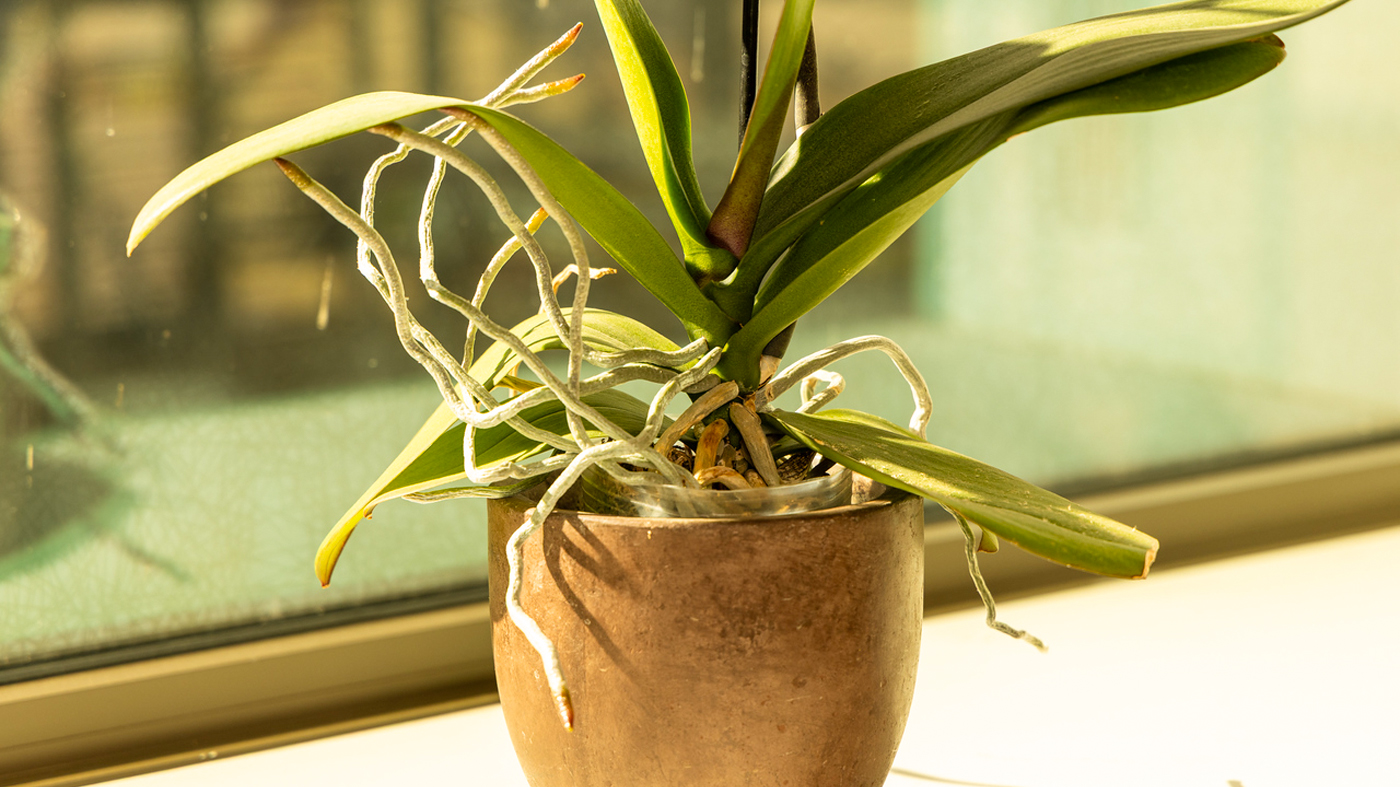
Orchids need a balance of nitrogen and other nutrients to stay healthy and grow. No matter what growing media is used, additional nutrients will need to be added periodically. However, orchids do not require much fertilizer. A little goes a long way.
Orchid fertilizers are designed to provide the nutrients that orchids need. Other well-balanced fertilizers can also be used. Look for fertilizers that contain nitrogen, phosphorous, and potassium, as well as micronutrients. For example, a 10–10–10 fertilizer contains 10 percent nitrogen, 10 percent phosphorus, and 10 percent potassium. Using a fertilizer higher in nitrogen can be helpful if the orchid is growing in shredded bark.
In general, you will find that it is easier to apply liquid fertilizers to an orchid, or fertilizers that can be dissolved in water. Never pour a fertilizer directly onto dry roots. It is best to water the orchid before fertilizing it so that the roots are still wet when fertilizer is applied. A common rule of thumb for fertilizing orchids is to water on a weekly basis with a diluted amount of fertilizer when the orchid is actively growing. It does not hurt the orchid to skip a fertilizer application once a month, and to use plain water to wash out any salts that have built up from previous fertilizer applications.
Flowering time
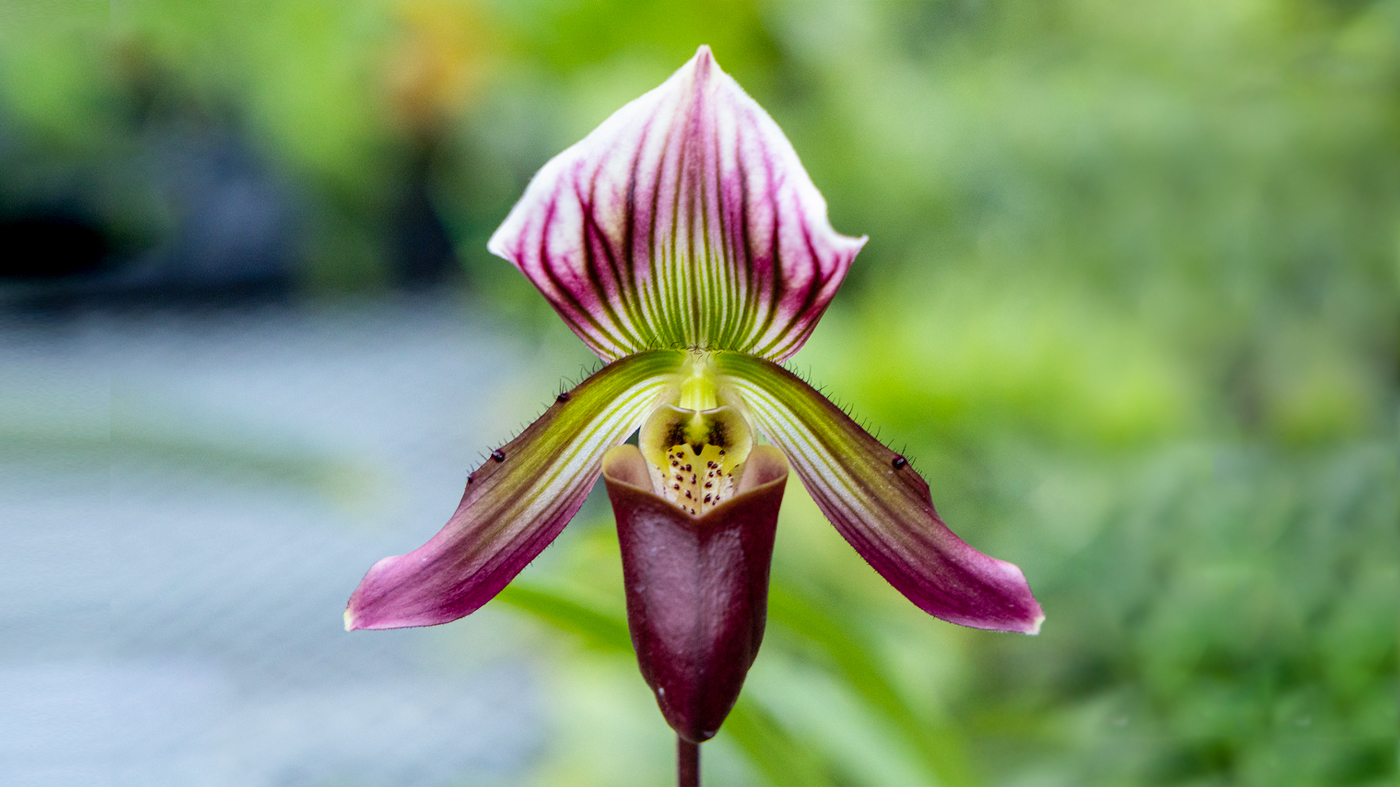
Most orchids flower once a year, under the right conditions. Some orchid species flower twice a year or more. If an orchid has not bloomed at all for more than a year, it is time to do some research. The first step is to look at what you are already providing the orchid. An orchid that does not have enough light will not bloom, even if it has everything else that it needs. Similarly, an orchid that receives too much light will not bloom. Twelve or more hours of light per day prevents many orchid species from blooming. Too much lighting can be a problem in urban locations, where orchids that are placed by windows receive light at night from streetlights. If you think your orchid is getting too much light, you can provide less light by moving it to a darker location at night.
Light is just one of several factors that need to be balanced for an orchid to bloom. Before changing temperature or watering practices, it is a good idea to find information that is specific to your orchid. Techniques that encourage one species of orchid to re-bloom may not work on a different species. For example, there are big differences in what temperature encourages a tropical orchid to flower, and an orchid that did not come from a tropical location. Thankfully, orchid researchers and enthusiasts have compiled resources that are readily accessible. You will find a list of recommended resources at the end of this article that can help you in your search.
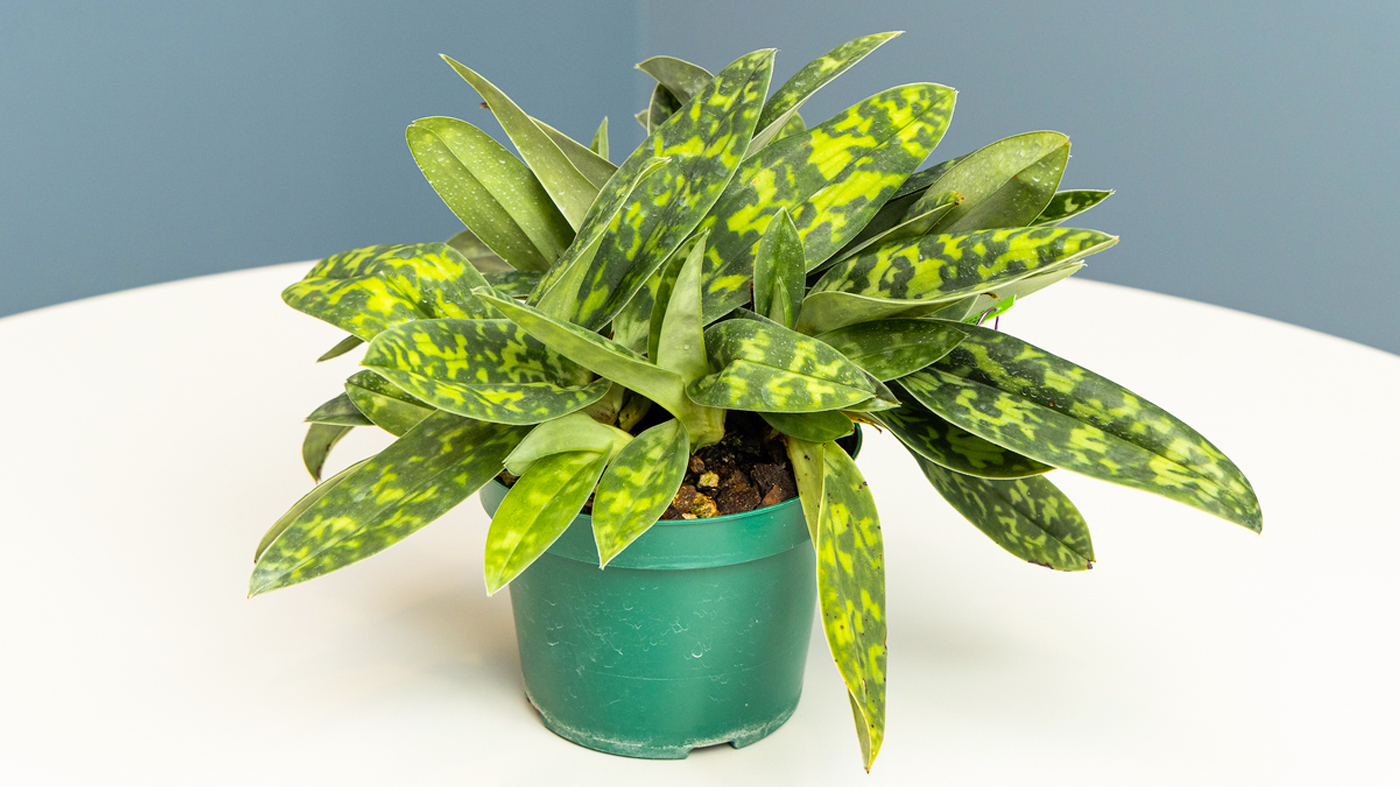
How to care for an orchid after it is done flowering
After the orchid is done flowering, you can remove the old flower spike. Use sanitized pruners when cutting the flower spike. This helps prevent infection and disease.
Flowering, for an orchid, is like running a marathon. Some orchids have the energy level for one race, and then they need to rest. Orchid hybrids often have the energy to produce many flowers. They may have one spike with amazing flowers, followed by another. Phalaenopsis is famous for an abundance of long-lasting flowers. Even Phalaenopsis cannot produce flowers all the time. At some point, orchids need a break.
When an orchid enters a rest period, it will not grow flowers. The roots will not grow. There will be no new pseudobulbs. The plant is not sick; it is resting and regaining strength. Ways you can care for your orchid as it rests include keeping temperatures low and watering less often.
Repotting orchids
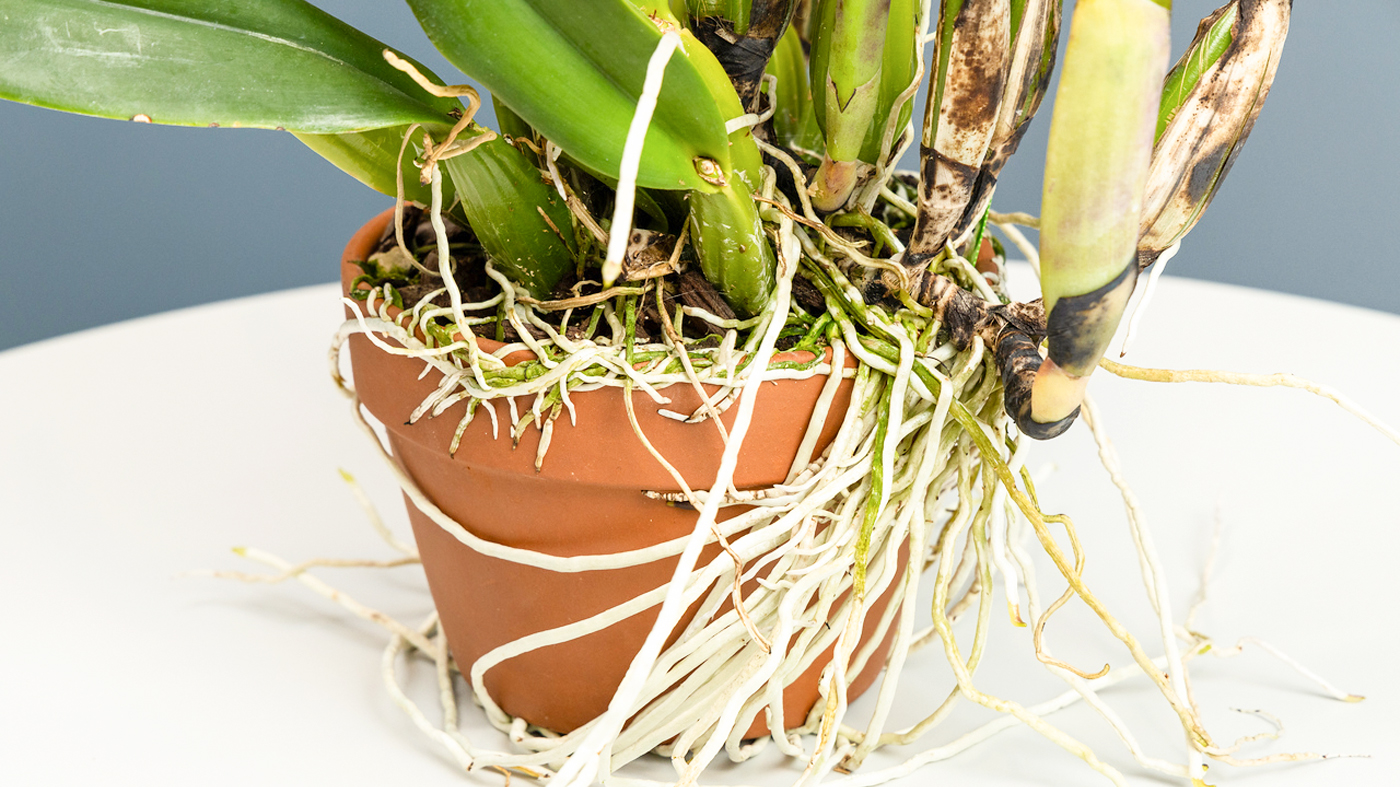
Over time, bark and other naturally occurring potting materials decompose. As potting media breaks down, air pockets become smaller, and it takes longer for water to drain. This can lead to root rot and other plant health problems. Not only that, as orchids grow, their roots, stems and leaves can become overcrowded. In some cases, the center of the plant will die back. These challenges can be prevented by repotting an orchid every two to three years into a clean container with fresh bark.
Here are a few tips for repotting orchids:
- Select a clean pot that is about two inches wider than the current container.
- Water the orchid thoroughly before you repot the plant.
- Gently pry the roots from the sides of the container, using a clean knife.
- Carefully lift the plant out of the container.
- Free the roots from as much of the old potting material as possible.
- Look closely at the roots to see if any are dead or have a disease.
- Use sanitized pruners to remove dead or diseased roots.
- If the orchid has pseudobulbs, remove brown pseudobulbs. Leave at least four healthy pseudobulbs.
- Add a thin layer of bark at the base of the new container.
- Gently hold the orchid in place as you add potting media around the roots.
- To provide support after repotting, insert a stake.
- Use a plant clip or other method to attach the plant to the stake.
- Water the orchid and allow the water to drain.
- Then place the orchid in indirect sunlight as the plant adjusts to its new container.
Common orchid pests and problems
- Aphids
- Mealybugs
- Mites
- Scales
- Slugs
- Snails
- Thrips
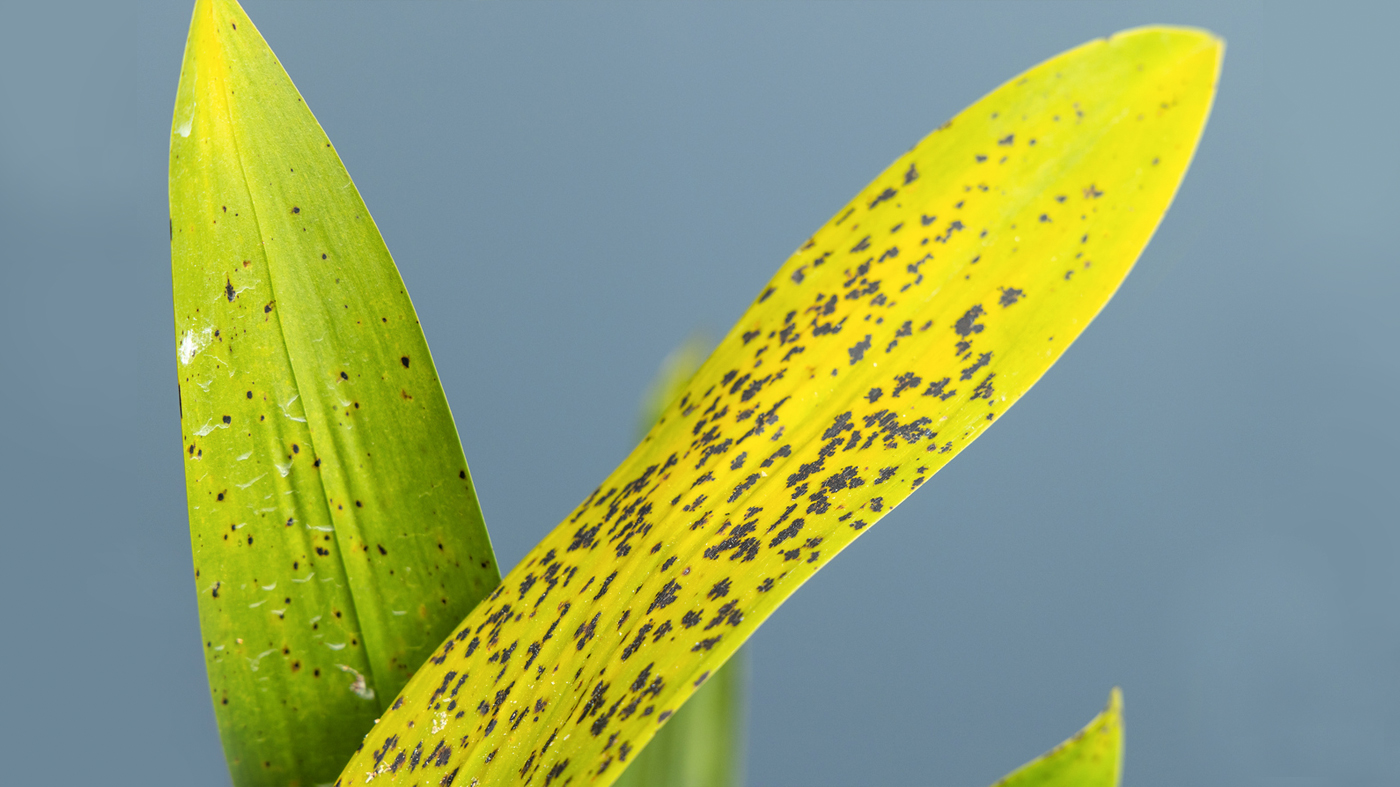
Fungal and bacterial diseases can also affect orchid health. Leaf spots, irregular blotches, and rot are often caused by fungi or bacteria. Light or dark colored streaks and mottled leaves are symptoms associated with plant viruses. Orchid viruses are serious. Disposing of orchids that have a virus is advisable. If removing the infected orchid is not an option, isolating the orchid is recommended.
For more information on orchid care, disease diagnosis and recommended treatments, contact the Garden’s Plant Information Service. Find additional resources in the Helpful resources for orchid care section.

Helpful resources for orchid care
The Plant Information Service is a free service provided by the Chicago Botanic Garden. You can email, call, or stop by the walk-up window to share your plant questions.
A book recommended by our orchid curator, Johanna Hutchins, on orchid care is: The American Orchid Society Guide to Orchids and their Culture, which is a publication from the American Orchid Society.
Culture guides from the American Orchid Society provide in-depth information on growing specific types of orchids.
The Illinois Orchid Society’s resource list includes culture sheets with specific care instructions for a variety of orchids.
If you would like more information on the orchid collection at the Chicago Botanic Garden, and our work with rare orchid species, check out our Orchidarium webpage.