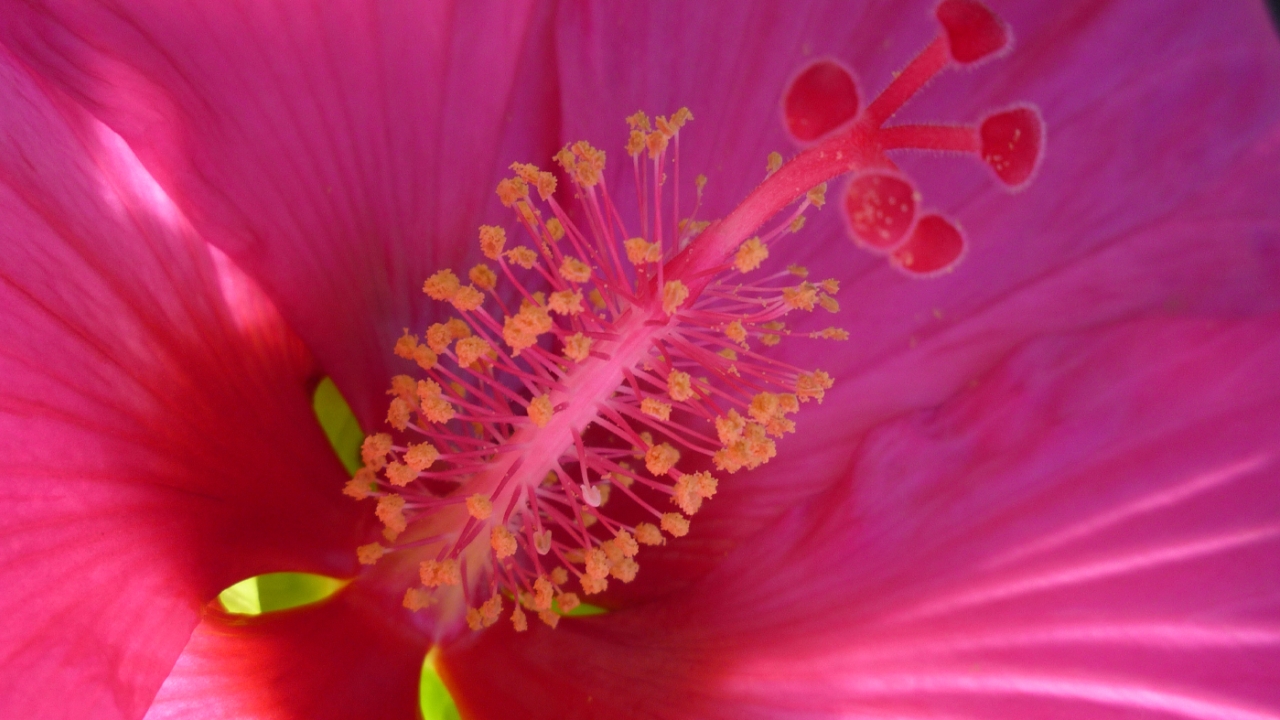
Plant Evaluation: Hardy Herbaceous Hibiscus
Hardy Herbaceous Hibiscus | Issue 53 2026
Richard G. Hawke, Director of Ornamental Plant Research
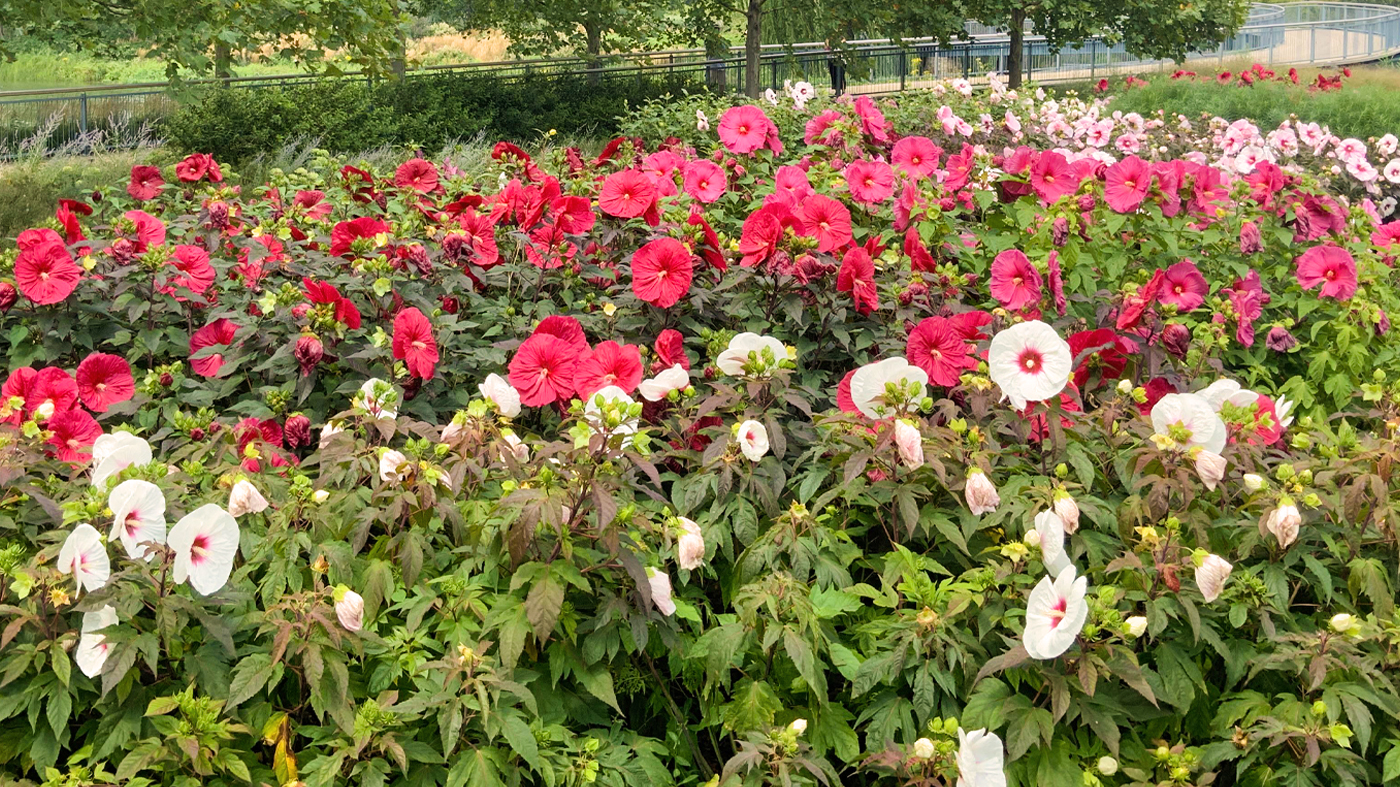
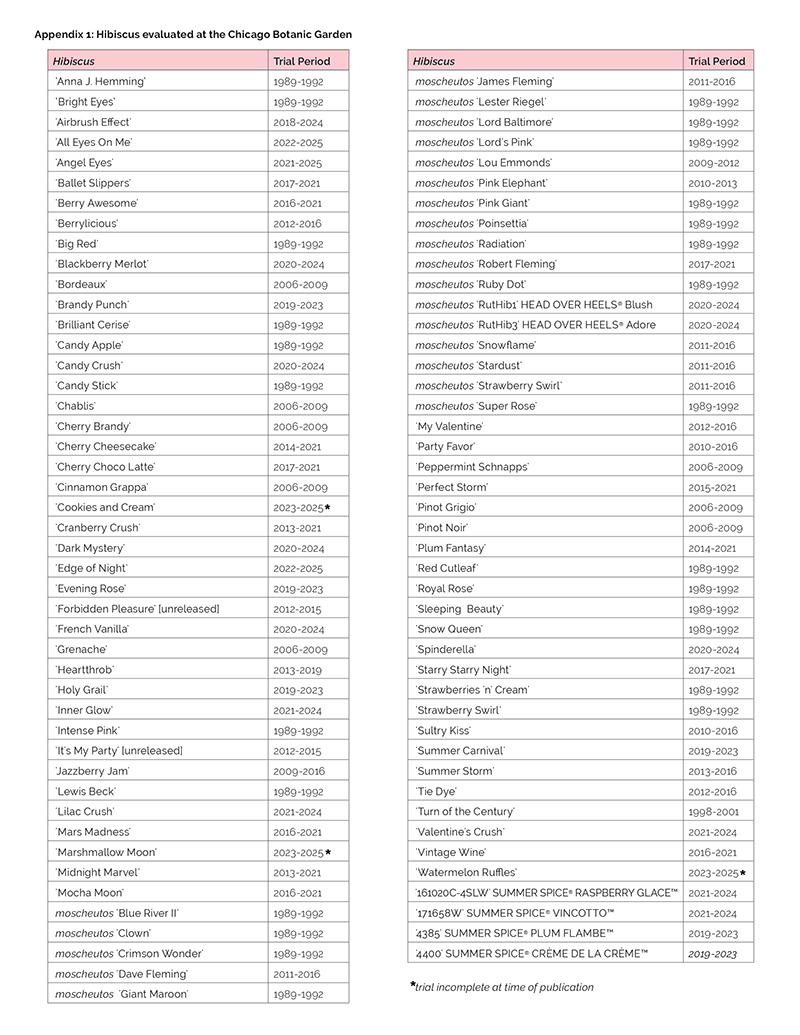
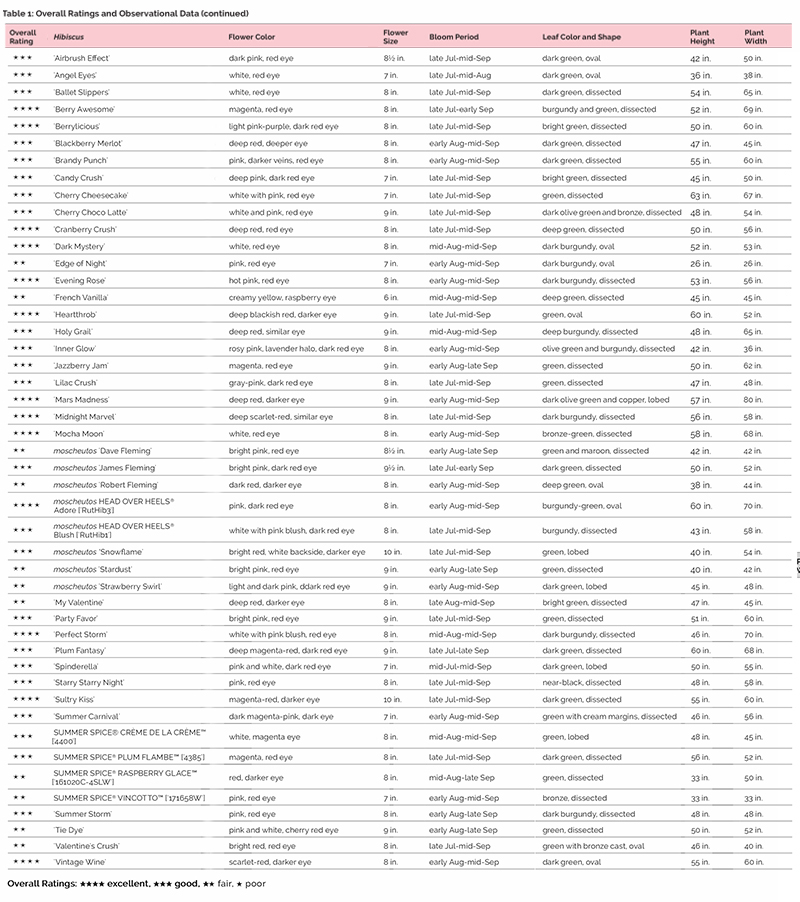
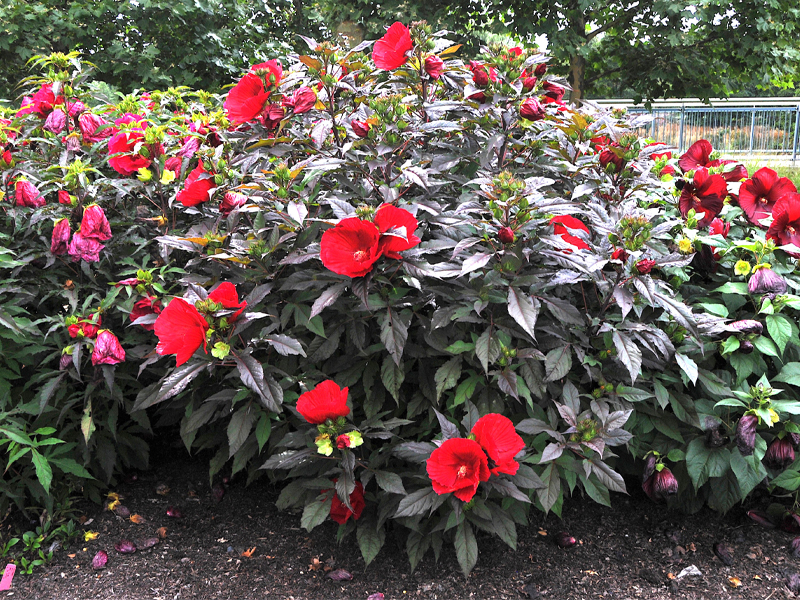
Hardy hibiscus trial at the Chicago Botanic Garden
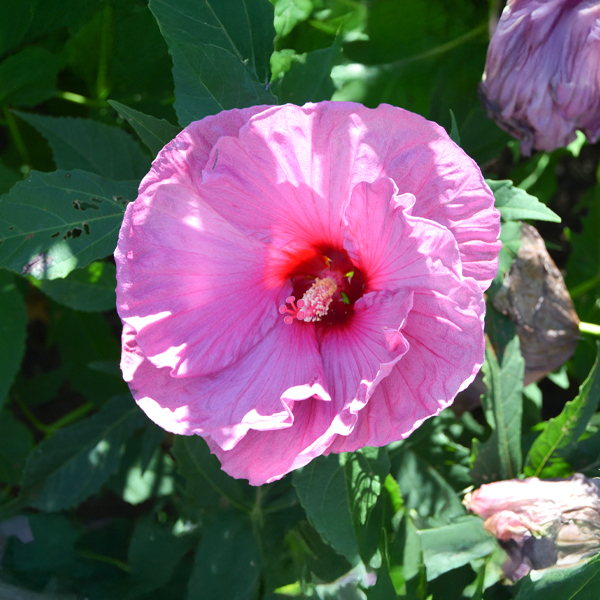
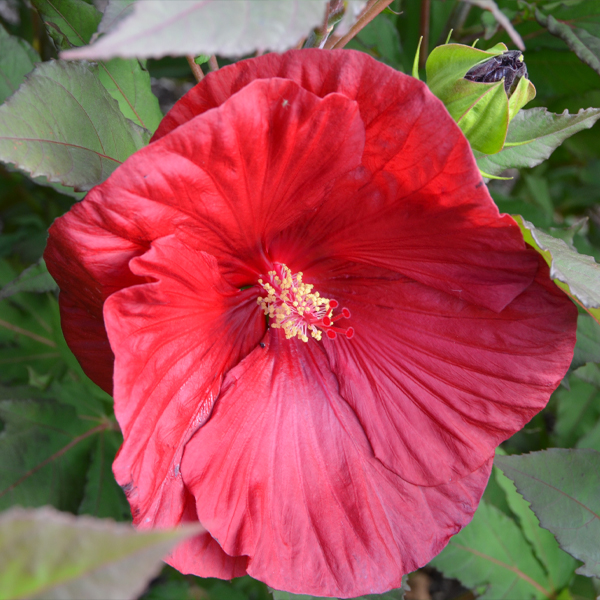
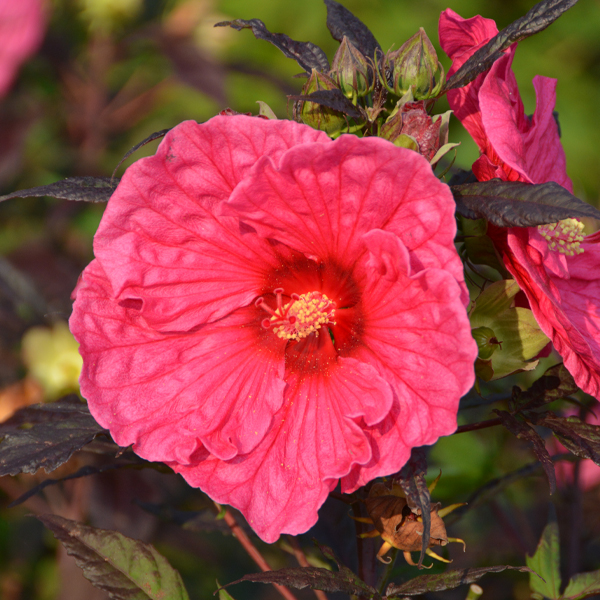
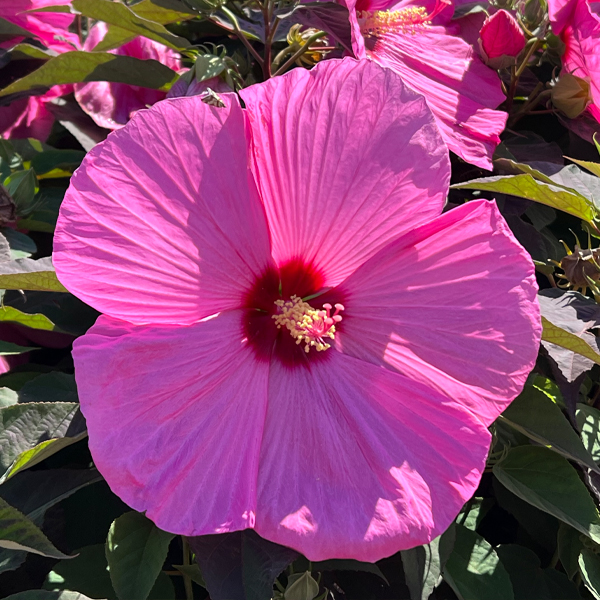
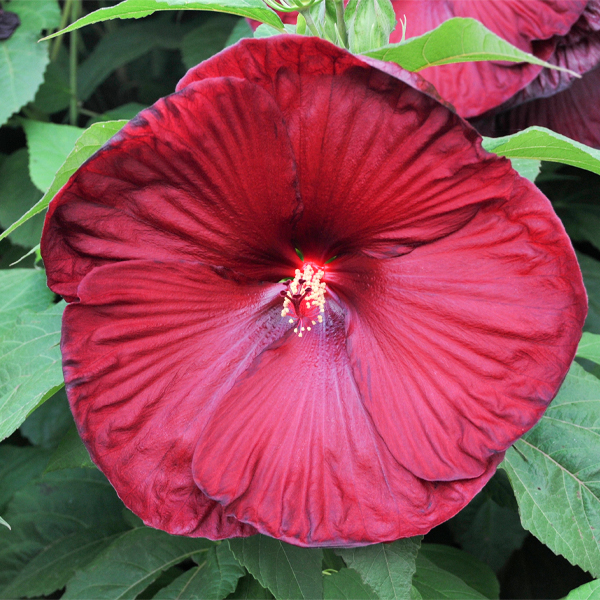
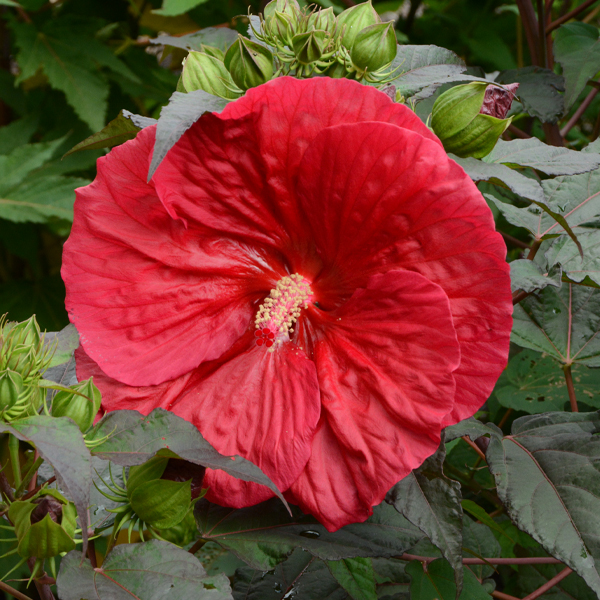
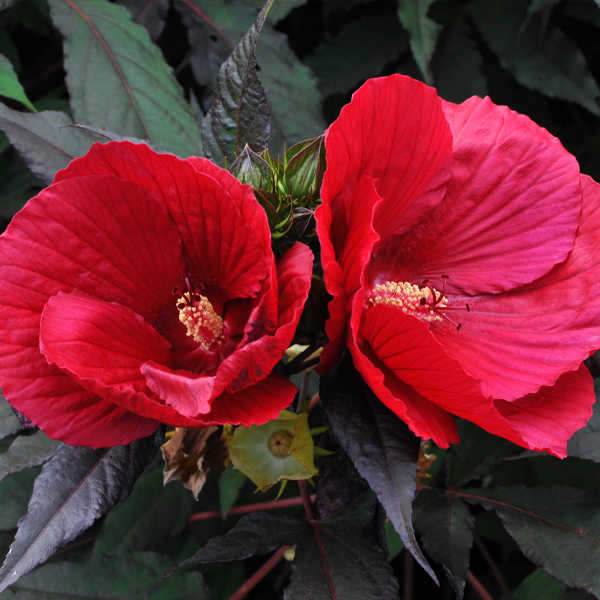
Few temperate perennials are as flamboyant as hardy hibiscuses or rose mallows—their brightly colorful dinner-plate-sized flowers can be up to 10 inches wide, bringing exotic vibes to northern gardens. Selections of the herbaceous perennial swamp rose mallow (Hibiscus moscheutos) have been cultivated for a long time but in recent years there have been exciting developments such as new flower colors and sizes, increased flower production, enhanced leaf colors and shapes, and shorter compact plant habits. Hardy hibiscuses have fans and detractors—their gigantic flowers are exuberant and charismatic to some gardeners, while others find them outsized and garish.
Hardy hibiscuses are in the mallow family (Malvaceae) and related to recognizable garden plants such as Indian mallow (Abutilon spp.) and hollyhock (Alcea spp.), and important agricultural plants such as cotton (Gossypium ssp.), cacao (Theobroma cacao), and okra (Abelmoschus esculentus). There are 243 accepted Hibiscus species worldwide, mainly from tropical and subtropical areas. Swamp rose mallow (H. moscheutos) is native to eastern North America and cold-hardy to USDA Zone 5. The hardy hibiscus cultivars in the market today are typically hybrids between several temperate U.S. native species such as scarlet rose mallow (H. coccineus) from the southeastern U.S., halberdleaf rose mallow from eastern North America (H. laevis), and swamp rose mallow.
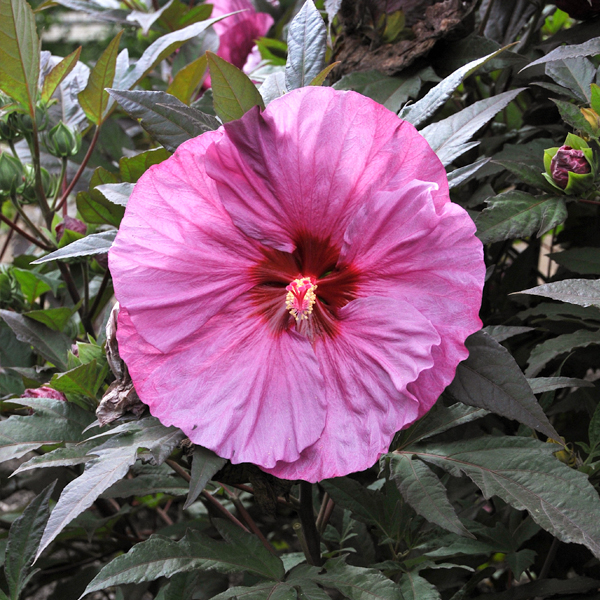
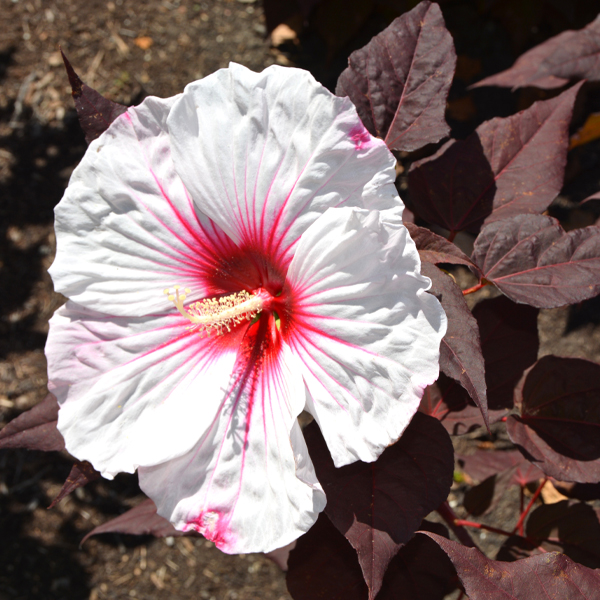
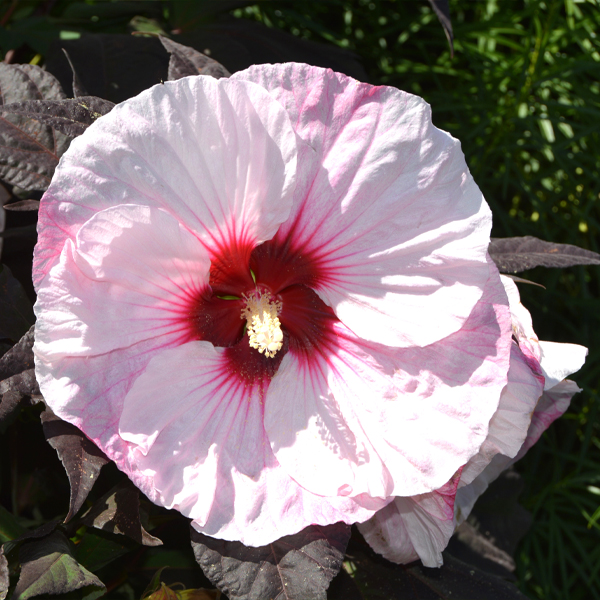
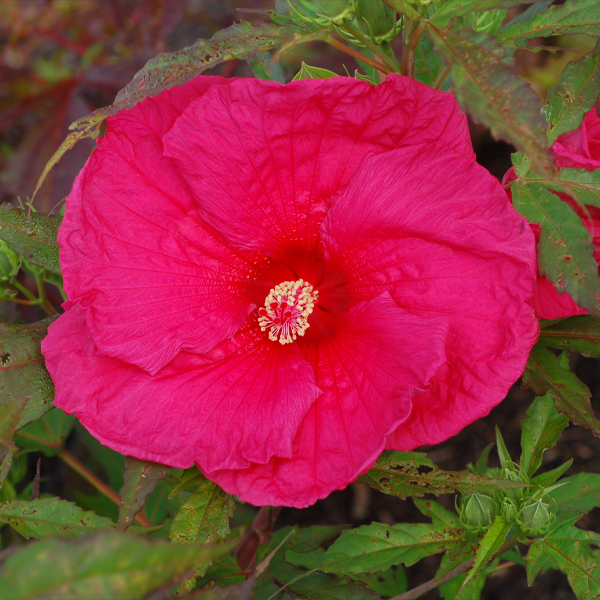
Red, pink, and white are the typical flower colors of hardy hibiscuses, although selections offer up many variations in color intensity including flushed and bicolored petals. The introduction of a lilac-blue-flowered cultivar [Hibiscus SUMMER SPICE® BLEU BRULEE™] broadened the color range, predicting more innovations to come. The shade and intensity of the spot or bull’s eye at the base of the petals varies by cultivar and may contrast with or bleed into the petal color or may be so close in color to the petals that it effectively disappears.
Sections
Trial Parameters
The Evaluation Report
Top-Rated Hardy Hibiscus
General Observations
Summary
References
Armitage, A.M. 2008. Herbaceous Perennial Plants, Third Edition. Champaign, IL: Stipes Publishing L.L.C.
Hawke, R. Hibiscus moscheutos Cultivars and Horticultural Hybrids. Plant Evaluation Notes Issue 4, 1993. https://www.chicagobotanic. org/downloads/planteval_notes/no4_hibiscus.pd
Illinois Wildflowers website.
Phillips, E. and C.C. Burrell. 2004. Rodale’s Illustrated Encyclopedia of Perennials. Emmaus, PA: Rodale Inc.
Special thanks to our plant evaluators and photographers: Alex Almodovar, Winston Beck, Janice Becker, Ellie Cashen, Patrick Dahl, Samantha Danguilan, Allison Hurt, Nat Kahn, Jack Nicholson, Heidi Petersen, Noreen Richards, Chrissy Whitacre, Robert Witkowski, and Gavin Young.
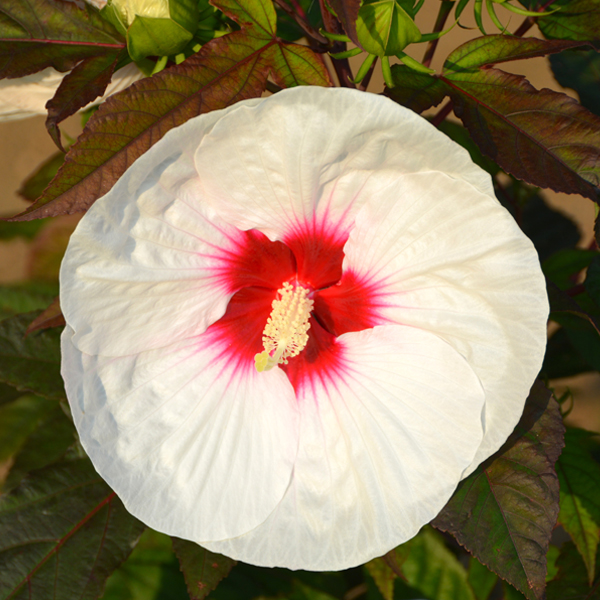
Cover photo: Hibiscus moscheutos ‘James Fleming’ [photo by Ellie Cashen]
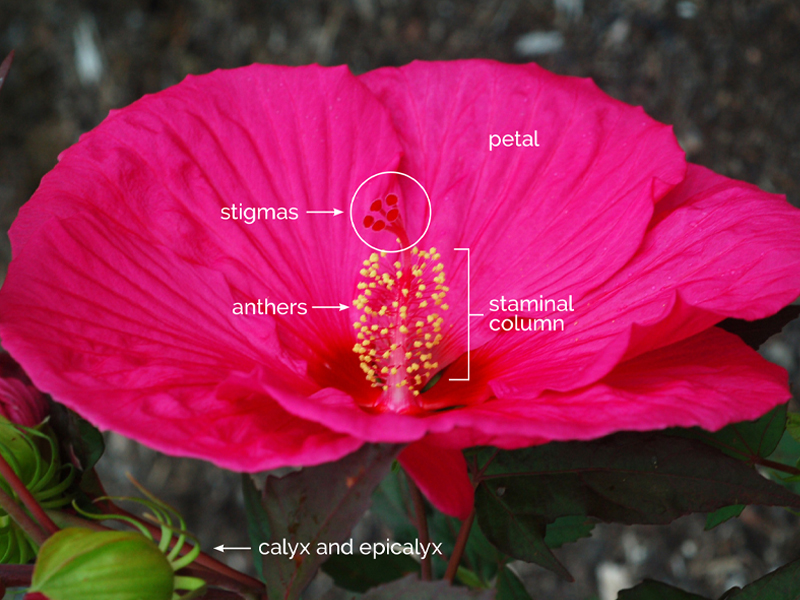
Figure 1: Hibiscus floral diagram [Hibiscus moscheutos ‘James Fleming’]
Flower forms vary from flat to slightly cupped. The five crinkled or crepey petals typically overlap and are etched with prominent veins that are sometimes suffused with a different color. Wild-occurring swamp rose mallow flowers range from 4 to 6 inches wide, but cultivars may have flowers up to 10 inches across. Flowers are held in a green, leaf-like calyx, which is subtended by a fingerlike epicalyx [whorl of bracts beneath the calyx]. The male and female reproductive parts are held on long bottlebrush columns protruding from the center of the corolla. The numerous stamens are fused into the prominent staminal column that surrounds the pistil and bristles with many white or yellow anthers; the pistil branches into five stigmas at the apex of the column [see Figure 1].
Flowers are fleeting—each blossom lasts for one to two days but flowers open in succession over many weeks in the summer and early fall. Flowers may or may not drop cleanly from the plant; if wet, flowers are prone to sticking to and drying on the leaves in an unsightly display. Fruit capsules ripen brown, remaining on the plants for an extended time, adding minor late-season interest. Some older cultivars are more plant than flower, but newer cultivars have been bred for indeterminate flowering, meaning that axillary flowers are produced along the stems and not just at the tips. Hardy hibiscuses provide nectar and pollen for bumblebees, other specialist bees, and hummingbirds. Caterpillars of several butterflies and moths feed on the foliage.
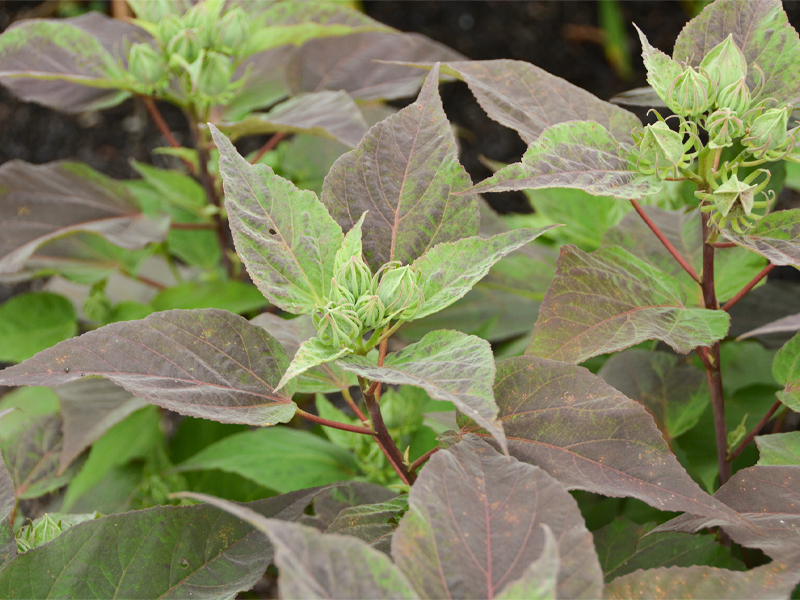
The swamp rose mallow leaf is broadly oval [figure 2a]
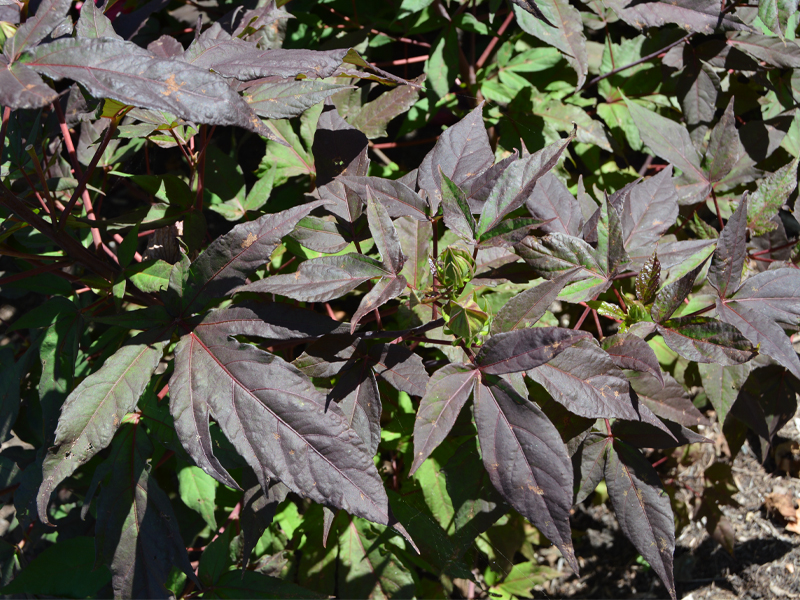
Leaf is dissected [figure 2b]
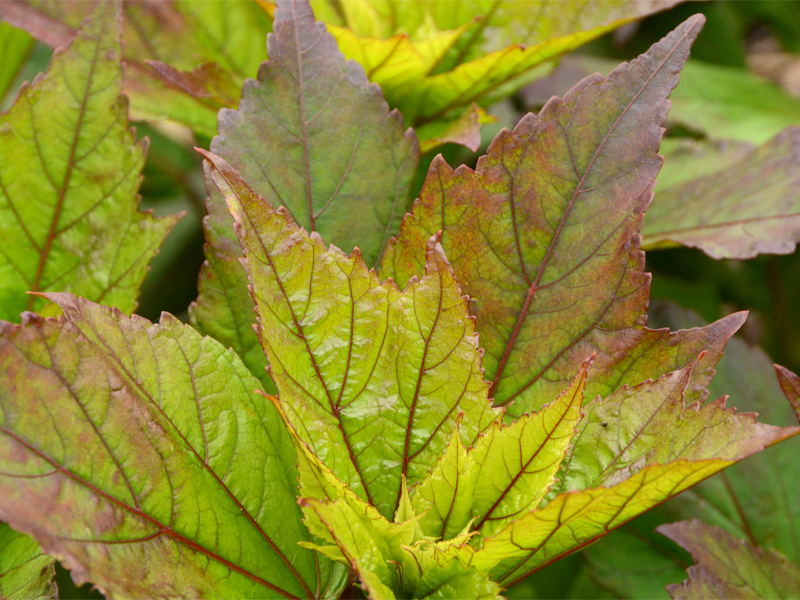
Leaf is lobed [figure 2c]
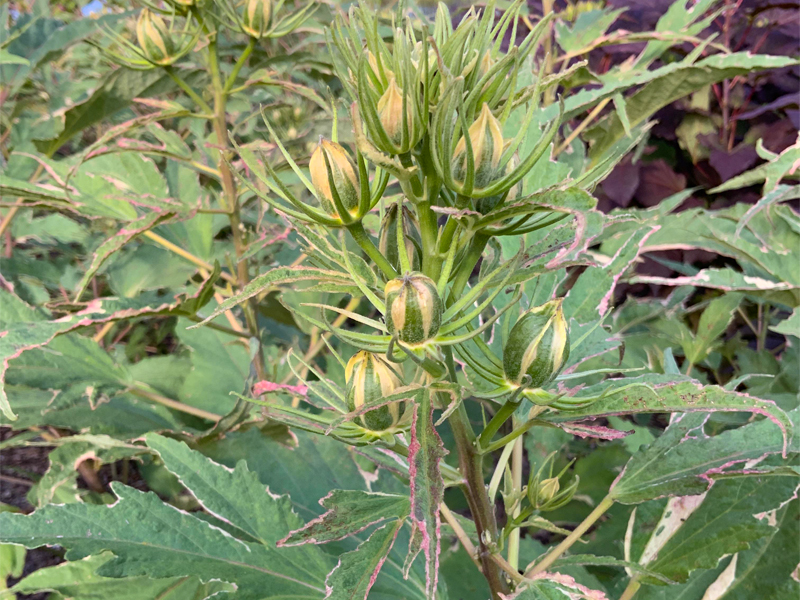
Variegated leaves and buds of ‘Summer Carnival’
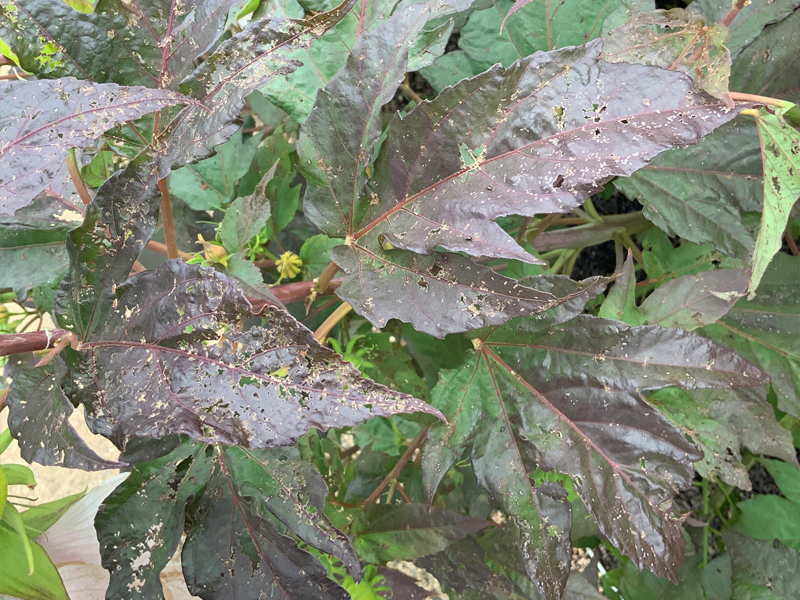
Flea beetle damage on HEAD OVER HEELS® Blush
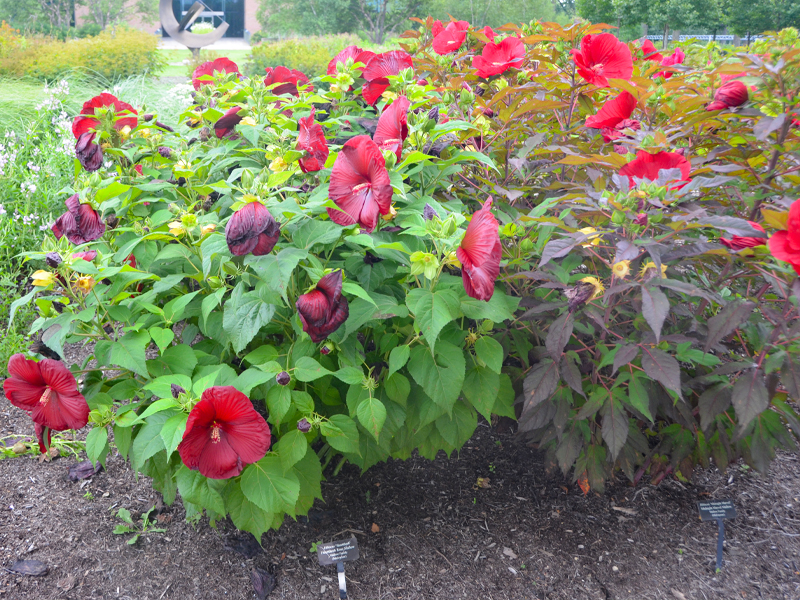
Hibiscus ‘Heartthrob’