The Spring Garden Awakens
"In the spring, I have counted 136 different kinds of weather inside of 24 hours."
— Mark Twain, American Humorist
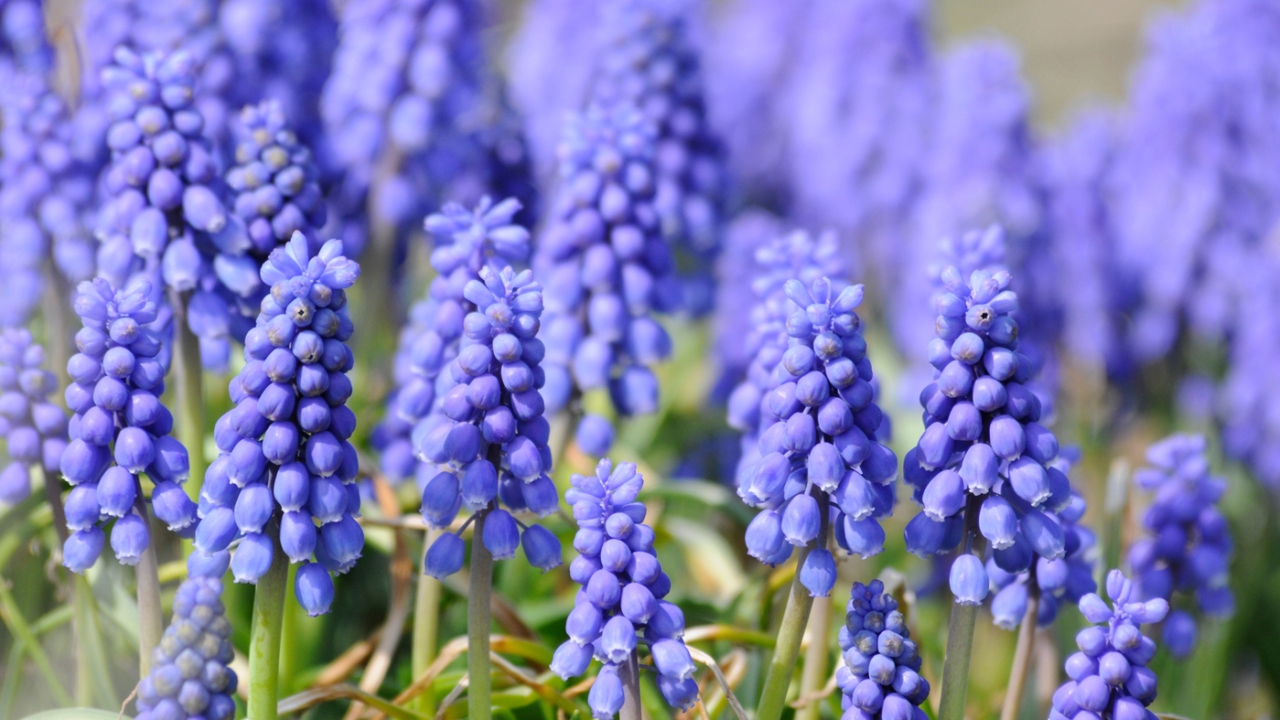
Mark Twain liked exaggeration, but sometimes April weather feels like a roller coaster. Hot, cold, rain, sun, snow, frost, freeze—all are possible in the greater Chicagoland area—sometimes in the same week. In the meantime, the lawns are greening up, and the tulips, daffodils, winter aconites, and dwarf irises are blooming. In the past week, forsythia bushes began unfurling their flower power in shades of bright yellow.
"Spring is nature’s way of saying, ‘Let’s party."
— Robin Williams, American Actor
While I’d like to party outside—sowing seeds and enjoying the spring blossoms—I’m keeping a cautious eye on the weather. Data collected by the National Weather Service (NOAA.gov) states that the “normal” April snowfall for the Chicago area is 1.3 inches. That’s nothing compared to the 7.9 inches of snow the area received in 2019. But typically this month, there’s little or no snow.
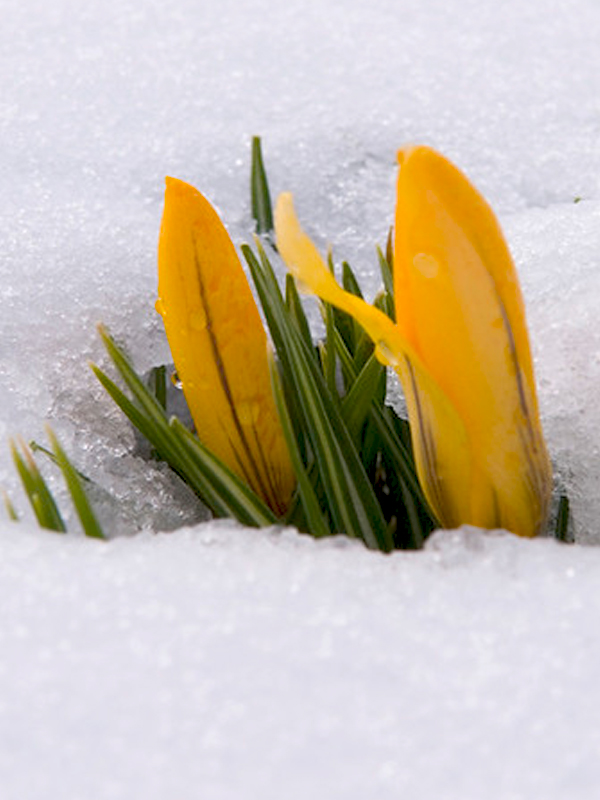
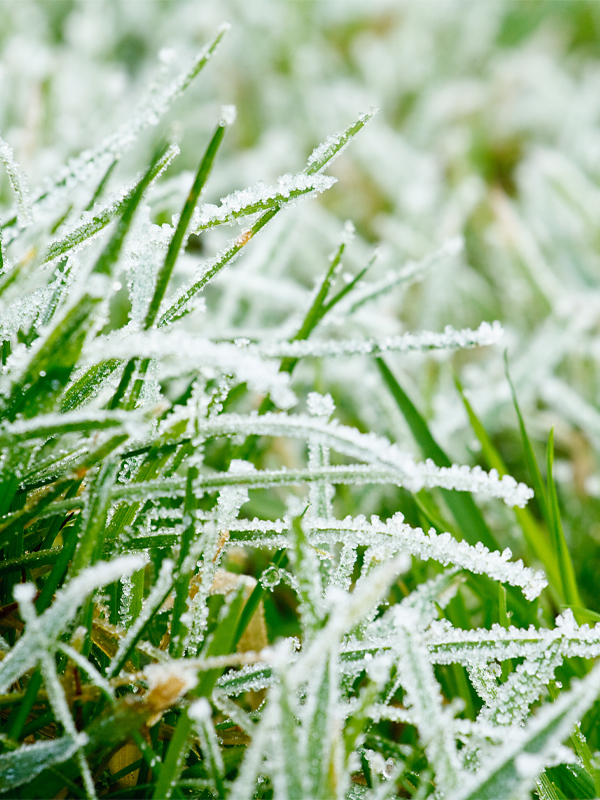
I’m more concerned about frost—the formation of those fascinating, feathery ice crystals—settling on spring foliage and flowers. Frost results when water vapor in the air forms on surfaces that are cooled below the dew point. (Unlike the actual air temperature, the dew point is the measure at which air becomes fully saturated with water vapor—it can no longer hold all the moisture in the form of invisible gas. When the air cools to its dew point, the excess water vapor condenses, settles and becomes dew or frost).
Frost or freeze?
These two terms are often mistakenly used to mean the same thing. Seed packets and plant labels may state that it’s safe to sow or plant outdoors after the last spring frost date. That’s different from the last spring freeze date. The Illinois State Climatologist’s office uses 32°F to identify frost, but visible frost sometimes appears on the ground when the reported temperatures are slightly above 32°F.
Stick with me here. On these April nights, cold, moisture-laden air can settle on the ground. The temperature near the soil surface can be colder than that just a few feet above. Official Illinois weather monitoring stations are placed five feet above the ground. At that height they record a temperature threshold of 32°F to indicate frost and 28°F for a hard freeze.
According to the National Weather Service, the “normal” date for the final spring freeze in Chicago is April 21, and April 27 in Rockford. (But the record set for the last spring freeze in Chicago at 32°F or lower took place on May 25, 1992!)
May 15th is generally considered the last date when we could experience a spring frost. (Gardening Disclaimer: As you can see, these dates vary from year to year. Weather forecasting remains an art and a science.)
What’s a gardener to do?
I like to circle April 21 (typical last potential freeze) and May 15 (typical last potential frost) on my planting calendar as a reminder. And, I pay attention to the weather forecast every day. If, like me, you’ve sown seeds outdoors of cool-season crops, like lettuce, spinach and kale, be ready to cover the seedlings with frost cloth, cardboard boxes, or inverted plant pots to protect the leaves before the temperatures drop, especially at night. This can keep the air temperature around the plants 3 to 4 degrees higher than the actual air temperature and that can make the difference between healthy or frozen foliage. Remove the coverings when the temperatures rise in the morning.
Open areas like lawns are usually the first to experience frost, while plants growing under trees are more protected. Flowering plants or spring vegetables growing near a building or solid fence may be spared from frost because the structures provide some protection. Lake Michigan plays a big roll in our local weather. Frequent, chilly spring winds cause plants growing closer to the lake to emerge later than those growing inland.
Garden centers often have pots of healthy looking vegetable plants this month. They’ve been coddled in a warm greenhouse up until now. If you buy warm-season crops (like tomatoes, peppers, beans and squash) wait to plant them until after May 15. Some gardeners like to wait until the end of May to plant their tomatoes to be on the safe side.
Get sowing!
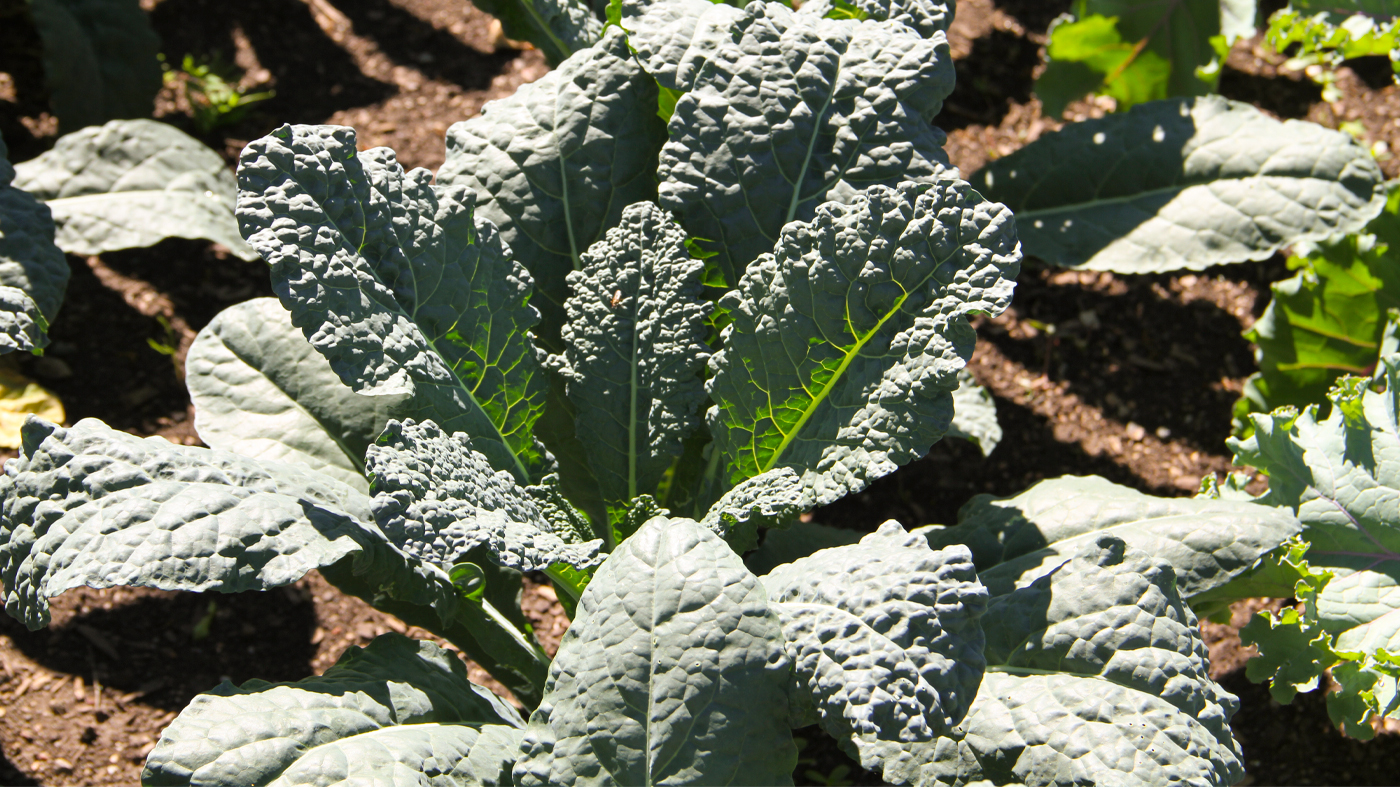
Seeds of very hardy vegetables can be sown outdoors 4 to 6 weeks before the spring frost-free date. Try something new like kale, if you haven’t grown it before. This cold-tolerant cabbage cousin is an edimental—an edible ornamental. It’s a great addition to vegetable and flower gardens where it can rub elbows with onions and spinach or salvia and petunias. Kale leaves can be frilly, curled, bumpy or ruffled, often in the most striking blue or magenta hues, offering a colorful counterpoint in flower borders.
Twice is nice
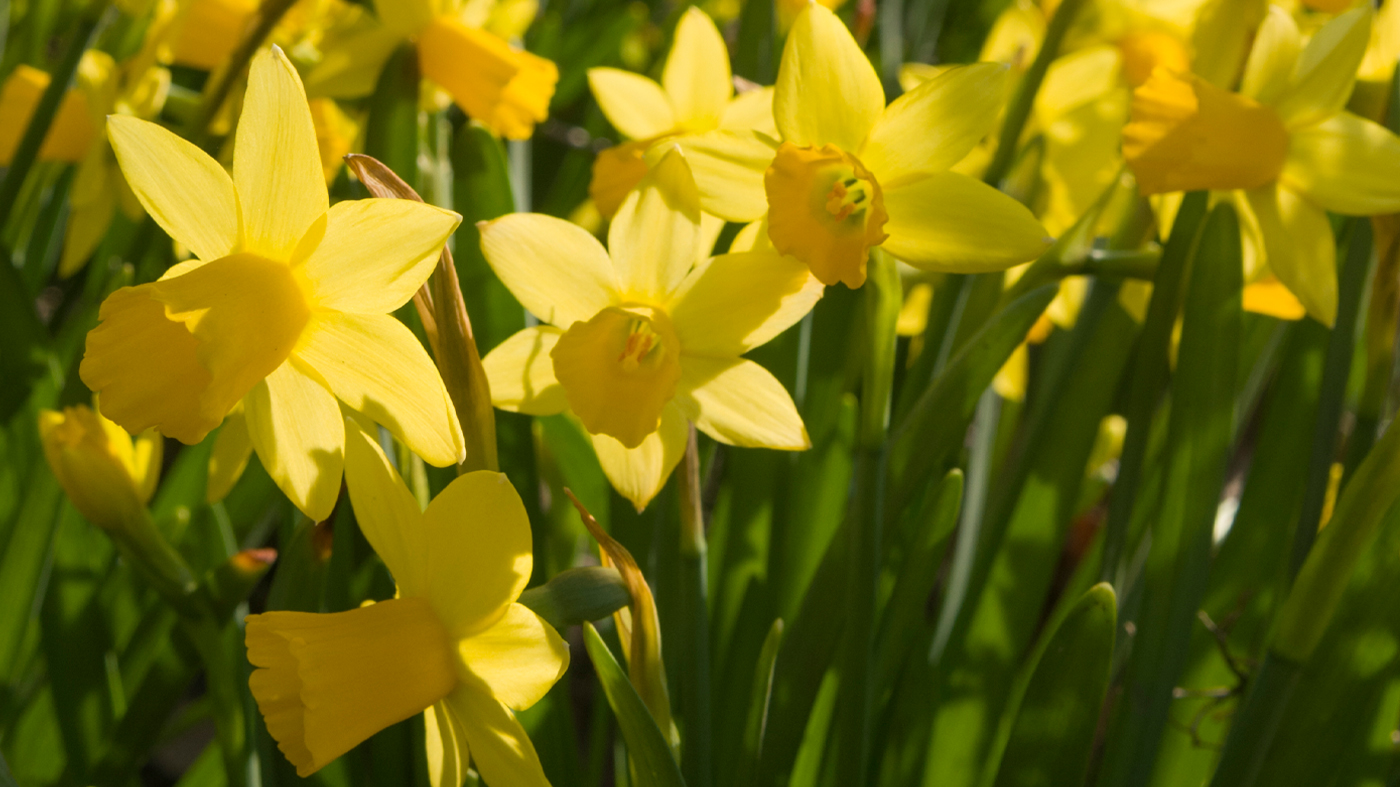
Celebrate spring by treating yourself to a pot or two of daffodils or fragrant hyacinths from the local garden center or grocery store. When they’ve finished blooming indoors, plant them outside and let the leaves die back naturally. You’ll enjoy them again next spring.
Nina Koziol is a garden writer and horticulturist who lives and gardens in Palos Park, Illinois.