

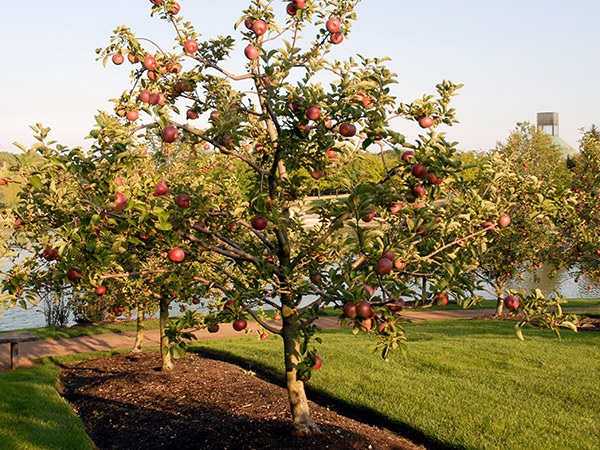
Consider applying fertilizer this month to trees or shrubs that have not received any fertilizer this year and/or have demonstrated need — for example, stunted growth, failure to fully flower or leaf out, undersized fruit, off-color foliage, recovery from disease, or insect attack.
Continue to water newly planted trees and shrubs, especially evergreens, up until ground freezes. Milder temperatures can fool gardeners into thinking woody plants don’t require as much moisture in fall as they do in summer.
Many deciduous trees and shrubs can be planted when they demonstrate fall color or drop their leaves. This indicates they are initiating dormancy. Water well and mulch with 2 to 4 inches of shredded bark. Do not fertilize at this time. Wait one year before applying a balanced, slow-release granular 10-10-10 fertilizer. Certain trees are better planted in spring, among them magnolia, redbud, Japanese maple, dogwood, doublefile viburnum, rhododendron, and any other woody plant considered marginally hardy in zone 5.
If rabbits, rodents, or deer have been a problem in past winters, take precautions with valuable woody plants now. To keep deer from rubbing antlers on tree trunks, spread garden netting or snow fencing around abused trees. Creation of physical barriers is more effective than sprays. Deter rabbits and rodents from overwintering in gardens by cutting down their winter habitats, such as ornamental grass clumps or perennials left standing for winter interest. Protect tree trunks from gnawing rabbits by setting up 12 to 16 inches of hardware cloth tacked into the soil three inches away from the trunk.