

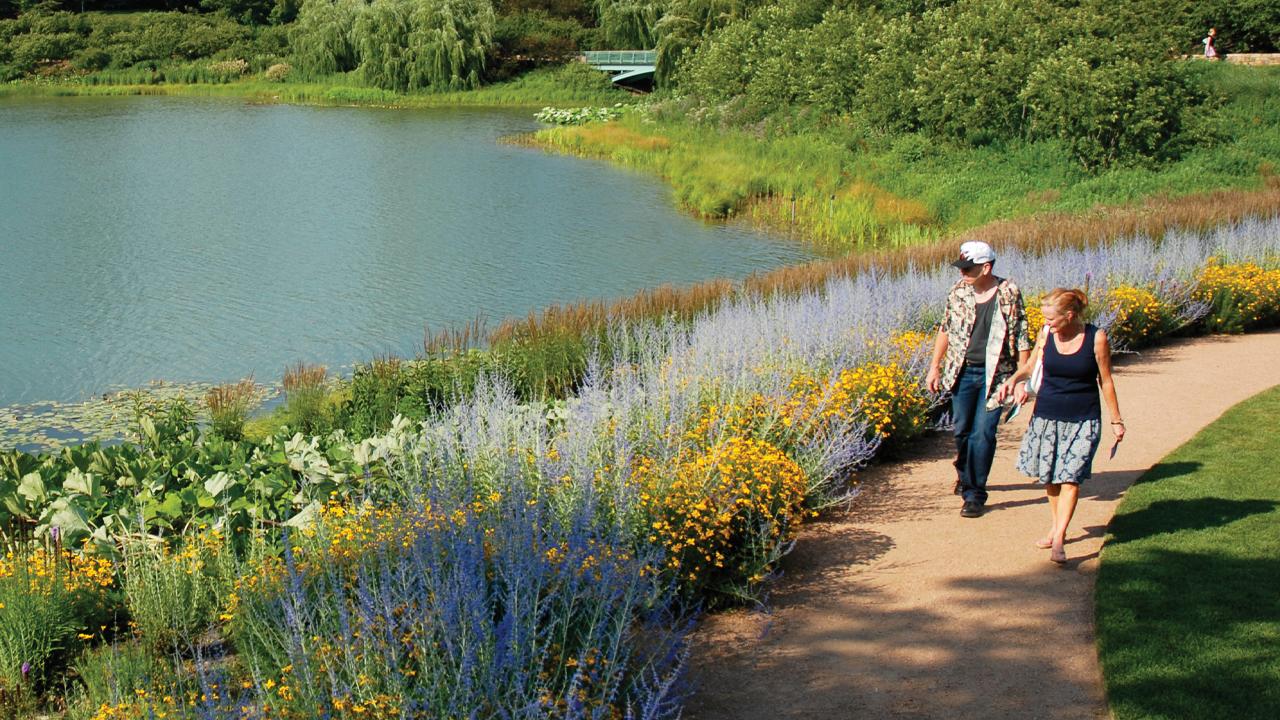
A Walk along the Water's Edge
The Chicago Botanic Garden is one of the largest public gardens in the world, with more than 2.5 million plants on 385 acres. Many new visitors may not realize that nearly one-quarter of the Garden's acreage — 81 acres, to be exact — is water. In fact, most of the 27 gardens are located on one of nine islands. Even a portion of the great Prairie, Marsh Island, is surrounded by water. These nine Garden islands are joined to one another through a series of bridges and walkways, some of which arch gracefully over the water, while others barely skim the surface, allowing visitors an opportunity to experience what it truly means to “walk on water.” Water played a significant role in the formation of the Garden more than 40 years ago, and it continues today to add so much to the enjoyment of the plants, the landscapes, natural spaces, and views — both grand and intimate.
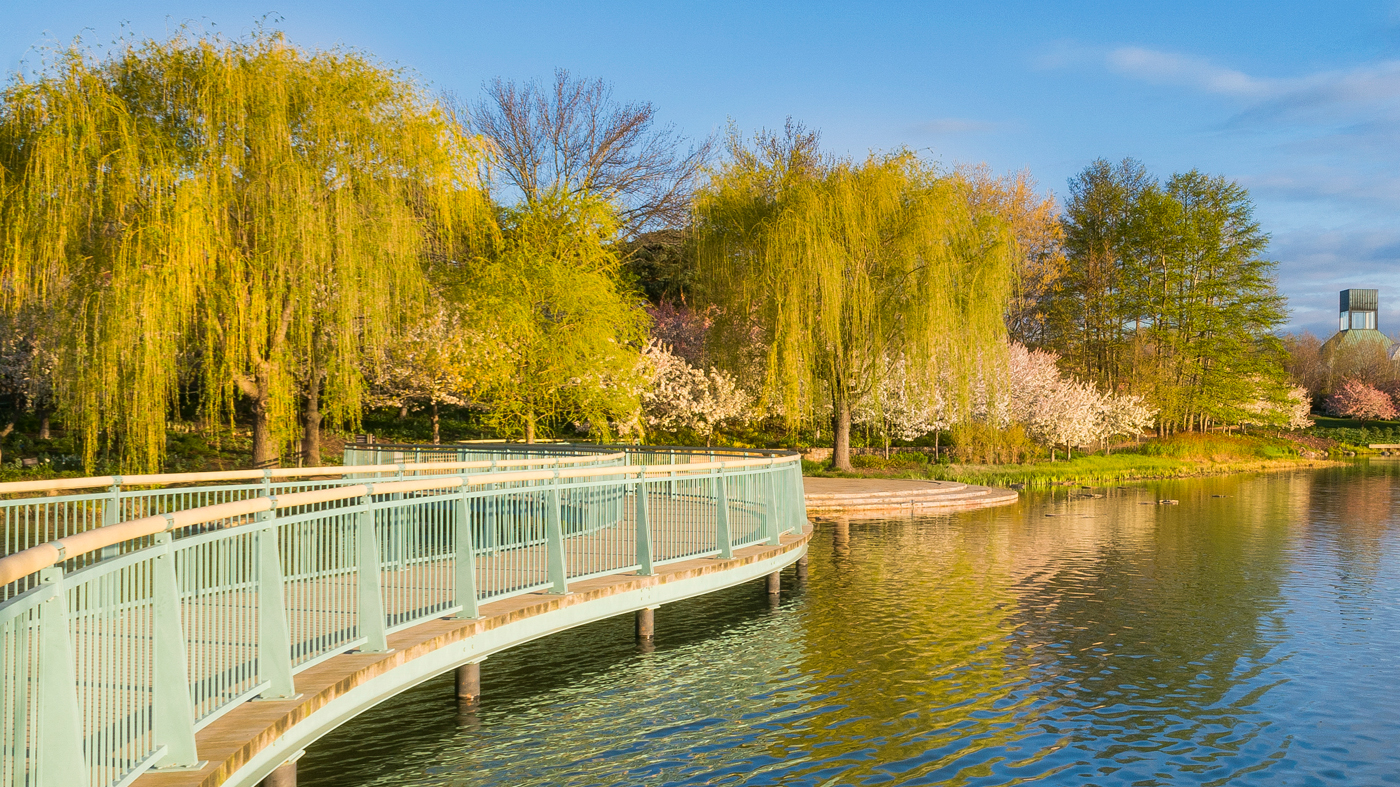
Gardens of the Great Basin
A cooling summer walk along the water’s edge is a unique way to explore the Garden, while treating yourself to views and vistas on a panoramic scale. The 60-acre system of lakes is surrounded by 5.7 miles of shoreline, much of it carefully restored, waiting to be discovered, all landscaped with the diverse plants appropriately themed to each specific garden. A fine starting point for this walk is the Great Basin, the Garden’s central lake, which is surrounded by gardens that include every variety of plant, from flowering crabapple to iris, rose, ornamental grasses, and perennials, whose images are mirrored by the reflective quality of water. This living necklace of brilliant flora includes the northern gardens of Evening Island, the Lakeside Gardens, and the individual Water Gardens, blooming with fragrant waterlilies, lotus, and other aquatic plants.
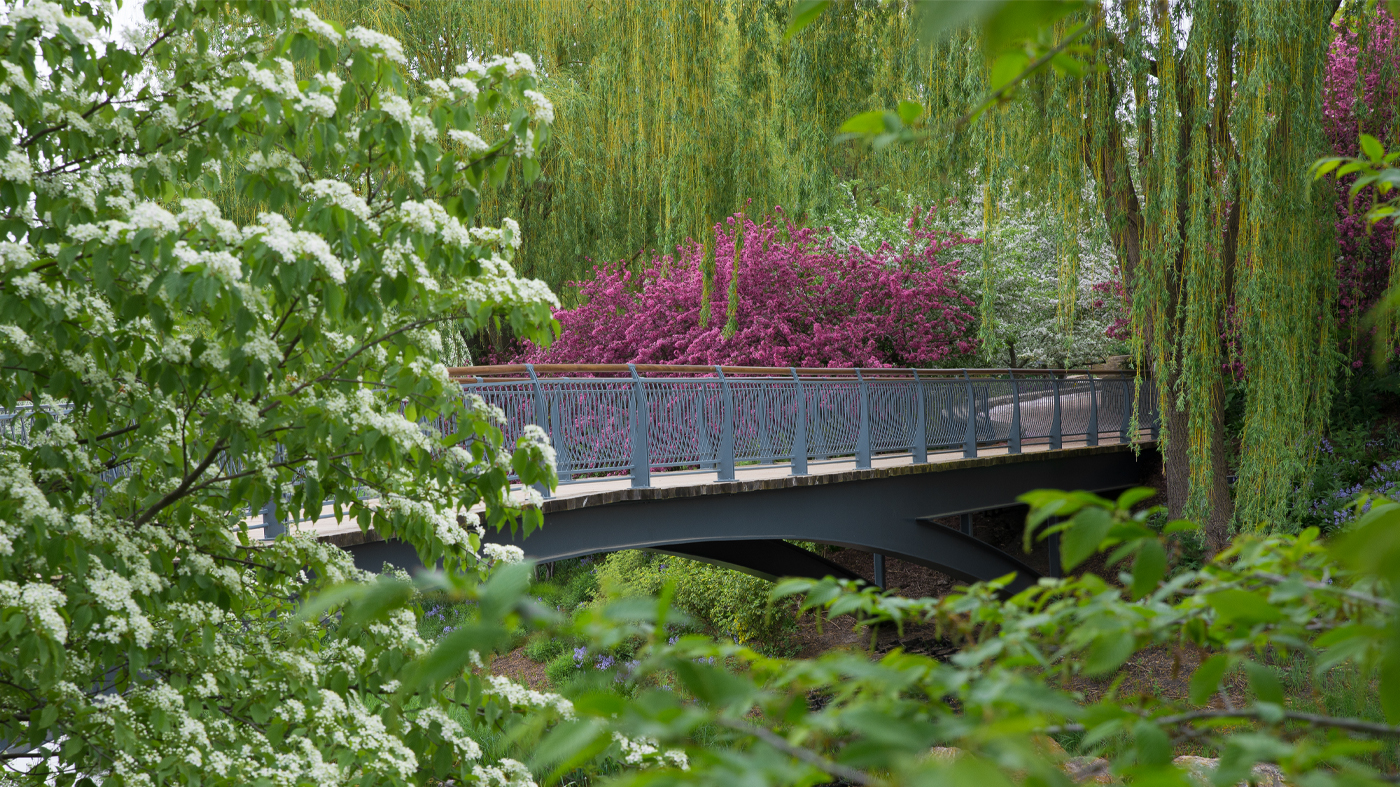
Views and Vistas From Land and Bridges
Take in this big picture at the scenic overlook at the corner of the English Walled Garden, where you can see a grand preview of what awaits. A clockwise circular walk will lead from the southern edge of the English Walled Garden through the terraced plants of the Lakeside Gardens (a don’t-miss event in early May, when hundreds of crabapples come into bloom), across the Arch Bridge to Evening Island, and then back to the Main Island via the low-lying Serpentine Bridge. In summer, perennials and annuals are at their peak of floral and foliar abundance, and the grasses have produced foxtail plumes or filigreed turkey-feet seed heads. As is true with all plants along this walk, the roses, irises, daylilies, bulbs, and sages are massed by the hundreds, even thousands, for their color impact visible across the water. This time, too, is when the waterlilies and lotuses are at their fullest of perfection. The hundreds of trees ringing the Great Basin are still summer green — a perfect foil for the blaze of sunsets that continue to light up the sky to the west.
From Evening Island you can also cross the Trellis Bridge to the Bernice E. Lavin Evaluation Garden, across from the Daniel F. and Ada L. Rice Plant Conservation Science Center. The Trellis Bridge makes it easier for Garden visitors to enjoy the entire Garden — and it underscores the vital connection between beautiful gardens and plant conservation research.
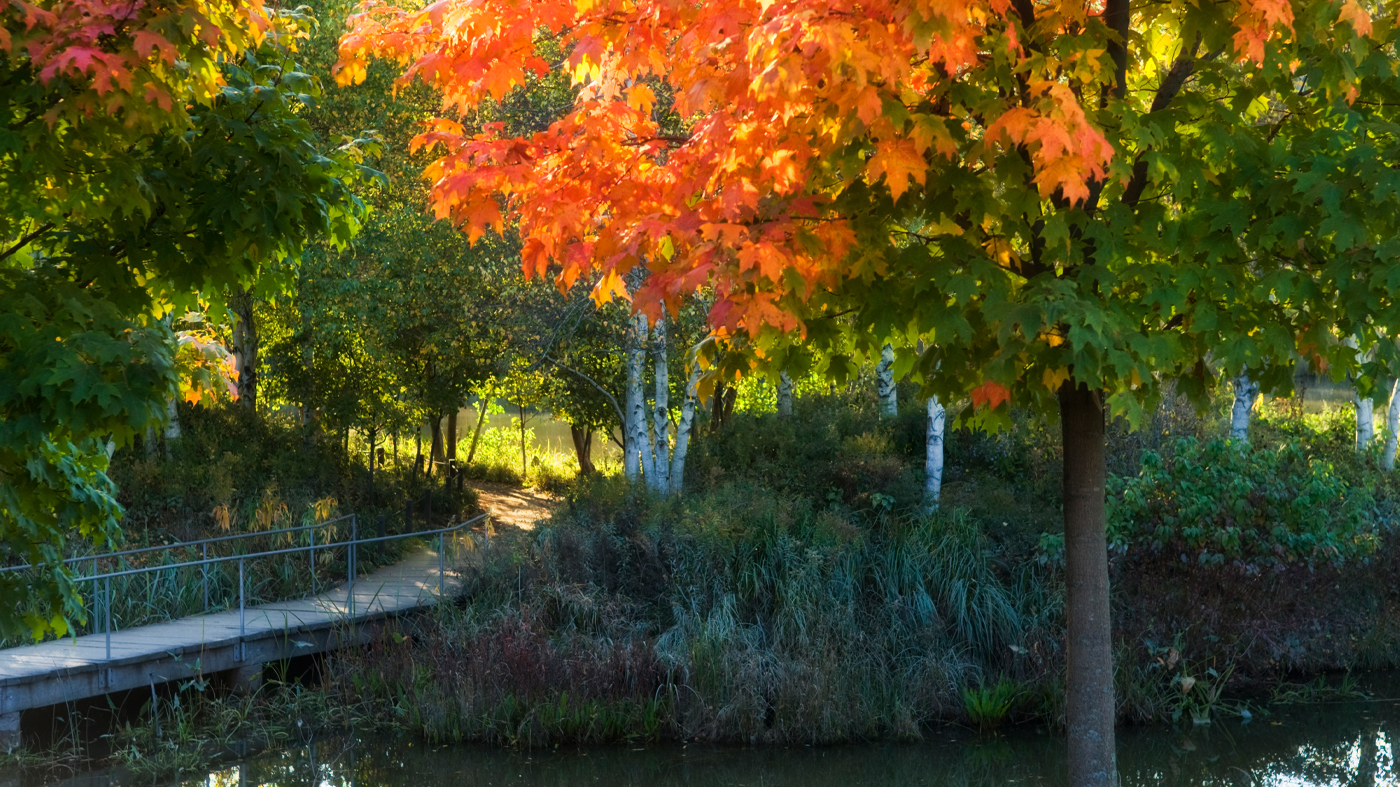
Intimate Spider Island
To move from grand drama to a more private shoreline walk, cross the handcrafted black locust bridge leading from the main island, near the Circle Garden, to Spider Island, the most intimate island at the Garden. Although this natural retreat appears to be pure woodland, its curving path pulls visitors from woods to water’s edge and to spectacular surprise views across the lakes.
Stroll the Boardwalks and Terraces
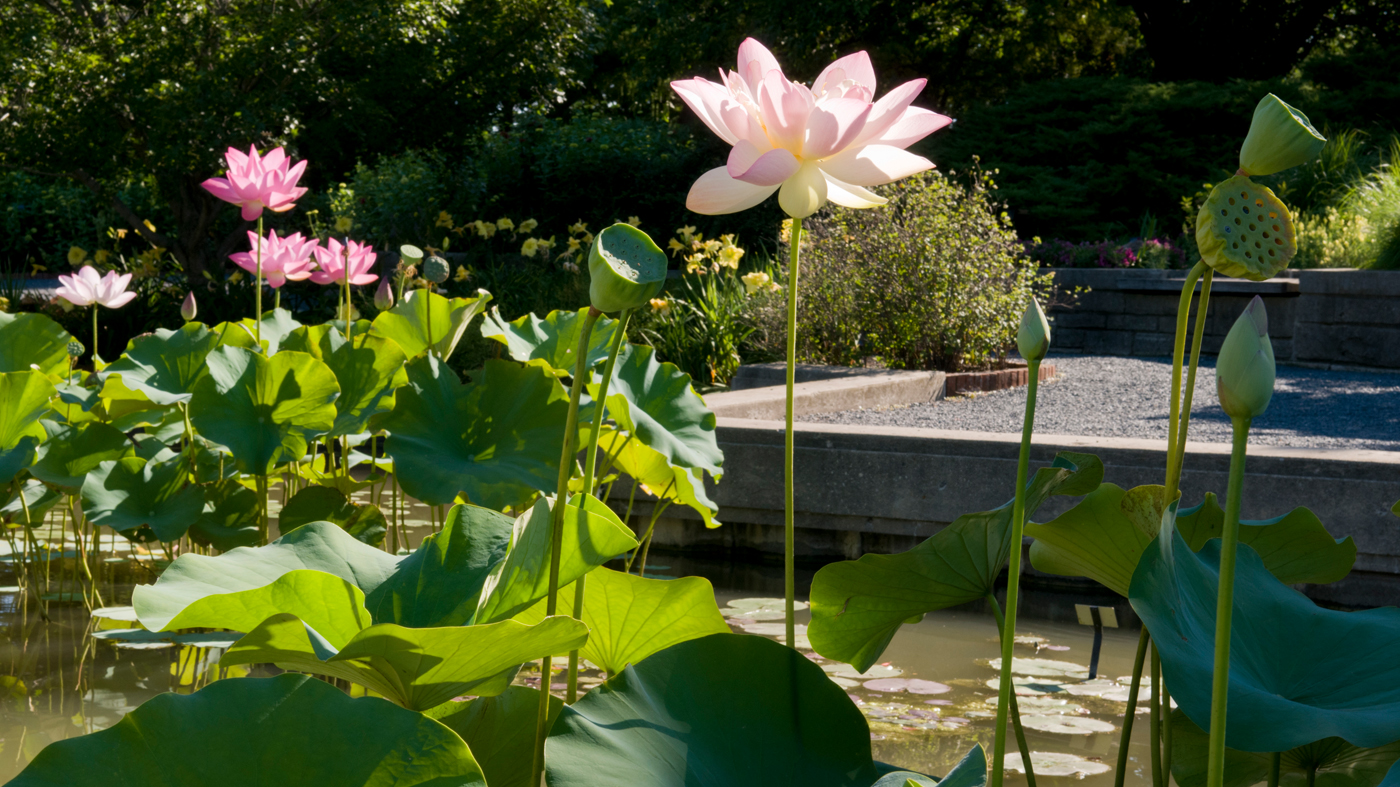
Continuing a close-up plant and water experience, stroll the boardwalks of the Aquatic Garden, adjacent to the Bulb Garden, to see waterlilies and lotuses more magnified than when viewed from a distance. Now you can clearly identify the unmistakable features of a water lotus — strong stalks rising tall out of the water, upraised wavy foliar pads, and that classic perforated seedpod — there will be no future confusion of lily or lotus. More waterlilies, water views, and a refreshing aquatic misting from the Smith Fountain, can be found close to the terraces and walkways at the edge of the Native Plant Garden and the grand Esplanade. The vistas from here across to the Regenstein Fruit & Vegetable Garden or to Bird Island present the northern face of the Garden, and a counterpoint to the exotic color and fragrance of the exuberant Crescent. This is a favorite site to spot the Garden’s gregarious resident ducks, trumpeter swans, and great blue herons, as well as scores of migrating waterfowl.
Serenity on Land and Water
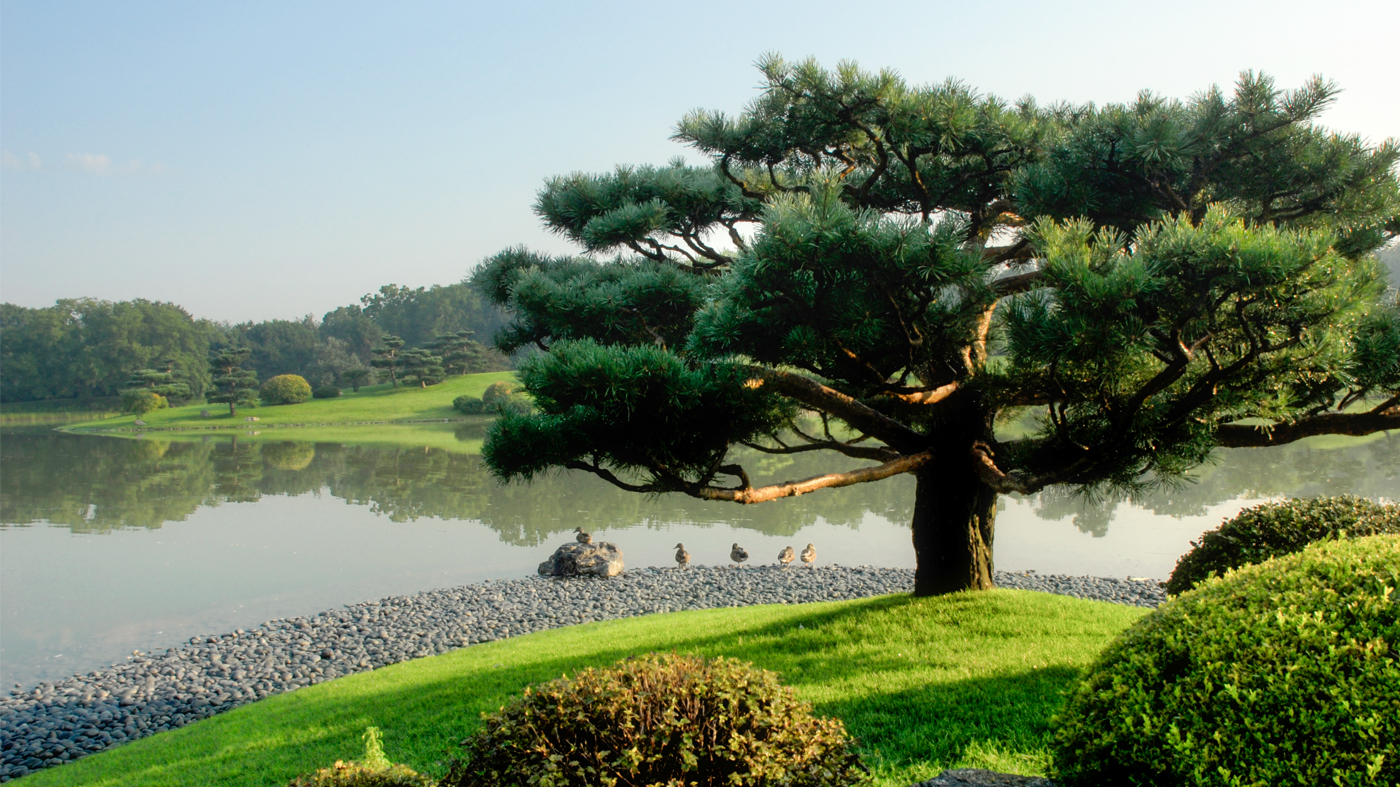
For perhaps the most personal and tranquil moments to sense both the power and peace of land meeting water, a walk through the strolling gardens of the Elizabeth Hubert Malott Japanese Garden is in order. Three distinct islands compose this extraordinary place, where respect for nature in all its forms is evident everywhere. The curving paths encourage visitors to explore the perimeter of the islands (except for that third island, which must be viewed only from a distance), and thereby sense the unity of land and liquid. Japan is a country surrounded by water, and this garden reminds us of that fact.
From Dancing Jets to Walls of Water
In addition to the Garden’s large bodies of water, there are 30 pools and fountains adding their own sensory allure to the pleasures of the plant world. Interactive jets of water shoot playfully in the Circle Garden, while a single spurt in a cistern is enough to turn your head in the courtyard of the English Walled Garden. The Buehler Enabling Garden’s two water walls are irresistible to the touch, and the quiet stream in the Landscape Gardens is every gardener’s dream. Look and listen for all our water sources on your next Garden visit.